GOP Trying to Replace Constitutional Law with Vigilante Injustice

We use the expression break the law to mean violate or disobey the law. But there is also break as in break into tiny, meaningless pieces. (And violate as in abuse or rape.) The Supreme Court is actively involved in breaking the law in this second sense. GOP controlled State Legislatures and Governors are doing this. DJT is and has been breaking the law in both senses for years in his asserting that anything that serves his immediate, short-term self-interest is truth and the law, anything that opposes him is criminal and evil.


Dan Rather and Elliot Kirschner argued recently that the Supreme Court, which used to and is needed to represent stability, fairness, and temperance has now “become headquarters for a majority group of highly partisan, reactionary players who make clear that they are uninhibited by history, precedent, or the will of the majority of the American people.” Their actions are about asserting power, not fostering the rule of constitutional law.


In one decision they argued for originalism, for the impossible task of sticking with the founding fathers’ original viewpoints. This view ignores the fact that the founding fathers lived in a very different time, where slavery was legal, women and men who didn’t own land couldn’t vote. Where the weapon of choice on the battlefield was a flintlock musket, there were no computers, and the world wasn’t threatened by a climate emergency. And they were all fathers, men.


In another of last week’s rulings, Oklahoma v Castro-Huerta, regarding Indigenous American sovereignty, the Court went against originalism. The ruling asserted a state’s jurisdiction over crimes committed on Tribal Lands. This, as even Justice Gorsuch wrote, violates not only precedent but founding-era understanding of law.


In 1832 the court ruled in Worcester v Georgia that the federal government had exclusive power to manage relations with Native nations, not states. Thus, this new court ruling violated its own legal opinions and destabilizes the rule of law and the court’s function of upholding the stability of the law. Instead, it asserts minority rule.


A Washington Post article by Colby Itkowitz and Isaac Stanley-Becker revealed the Court has agreed to hear a case involving the “independent legislature theory,” a conservative legal theory that asserts state legislatures should have virtually unchecked power over federal elections. It would erode basic tenets of American democracy including applying the rule of law equally to everyone and basing the ultimate source of all law in the people.


“[I]n its most far-reaching interpretation, it could cut governors and state courts out of the decision-making process on election laws while giving state lawmakers free rein to change rules to favor their own party. The impact could extend to presidential elections in 2024 and beyond, …making it easier for a legislature to disregard the will of its state’s citizens.”


Texas and other states have joined in this effort to undermine the rule of law. In its 2021 anti-abortion legislation, it created a sort of vigilante justice by deputizing citizens to sue and enforce the law instead of government officials. And it would pay the vigilantes $10,000 for each successful suit. According to a New York Times article by Sabrina Tavernise, whereas if Texas had put enforcement in the hands of state officials, those officials could be sued by abortion advocates aiming to bring their case to court….


*To read the whole article, please click on the link to The Good Men Project who first published it.

The Supreme Court Decisions Are the Next Assault in the Continuing War Against Democracy: The Whole Calculus Regarding the Next Election Has Changed

Why were two Supreme Court decisions made public just after the fifth hearing of the Jan. 6 Committee? One decision protected the rights of gun owners to openly carry weapons in public. The other took away a woman’s right to bodily autonomy.


Were these decisions made public now to divert the media away from reporting on the Jan. 6 Hearings and the crimes of a former President who tried to make himself a forever President and destroy the constitution? Or to reassure the GOP base that their mission is still proceeding as planned? Or distract from headlines about over 100,000 people being killed by gun violence since DJT ran for President in 2016? Or headlines about racist, hate and lie-fueled assaults on black people and election officials?


A blog in the Daily Kos by blogger, political organizer, and author of the book American Taliban, Markos Moulitsas expressed the essence of what I have been feeling and thinking about the Supreme Court decision. It was clearly and unfortunately not just an assault on a woman’s right to abortion and to full healthcare, privacy, and bodily autonomy. And contrary to what 5 Conservative Supreme Court Justices and many media outlets have said, the ruling is not simply about turning the decision about abortion over to the states.


It sacrifices women to a political agenda, to a right-wing assault on democracy. This assault is particularly dangerous to women with low incomes and women of color who have less access to contraceptives and good healthcare and can’t afford to go to other states or nations for abortions.


The assault advances minority rule in this nation. According to the Pew Research Center, 85% of Americans think abortion should be legal in some or all cases, so this decision clearly goes against the will of most Americans. The Supreme Court itself represents rule by the minority. The court was stacked with 3 justices chosen by a President who took office with the approval of only a minority of voters, chosen by an electoral college that advances minority rule, an electoral system gerrymandered to favor one party and regulations passed by many right-wing controlled states to suppress the participation of Democrats and people of color.


Even more, as Justice Thomas wrote in his opinion, the decision sets up the reconsideration, meaning reversal, of other Supreme Court due process rulings and precedents, so other rights, like to contraception, interracial and gay marriage, can all be taken away. So, the rights of any group not white, Christian, straight and male could be threatened.


We constantly hear about how the midterms mean the end of Democratic control of Congress. But Moulitsas makes clear two crucial points. First, it might be the general trend that the political party in power often loses control of Congress in midterm election, due to the supporters of those in power not turning out to vote in as great numbers as those dissatisfied by being out of power. But this is only a trend.


And I am sick of hearing this past trend repeatedly spoken of as future fact. What will happen is what we the people decide will happen. Repeating this prediction of the future as an established fact of the future only serves to further suppress the majority from voting.


The GOP, and many media outlets further aim to suppress the Democratic vote by repeating disinformation about President Biden. Considering the divisiveness he is facing, the viciousness of the opposition, many of whose members  actually supported a violent assault on their own government, the pandemic, the war, Biden has done rather well. His administration has been considerably more humane and competent than many past administrations.


Secondly, due to this rule by a minority, the Democrats are not in control. We have a Democratic President and a majority in the House. They have a technical majority in the Senate only if we ignore Democrats Joe Manchin’s and Kyrsten Sinema’s constant protections of GOP rule. The Senate is split 50-50 yet Democrats represent 41.5 million more people than the GOP. And clearly the GOP control the Supreme Court. So, Democrats, or democrats, do not control the government despite a clear majority in voting numbers.


So, when we talk about voters who are not in power being motivated by the loss of power and/or the actions of the party in power, we need to wake up to the reality. The assault on women, the proclaimed future assault on our rights, the protection of the profits of gun companies over the health and safety of children and all of us and over the stability of our nation⎼ these are clear examples that Democrats are not in power.


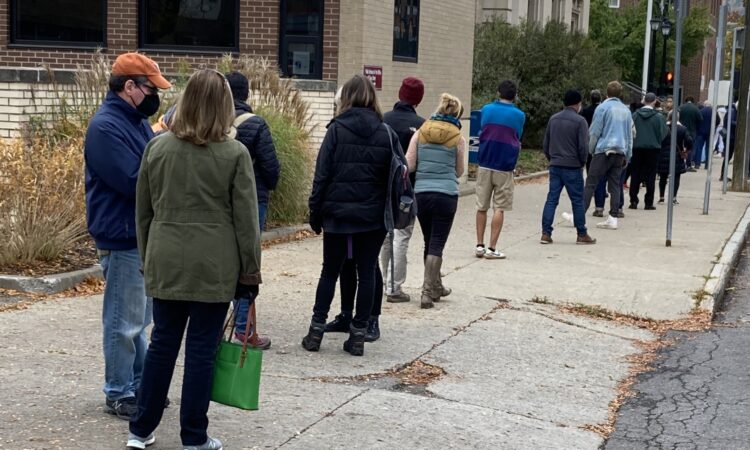
Yet, democrats can and will (I hope) work to get out the vote. Will vote in large numbers despite their polling places being limited, despite longer lines and possible harassment. We will vote. And we will do all we can to assure a fair counting of those votes. The fact that so many have taken to the streets to peacefully protest the anti-abortion ruling and many called for the impeachment of any Justices who lied to the Senate in their hearings, I hope will not only pressure legislative action to protect abortion but motivate millions to go to the polls in November.


Chris Hayes on MSNBC pointed out how rare it is that rights have been taken away from us and how often the Supreme Court in the past has been central to reactionary efforts to deny rights, working to undo what most of the rest of society had done to create a multiracial democracy. A blatant example is the malignant Dred Scott decision, which denied citizenship to a former slave who was residing in a free state and thus supported the enslavement of black people by whites.


On this same program with Hayes was NYU Law Professor Melissa Murray and New York Magazine writer Rebecca Traister who made very clear that this ruling is not a one-time assault and not just about abortion. Rebecca Traister said the message that things will be ok is an anesthetizing message. We must take the badness and injustice and yet continue the work. “We must use hope not as a feel- good measure. But to regard it as a tactical necessity and a moral and civic responsibility.” No matter how frightened we have become or how much we worry that our efforts will not bear fruit, we must act. If not for the immediate moment, then to build on each of all our efforts toward a better future.


The positive take away from Moulitsas, Hayes, Murray, Traister, and so many others is this: The importance of what we say and do over the next 5 to 6 months, or 2 plus years, is clearly revealed. These decisions by the Supreme Court can, and must, be used to change the whole election calculus and supply further motivation to reverse the old trend of midterm elections. We can and must expand the number of Democrats in Congress. We can and must change how we talk about and work for the future and the next election. If we didn’t have a good chance of succeeding, a good chance of expanding democracy, protecting our rights, creating a more caring community, the GOP wouldn’t be so obvious or desperate in what they do to stop us.


We have a one or two or thousand issue election coming up in November. If we value a woman’s right of autonomy over her own body, we must vote for every candidate who supports that right. If we value our right and our children’s right to safety, and to live without fear of gun violence, we must vote for every candidate who supports legal controls on gun ownership. And in practically every case, this means voting for every Democrat. This is not the end of what we want and need, but the beginning of saving our lives and improving the outlook of our future.


*This post was syndicated by The Good Men Project.


After the Celebration, Then What?

A big event occurs. You graduate from high school or college, you win the lottery, get married, and what do you expect next from your life? You imagine the joy of seeing the winning numbers going on forever. You imagine the ceremony, the parties, the honeymoon. But after the celebrating, what then? Do you imagine cleaning the house? Taking out the trash?


We expect the world would be changed or we would be changed. That the quality of our experience of life would be better, heightened, maybe. Or the quality of our mind would be different. And it is, but not like we expected. We are always changing. But we easily get caught up in the idea or the story we tell ourselves instead of the reality or totality.


Especially today, when the level of anxiety is so high due to all the threats to so many of us, and so many aspects of our lives, including our sense of humanity and the climate, our health or control over our own bodies, it is easy to expect or hope for even more from any event than it could possibly produce. For example, we could work to successfully elect a candidate we trust, or to defeat one we knew had to be defeated, and afterwards, we expect all the threats to disappear, and the whole world would be changed. If only that were so.


Daniel Kahneman, professor of both psychology and public affairs described this as a “focusing illusion.” When we’re thinking about the graduation or the wedding, it is big, tremendous. When we’re in school, we might think that when we graduate, life will be so different. Or we’re in love and imagine that, once the love is celebrated and wrapped in the marriage license, we will feel more secure and loved. But what we find is a new moment, another day, another call for action. We forget how we adapt to situations, to living with a spouse or a new job or whatever it is we do after a big event.


We forget where feelings come from. We think the achievement itself creates the thrill of success. We think the person we love creates the love. We forget that to feel loved one must love. To be touched, one must touch. Jack Kornfield wrote a book called After the Ecstasy, The Laundry: How the Heart Grows Wise on the Spiritual Path. We can even view enlightenment, whatever that is, in the same way. “Once I get enlightened, all will be different.” Or “If only I’d get enlightened…” If only this or that.


All we ever have is moments, and moments are too slippery to ever own. They are less a thing and more what or who we are. Hopefully, most will be spent with more clarity than confusion, more compassion than anger, more love than greed. We do the best we can in the moment to learn from whatever occurs, and then let it go. To perceive and honor what is there for us without blinding ourselves with self-judgments or turning a passing moment into a permanent monument to a self. Monuments don’t feel and what isn’t perceived can’t be acted upon….


*To read the whole piece, please go to The Good Men Project.


The Road Keeps Changing: The Power in Combining the Study of History with the Practice of Mindfulness Meditation

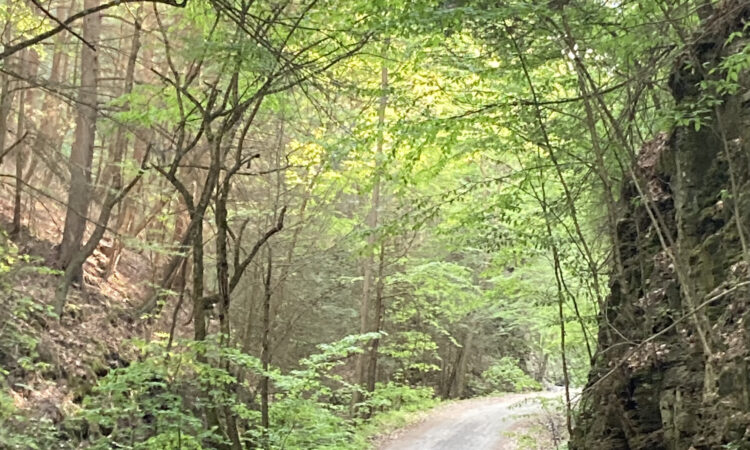
I was walking up this long rural road, a road I walk or drive on almost daily. And as I looked to the distance ahead, let my mind rest mindfully in the view, I suddenly felt there were layers in this road or under it. Old roads. Unknowns. The road has two lanes now. Was it once only one lane? A path traveled by native Americans? A deer path?


What was this hill like in the past before this road was built? What is hidden? I stopped and stared into the distance, imagining what the road might cover. These trees on the side. They are now maybe forty feet high. In many places there is just one lone tree fronting a home. Were the trees that bordered this road once part of a vast forest of interconnected trees, huge monsters reaching up to the sky?


We think of our road, village, town, or city as being just this, just the way it is now. The same old thing. But we know this isn’t the only way to see it. Not the only way it has been seen, even by me. This road, for example, was recently repaved and widened. The relationship of me standing here, the car speeding too fast by me, that crow calling, the spongy moth floating down its line never existed before.


What does it mean to me, now, that just 39 years ago, the lines of cables lining the road for the internet weren’t here? There was no Facebook, TikTok, texting.


What does it mean that 77 years ago World War II ended? A hundred years ago was the roaring 20’s. About four hundred years ago, the first Europeans came to this area, which had been populated up to then by the Cayuga tribe of Native Americans. Before the Cayugas, there were more bears than people. Today, we’re shocked, but maybe secretly filled with joy, when a bear walks down our street or visits the food market. Back then, the bears were shocked to see one of us in the forest. So much change.


How is this past alive in this present? What does it mean that our lives can change so much and so continuously? So much pain. So much gain and loss.


History is the story of change. Dr. Theodore Christou said history is rooted in storytelling. The Greek root of ‘history’ is historia, which means inquiry, seeking knowledge. And ‘story’, histoire in French, is history  without the ‘hi’.  Both words refer to an account of events.


We use stories to organize and shape the moments and events of our lives into memories. How we shape those stories is how we shape ourselves, create an identity or personal history. And we then know ourselves through these stories. Likewise, a culture knows itself through its stories. This history is a collective memory. It shapes how we relate with others and shows us who we are….


**To read the whole post, please go to The Good Men Project.


The GOP Would Sacrifice Us on the Altar of their Power and Profit: What if, Instead, We Created a Better World?

What if we, or I, have been looking at this all wrong? I often feel like we’re on the verge of losing almost everything. But what if we’re on the verge of⎼ well, winning. Or maybe not winning but at least making things better? Maybe we must re-think our thinking about  what’s possible.


The GOP, and even some Democrats, or the financially well-off financiers of some Democrats, have become totally desperate. The immorality of many GOP, their willingness to sacrifice everything and everyone for their greed and power, has become totally upfront and obvious to anyone not blinded by lies and an unwillingness to question their beliefs or recognize the humanity of those holding views different from their own.


Desperation is a sign of weakness, not strength. Unwillingness to change one’s views or listen to others is a weakness, not a strength.


On May 30th Sonali Kolhatkar, host and founder of Rising With Sonali, a tv and radio show that airs on Free Speech Radio and Pacifica stations, wrote an article for the Independent Media Institute arguing very cogently that the very rich are making a very dangerous calculation⎼ that it is worth sacrificing millions or even billions of lives in order to preserve corporate and individual profits.


She cites a new poll by the National Surveys on Energy and the Environment which found that “there is no longer skepticism among the public that the effects of climate change are real, as 76 percent of respondents—the highest on record since the poll started—’believe there is solid evidence that temperatures on the planet have risen over the last four decades.’”


Yet, despite overwhelming support for doing all we can to halt climate change, “corporate profit-based considerations have constantly dictated our energy use and climate policies, [and] we have effectively decided that major sacrifices of lives—most likely poor people of color—will be worth the pain of relying on fossil fuels for energy.”


And the same holds true with the pandemic. “Today, even as COVID-19 infection rates are skyrocketing, with cases having risen by 58 percent in the last two weeks alone, mask mandates are being dropped all over the country and COVID-19-related restrictions are ending. This is not because the virus is under control—it is clearly not—but because it’s no longer financially viable for corporate America to sacrifice profits for lives. So, it will sacrifice lives for profit….”


Greg Sargent wrote in the Washington Post back in September about how the GOP would exploit the pandemic, sacrifice lives by lying about vaccines, for example, to resurrect their power. Millions of people were tricked, made sick, and many died due to the anti-vaccine propaganda of DJT and the right.


*This blog was syndicated by The Good Men Project.


Why Is Nature Capable of Being So Comforting? We Can’t Escape the Earth or the Universe Because We Are It

Why does nature have this effect on us?


I take a walk in the woods and thoughts fly off like birds⎼ swallows, crows or chickadees, to be replaced by insights or a beautiful sense of quiet. Or I sit on the beach, by the ocean, and my attention goes to the seemingly infinite space over the water. My whole body seems to move rhythmically with the sound of the waves. Before I was tense, my mind and body racing. Now, as I’m sitting with the ocean, I am comforted. Relaxed.


Why is this?


I’ve used the rain, the sky, the sound of birds and peepers, crickets, and cicadas, the feel of my breath or the air on my face, the seasons, the glow of the moon in the middle of the night or the wind in the middle of the day as doors to meditation, or to calm and slow down enough so I can feel or perceive the world and myself more clearly.


Even an ice storm can evoke a sense of beauty; and the dark clouds of a hurricane can reveal a sense of awe⎼ right alongside the fright.


Being outside in nature or viewing it helps us stay healthy, happier, and recover more easily from illness. We experience less stress and pain and heal quicker in a hospital if our room has windows facing trees, streams, or mountains or there are murals of such scenes painted on the walls.


Something like 170,000 years ago, evolutionary changes like a loss of body hair and a subsequent need for protection from the elements led early humans to clothe themselves. Or maybe it was also for artistic reasons. Maybe as long ago as 400,000 years ago, certainly by the Neolithic Revolution of 12,000 years ago, we began to build homes, shelters from the storm, or from dangerous animals. Later, we began to build walls to protect us from our own species. We then tried to control nature or wall it away, but we couldn’t, so we walled ourselves from nature, or tried to do so.


Likewise, in our personal evolution, so many of us had to wall away traumas that were too much to face at the time or aspects of ourselves we didn’t know how to integrate or accept.


And because of this effort, of walling ourselves from nature or ourselves, the question arose: why is nature⎼ why is what we are walling away so often healing to us, despite the storms, the ice, the fires, and the bears?


Because nature ultimately includes everything. It’s not just trees, beaches, streams, and sky that can comfort us. Almost any aspect of nature can be used as an object for meditation and for calming ourselves, but so can almost anything we perceive. A poem, a work of visual art, a person, pet, park bench, building, a piece of paper, a question. We can use the mere act of looking to help us see more clearly, or a moment of fear to study how we construct emotions. The key is to find what comforts us….


**If you’d like more information on any of the practices referred to in this piece, click on any of the links provided, and, if possible, find a reliable and experienced teacher, therapist, mentor to be a guide.

***To read the whole blog, please click on the link to The Good Men Project.

Dismantling Walls, Reducing Pain, and Rethinking Thinking

There are so many obstacles, both personal and institutional, we face in trying to improve our lives as well as the society we live in. But we too often overlook the way we think about thinking as one of those obstacles.


How we think, as well as what we think about or pay attention to, influences the answers we derive and our emotional state. This might be one reason why the GOP so vigorously use twisted logic to attack the search for truth⎼ about Jan 6 and DJT,  about science, public schools, and education in general, and certainly about gun violence. This is not just a dangerous political maneuver, but one that could threaten our survival as a nation and as a species, because it turns our most precious resource⎼ our minds and ability to think⎼ into an enemy to be feared and fought against.


We often conceptualize intelligence as our ability to learn, solve problems, or select goals and calculate how to reach them. But intelligence and thinking are not just a road to a desired end but a quality of our journey. It involves the ability to let go as well as dig deeper, not just to think but rethink our assumptions and beliefs. To know our limitations. The Greek philosopher Socrates supposedly said that what made him wise was that he knew he knew nothing.


Organizational psychologist Adam Grant, in his book Think Again: The Power of Knowing What You Don’t Know, spells out how our mistaken idea of thinking can lead to distorting what we look at. And the brighter we supposedly are, the more blind we can be. What makes us intelligent, he says, is an ability to question our assumptions, and beliefs. To act like scientists testing our hypotheses.


We often resist rethinking, not only because of the time and energy required, but because it would mean questioning ourselves. Such questioning might add more unpredictability to an already unpredictable, often threatening world. And we’d have to admit we’re wrong, and capable of being very wrong. Our identity is tied closely to our beliefs and what we think are facts. To change our viewpoint can feel like abandoning our sense of ourselves. We might prefer the “comfort of conviction over the discomfort of doubt.”


Many of us use one of 3 models for thinking: a preacher defending their sacred beliefs, a prosecutor proving the “other side” wrong, or a politician seeking approval. Instead of thinking clearly, we often “listen to opinions that make us feel good instead of ideas that make us think hard. We see disagreement as a threat… and surround ourselves with people who agree with our conclusions” instead of those who challenge our thought process.


The result is what’s called the Dunning Kruger Effect. This is based on studies showing that people who scored the lowest on tests of reasoning and grammar had the most inflated idea of their abilities. The less we know in a particular domain, the more we overestimate our intelligence in that domain, and the more rigidly we hold our beliefs. Instead of recognizing what we don’t know or have yet to learn, we hide from the realization. We fall easily into the bias of thinking we’re not biased.


We might think this doesn’t apply to us, but I saw this operate in my own life. After returning to teaching after a 10-year absence, for a few years I found myself presenting answers to students more than modeling ways to question. I held viewpoints with more conviction than I felt because I didn’t want to expose my lack of knowledge.


**To read the whole article, please go to The Good Men Project.

The Relationship of All Humans, Revisited: A Stable Society Is Like a Loving Relationship

A relationship with another person, even one of long standing, with a friend, colleague, even a spouse, can seem so strong but, in reality, be so delicate. It is important to recognize this. We expect emotional ties to bear so much, to tie people, families, groups together. But emotions are just thoughts, feelings, and sensations. They are ephemeral; like air, they can be moved or changed so easily.


I look at my wife, Linda, and realize how much better my life is because of her. I think more clearly and gain new perspectives because we talk so easily together. The more I feel love, appreciation, and gratitude, and the more I allow her in, the more I enjoy my day. Yet, despite all that, sometimes I lose it. I don’t feel the connection. I feel what I feel and think what I think but what she feels, or thinks is beyond me. I relate to her as if she were a means to an end, my own projection, simply the source of my own satisfaction, or pain. I mentally accuse her of being the cause of what hurts me.


And then I become aware of what I’m doing. I feel our separation, the fragility of our life together and how easily I could lose her. I shudder and wake up.


Society is also a relationship. Of course, there’s more to it than that, just like there is more to a marriage than emotion. There’s history, commitment, often there are children, homes, possessions, and for a society, institutions, buildings, roads, laws, and social processes. But what do any of these mean without the sense of relationship?


We spend most of our time each day in human constructed environments with other human beings. The beauty and necessity of our cooperation with others surrounds and envelops us. Yet often we lose it. We treat other people as means to our own ends. We treat cashiers like the machines they control. We treat other drivers as obstacles to pass. We treat people we barely know with the briefest of recognitions and people we don’t know are ignored or worse. There are so many people around us. How can we do anything else?


The more we harden our personal borders and think of ourselves as separate from others, the more pain we feel, and the easier it is to go from indifference or ignoring others, to hurting.


Or to lying to ourselves. Telling and recognizing the truth means getting as close as we can to what’s real, what is happening in ourselves and the world. A lie hides and distorts, pushes away what’s real, by intent. It substitutes a fiction, an idea for reality. Of course, it can get complicated. I don’t know if it’s best or not to always tell the truth. But in general, knowing and speaking the truth, or knowing as best we can what’s actually going on in ourselves and others, fosters healthy relationships. When problems arise, as they must, we can only face them if we notice them. We can only face what we allow ourselves to perceive….


**To read the whole article, please click on this link to The Good Men Project.

When the Air Sings to Us: What Makes a Good Relationship?

It’s truly a spring day and a beautiful morning. For once, the sky is clear, and the quality of sunlight is so alive. I love the early morning light even though I rarely get up to see it or hear it. There’s a hum in the air.


Early, for me nowadays, means 8:00 or 9:00 am, not 6:00. And the birds. Amazing. Right now, a male cardinal is singing. They sing love songs to their mate or hopeful mate. And we, lucky humans, get to hear it⎼ if we’re quiet enough, or our neighbors are. Imagine one creature making love to another with its voice and we get to listen in.


What is it in the song, what quality attracts one bird to another? Biologists often talk about ‘fitness,’ but I think that’s bunk. What does ‘fittest’ mean in terms of a bird song?  I’m not an ornithologist but I don’t think a female cardinal picks the gruffest or toughest sounding male. Being gruff, at least in a human, limits the vocal range.


Even Darwin, who is often misquoted as saying or implying it is aggression or a “selfish gene” that makes beings fittest, actually spoke in his book The Descent of Man only twice about survival of the fittest. Of course, we humans can be selfish. We’d have to be blind not to see it. But many of us act like we are helpless before our selfish impulses and blind to other aspects of ourselves, aspects that Darwin named as essential to our survival.


Systems scientist David Loye pointed out in his research on Darwin’s Lost Theory of Love: A Healing Vision for the New Century, that Darwin included 24 entries on the importance of mutual aid, 24 on reason and imagination, 61 on sympathy, 90 on a moral sense, and 95 on love.


Especially since cardinals mate for life, and males feed the females both before and after she lays her eggs, wouldn’t ‘fitness’ in a voice be its beauty, its subtle and yet lingering notes? Wouldn’t it be the ability of a vocal vibration to make a listener feel warm inside, safe?


Imagine we let ourselves feel loved by the world around us. So much would change, I think. Maybe fewer of us would have a cavalier attitude toward nature and treat it as mere “equipment” to exploit for our own immediate purposes. We’d feel the life around us more intimately. Maybe we’d feel more valued and loved ourselves. More powerful, alive, engaged. We’d feel everything speaking to us. Not just birds but trees, rivers, clouds, the air we breathe, the other people around us.


We’d feel the streams of the earth as the veins of our body. The air as the fuel that animates us….


**To read this whole post, please click on this link to The Good Men Project.

Last Night, A Dream: About The Handmaid’s Tale? The Supreme Court? Or Depths I haven’t Yet Realized?

I woke up from one dream and found myself in another. The first dream, which I barely remember, returned me to when I was a teacher. A school trip I was helping lead had gone bad. In the dream, a young man I don’t remember ever knowing was caught trying to steal from our group. I was holding him by the upper arm⎼ and then I was catapulted into a totally new scene.


I was in a city, like Manhattan, still holding the upper arm of the young man from the previous dream. We looked around us at a world gone crazy and which neither of us knew. It had all the energy of a war movie. Many people were running, rushing fast through the streets. There was a group of 5 or so white men, dressed in dark, maybe black clothes, walking deliberately, and carrying signs. “Join the chorus.” “Become a chorister.”


The apparent leader of the men with signs approached me and said, “You look like you could do it. Join us. We need you.” I didn’t respond and the group moved on.


We turned a corner of the street. I let go of the arm of the teenager and we talked about what we were seeing, and what we should do. “What do you think is going on?” I asked him. We were now allies, refugees together. I thought to myself maybe I should find the man with the sign and ask him what was going on. What is the chorus, besides people singing together? The horror of the novel, The Handmaid’s Tale  came to mind. Would it be better for me to be a chorister or leader than a foot soldier? Or maybe not? Could I be a leader? And of what?


I imagined myself reading books of fighting strategy. And then I woke up to daylight, morning. In my bed.


Is this related to the white men (and one woman) in dark robes now trying to turn our society into a Gilead, a patriarchal, white supremacist, totalitarian Christian state that treats women as property? The dream came to me a few days before news reports revealed a draft of a decision by 5 Conservative Supreme Court Justices to overturn Roe vs Wade.


Was my subconscious giving me a warning? Or trying to wake me from a sleep of inaction? Was the dark robed man in the dream trying to get me to join other white men as oppressors? Or to fight them?


Margaret Atwood, author of The Handmaid’s Tale, said the story just exposes trends that she saw happening back in the 1980’s in the US. Her work was a response to people saying such events could happen in other nations, but never here. But here we are. We have 5 Supreme Court Justices taking away rights and health care from one half of all of us.


And how do they justify this? They say they are saving the lives of unborn children. They don’t seem to care about the lives of children once they are born, since many support executing people, including women who have had abortions. Many in the supposed “pro-life” movement supported cuts in programs to feed hungry children and deny affordable healthcare coverage to those with “pre-existing conditions.”


In the leaked draft opinion on the issue, Justice Samuel Alito relied heavily on 17th century English judge Matthew Hale. As Deanna Pan writes in an article for the Boston Globe, Alito argued that prohibiting abortion should be upheld because it has an “unbroken tradition” in the law. But slavery, in the 17th Century, had an unbroken tradition as did denying women the right to own property. So did, according to Hale, sentencing women to death for witchcraft and allowing husbands to escape criminal liability for raping their wives.


Human rights, democratically elected governments, also television, computers, baseball goes against what was established tradition in the 17th century.


Alito ignores the fact that Roe has been accepted legal precedent since 1973, almost 50 years. It was upheld in three previous cases, Planned Parenthood v. Casey, Whole Women’s Health v. Herllerstedt, and in 2020, June Medical Services v. Gee. Alito’s arguments come from a time when only a few white men had any political power.


Or maybe the dream had nothing to do specifically with denying women the right to control their own body. There have been so many reasons we have protested lately, including Black Lives Matter, ending gun violence, and calling for DJT to be held accountable for treasonous acts. But there also are people forced to run through the streets due to the horror of Putin’s war against Ukraine.


Maybe the dream was about the need for action by anyone who thinks the whole drift toward Gilead is not only wrong but threatens the very future of democracy. And because many of those who push an anti-women agenda that criminalizes abortion also deny human-caused climate change, they threaten the ability of our planet to support the life not only of human children but of all living beings.


So, we must all ask ourselves: if we think this attack on women is wrong, what are we ready to do? How can we speak out? What creativity or specific skills do we have to make our speech heard and honored? What tactics have we read about in the past that have led to successful political actions or in evoking the attention and compassion of the nation?


Brian Resnick wrote an article for VOX outlining 4 Rules for Making A Protest Work, like keeping the protest nonviolent and more proactive (preventing an action) than reactive, making the message very clear and salient, joining different groups or issues under one banner, and aiming for specific actions or legislation.


We might think of Gandhi and Martin Luther King, Jr. We might think Lacie Wooten-Holway, a mom and neighbor of Justice Kavanaugh, standing outside his home holding a candle of protest. We might think about the protests against the GOP Graham-Cassidy Health Denial Bill in 2017; the women’s wall in India in 2019, or the wall of Moms in Portland in 2020. Or the first Earth Day events in 1970 or maybe placing flowers in gun barrels and levitating the Pentagon during the anti-war movement in the sixties.


And especially joining the upcoming Women’s March on May 14 and working to protect and get out the vote this November.


The fight here is first for a woman’s right to abortion. But it is equally for equal justice for all before the law, voting rights and protections, environmental justice and protections, healthcare for all, and the advancement of public education.


**This article was syndicated by The Good Men Project.