It’s So Overwhelming: Rediscovering the Core of Our Being

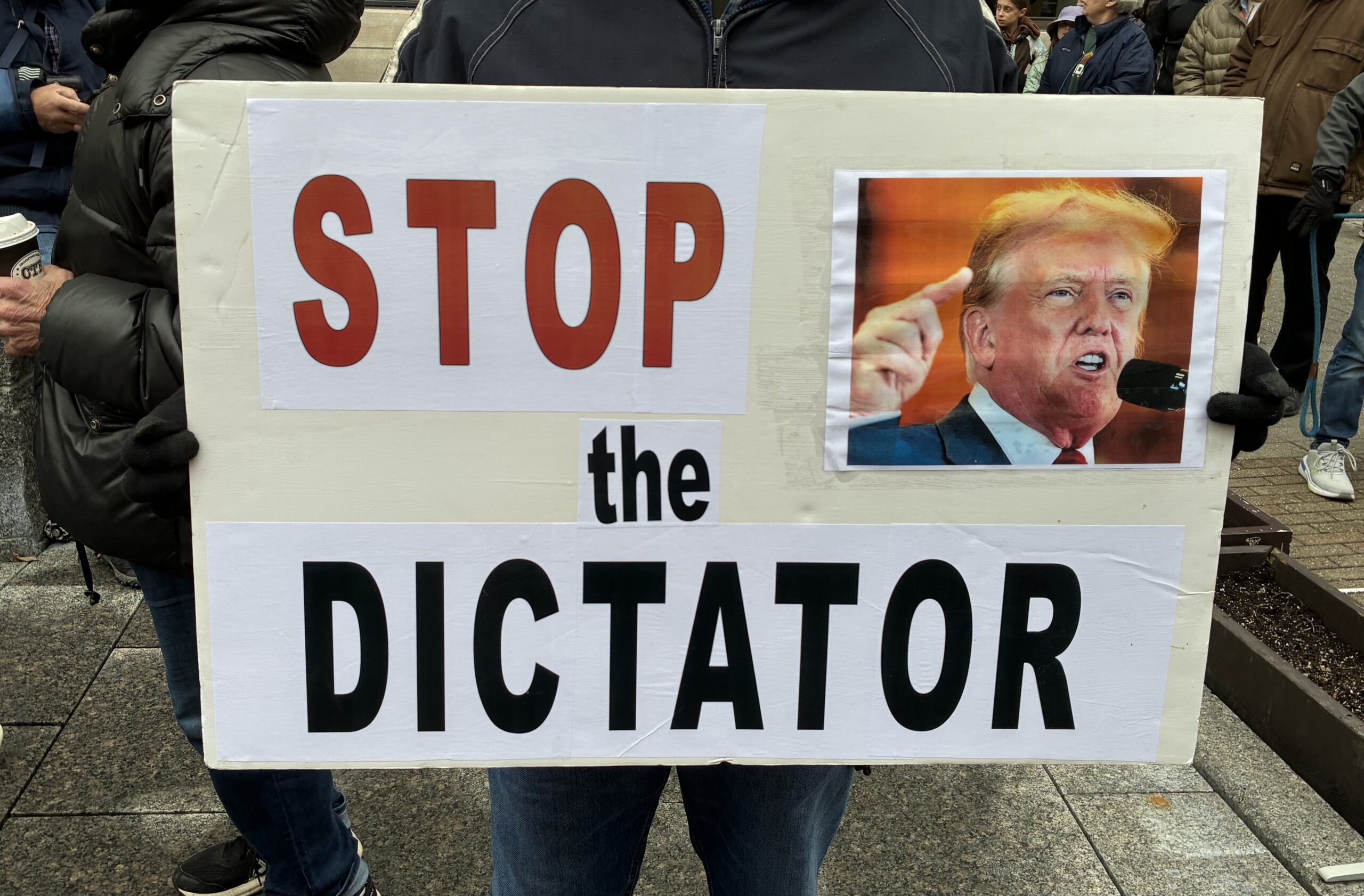
DT continues to do all he can to stir up the chaos, the shock, the abuses so we can’t keep up. My e-mails are flooded with petitions, unbelievable news stories, information on protests that happened and ones to join, and requests for money to fight back against the assaults. Never before did I so anticipate and cheer on suits against the government. I used to automatically delete 95% of emails; now, 95% seem too critical to ignore.


This morning: Scott Dworkin, Massive Anti-DT Protests Erupt Everywhere and More Good News. And: Opinion You Don’t Want To Miss. Trump IRS Pick Just Enriched by Tax Schemers, Trump Relaunches His Tariff Corruption Game. Articles on DT’s threat to the economy and threat to our ability to afford our lives. The Supreme Court denying or sometimes affirming DT’s lust for absolute power at our expense. The illegal imprisonment of immigrants, the attempts to destroy due process and the rule of law. Articles repeatedly appear on the destruction of health care, environmental protections, and all government functions that support the well-being and the very lives of most Americans.


And notably, an article in the New York Times on Easter Sunday about how Americans desire and are turning to a belief in a god, soul, afterlife, a spiritual dimension to their lives. 92% of Americans claim they have some kind of spiritual belief. The article, Believing, by Lauren Jackson, appears in a section of the Times dramatically titled America Wants a God. It’s part of her now yearlong project studying a significant shift in American life, after decades of people turning away from religion. A good number of us, 40 million Americans, had left their churches, synagogues, etc. and looked to jobs, gym classes, mysticism, meditation, mostly secular replacements.


But since the pandemic, the environmental emergency, and DT, more and more of us have felt an “existential malaise.” Our world, our lives are threatened on so many fronts, and we want somewhere to turn for support, for reason, for care. And studies, including one by the Pew Research Center, show that people who practice a religion, or have some sort of regular spiritual practice, tend to be happier, and one from Harvard on how religion contributes to being healthier. (Yeah, Harvard.)


This revival of spiritual longing, or maybe desperation, rings very true to me. We see this in the great interest in mindfulness over the last 40 years. And on the other hand, we see it in the maybe one third of Americans who have declared DT their new God or savior. I don’t know how believing in the Donald’s holiness makes people happier. I mean, he sells bibles for extra cash and seems to sell access to power to evangelicals for votes.


If godly means moral, caring about the well-being of others, living by the Golden Rule or Ten Commandments, and knowledgeable of the content of whatever Holy teachings one says one believes in, I think DT is probably one of the last people on earth to be called godly. But he nevertheless claims the title so absolutely others seem to accept his insistence as proof. When an assassin’s bullet just grazed him, he claimed God intervened in his behalf. Maybe spreading hate has a happy edge to it, or makes people feel united in a community of shared bitterness. Or maybe people can mistake autocratic political power for power over eternity.


Since even before the early Middle Ages, religion was often pitted against reason. With a 20th century decrease in church membership there was an increase in trust in science, research, rationality. And, at the same time, an increase in materialism, in a commodification of every aspect of life. Our own attention, our very mind, became the biggest commodity to sell. Although maybe this effort of commodifying the human mind, of controlling the mind of others, has always been the biggest power that certain humans hungered for?…


*To read the whole article, please go to The Good Men Project.
Silence Sits at the Open End of Everything⎼ Savor It: Right at the Core of Anything is the Silent Heart of Everything

Silence can be a frightening experience or the voice of welcoming. There is a silence of the heavens.  A silence that can remind people who can hear of death. And then there’s a silence that is peace itself.


I once shared in a blog something my father told me. I was in my early twenties, temporarily staying with my parents, and planning to hitch-hike across the country. My dad hated the idea. One night, he yelled at me, calling me irresponsible for not getting a job immediately, but ignoring the fact that in three months I had a job lined up and was going to graduate school.


My mother heard the yelling, came into the room and calmed him down. He then shared what motivated his outburst. It was partly his economic fears, based on his experience during the depression in the 1930s. And partly, it was his reaction when he went outside at night and looked up at the stars. He said he’d feel lost in the expanse of darkness, unable to accept the infinite silence of the heavens. The only way he knew to deal with this reality was by having a job, having a schedule and something “useful” to accomplish.


We humans have been feeling, questioning, and speaking of the awful or awesome silence of the heavens forever. But there are other dimensions, other ways to experience silence. Imagine being in a medium sized room with 20 or 30 people all engaged simultaneously in independent conversations, their voices echoing from the walls. Then we leave the room and go into a hallway empty of noise, Muzak, or of anyone besides ourselves. The silence would be so welcome.


Or we’re in a forest or walking a rural road. Trees moan as they move together in the wind. Water streams along the bank of the road, crows cough, robins share their sweet voices. And then, seemingly absolute silence that seems to go on forever. No more trees talking, water streaming, or robins singing. The silence feels incomprehensible. Mysterious. Absorbing. I want to wrap my life in it.


We might find ourselves wanting to just get something done, or over-with. Or we feel we must do something but don’t want to⎼ we resist doing it. Whatever it is feels too difficult emotionally or physically to face. This leads to us to being on the defense; we experience in our shoulders, maybe our face or belly a flee-fight-flight response. We tense up. Everything becomes a drag.


But then we realize, hey, at least we can still do this task. Our body is mostly healthy. We are conscious. We focus on feeling the moment of awareness, feeling right here; feeling the fact that we can feel, that we can hear and see. Or we notice the feeling of our feet on the floor, hands in our lap. And suddenly, everything changes. Our sense of isolation ends, sense of connection expands. Switching our attention for a moment from an object of awareness, like a particular person or a step in a task, or our initial dislike, to the fact of being aware can do that.


This allows us to stop and savor the moment. Or savor the fact we’re right here, present. And suddenly, there’s silence; there’s joy. We notice the pleasure of being here. Right amidst whatever angers us, right inside whatever fear we might hold onto, there’s a space of silence. There’s a space of breath. There’s a space for joy. Right at the core of anything is the silent heart of everything. There’s been too little joy for many of us lately⎼ and we can use a great big dose of it. We need to give ourselves a great big dose of joy and compassion.


We might be in the middle of a conversation,….


*To read the whole article, please click on this link to The Good Men Project.

The Movement Has Begun in Earnest⎼ And Just in Time, I Hope

I joined maybe millions of others in over 1400 cities and towns across this nation in the Hands Off rally and march on Saturday, April 5th. It was both deadly serious and wonderful; a reminder of the terror we face and an awakening of the heart⎼ an awakening of a commitment to act. And an act of caring for ourselves, others, and our physical and social worlds.


It was deadly serious for obvious reasons and maybe some not so obvious. After about 40 minutes of speeches and songs, the rally became a march, from the downtown commons to a Community Center. It stopped at a busy intersection, where it became a “honk & wave” demonstration. So many cars honked to join in and support us, 50 times more than those that gave us a thumbs down. Many cars even had signs supporting ours.


At that point, I was with a good friend, standing on a busy street corner crowded with cars on the roads, and protestors for several blocks filling both sides of the sidewalks. I leaned in, giving a thumbs up to a car, and my friend grabbed me by my coat and pulled me back. He said you never know when someone opposed to our message might come by and try to push you into the street in front of cars.


The obvious reason of the deadly seriousness of the march, of course, was DT, EM, and their attacks on every aspect of our democracy, almost every aspect of life. They’ve attacked our rights to free speech, due process, voting; to health care, in the process destroying federal agencies and the lives of workers who’ve dedicated themselves to looking out for our health. They’ve fired, attacked, and  threatened anyone who speaks out against them or shares the truth about DOGE, illegal deportations, etc.


They’ve attacked our children in so many ways, but one major attack was the dismantling of the Education Department, making it more difficult for our future generations to get food, get the support many need, and receive a good education. They’re attacking our future economic security, dismantling Social Security.


They’ve increased tensions throughout the world, undermined our international standing and our national security in countless ways, from firing thousands from the defense and state departments, destroying the Voice of [Democratic] America, which formerly had enabled people in nations with censored media to get reliable facts. They cut USAID, threatening our influence over third world countries. DT even threatened to invade our closest allies, Canada and Greenland.


DT’s tariffs not only threaten American businesses and the pocketbooks of most of us but have started trade wars with allies! The tariffs undermine both our national security and our personal incomes. One reason for the tariffs is to pay for tax cuts for the rich and corporations. Such cuts lead to an increase in the concentration of wealth and power into fewer and fewer hands, and a loss of power for the majority. And it means the rest of us will have to cover more of the costs for government functions, for so many things, from repairing roads, to researching cures for illnesses, and protecting our food system from contamination and us from criminals and terrorists both foreign and domestic.


They’ve undermined our environment by dismantling whole sections of the EPA and transforming its mission from safeguarding the environment to increasing the huge profits corporations get from our natural resources, while destroying our heritage of forests, polluting land, air, and water. They’ve even removed bans on forever toxic chemicals.,,,


*To read the whole article, please go to The Good Men Project.

It’s Just Who I Am Now: Feeling More Deeply at Home in Our Bodies

One gigantic reality each of us must face is aging. We can feel it when we’re 11 going on 18, or 65 going on 85. At first, the aging, the changes are usually so small, so subtle, just normal reality. Then, seemingly suddenly, the change is immense, startling, towering over our old understanding of ourselves.


A few days ago, I was experiencing persistent shortness of breath and thought I should go to the ER for immediate diagnosis and treatment. The symptoms started during a hike; suddenly, it got so intense I couldn’t tell if I would be able to make it back to my car. I kept imagining having to call on my phone for an ambulance. It was too late in the afternoon to call a doctor; so I slowed my pace and distracted my mind from the fear by counting my steps until I reached my car. And when I did see the car, what an amazing relief it was.


But despite all that, I didn’t want to go to the ER. I had a physical sense of what might be going on, and it wasn’t a heart attack. So, I drove home.


The difficulty breathing abated for a while; but after dinner, it returned, with even more symptoms added on. So, my wife drove me to the ER. After several hours, the ER medical team decided I had issues, but nothing warranting a stay in the hospital.


When we got home, the sky thundered. I couldn’t see any lightning, but I felt not only thunder but a driving wind; and an intense rain seemed to fall suddenly out of everywhere, from the sky, the hills, the buildings. We ran inside, dried off, and went to bed as soon as we could.


The next morning, I at first wanted to buy myself something, some material compensation for going through the confusion, fear, and physical discomfort, but wasn’t sure what it could be. I imagined going to some local store, maybe a bookstore. I love bookstores. Or go online, if I could just think of something I felt I really needed or wanted. Consumerism shows itself in unanticipated ways.


Then I realized these occasional symptoms and physical changes were just an important element of who I now was. I didn’t need any distractions from my own life. It was just that my self-image was miles behind my reality. My awareness hadn’t comfortably settled into my moment-by-moment experience. But now, maybe, this was changing, like everything else. And maybe now I could perceive this seemingly new situation or time of life as valuable, not just something to deal with⎼ but as something interesting in-itself to observe and learn from.


And it became clear to me that no material gifts, or outside objects was what mattered the most to me. What mattered the most was my response⎼ what I did, what actions I took, how I understood whatever occurred. This mattered. This was what would most determine the quality of the next moments and years of my life.


A few days later I ran into a co-worker from a job I had years ago. We went through the usual greetings⎼ how are you? what’s your life like now? And we answered as honestly as possible without going into many details. She talked about being 80 years old and beginning to feel old; and she added that young people she knew described older people as afraid of change.


But I replied I didn’t think that assessment of older people, of us was entirely accurate. As we age, certainly as I age, I notice changes more quickly than I used to, especially changes in my health, in my environment, in my friends….


*To read the whole article, please go to The Good Men Project.