We Are Dancing to Oppose a Dictator and Possibly Save Our Lives: The Price We’ll Pay If We Don’t, and the Wondrous Benefits to So Many If We Do

Imagine being in a room outlined with gray clouds and not clearly delineated walls. And inside, so many people, either in black tuxedos and white shirts, or pastel-colored dresses. A few, however, stood out with slightly sharper but still muted colors, some red and blue, others orange, like a sunrise, or purple like dusk. It felt a bit like a dance competition on a fantasy world.


But there was a challenge and a threat in the air. How much opposition would we show in the uniqueness or individuality of our dance steps? How much would we say to our partners or shout to the room?


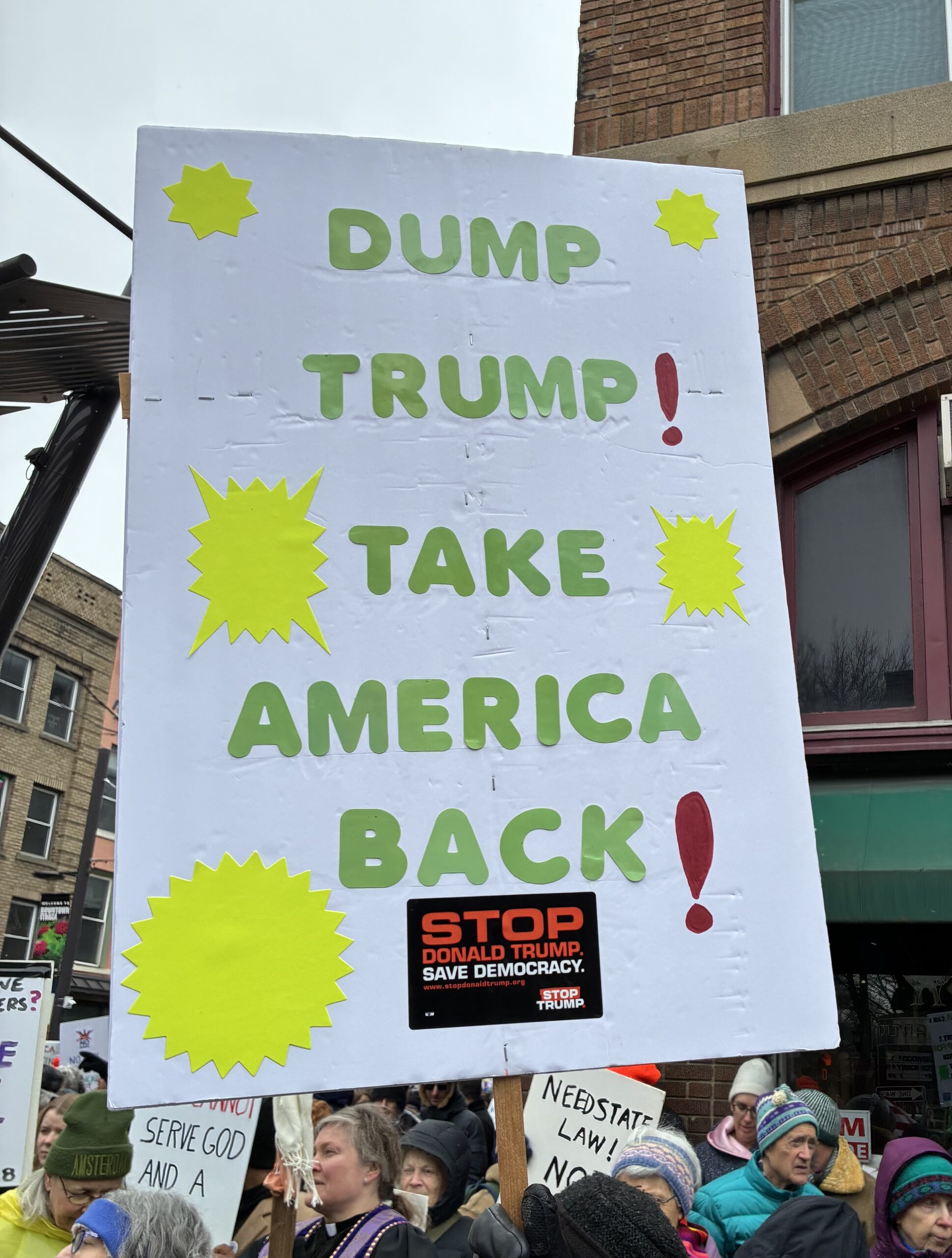
The opposition was, of course, to DT and his regime. But nowhere was HIS name spoken or did HIS image appear. It was all unstated, forbidden, but everyone knew what was going on. We were dancing to oppose a dictator and possibly save our lives, despite at the same time knowing that anyone who stood out too much, anyone who seemed too “different,” and especially anyone who took the role of leader could be “disappeared.”


I was standing a bit on the sidelines, occasionally talking with people, mostly watching; and looking much younger than I am now. One person I was watching was this older person, in their 80s or 90s, dressed in what traditionally was a woman’s clothes, yet in a sharper red. And they were dancing like a pro, with moves so individual they were shockingly in opposition to conforming and surrendering one’s freedom. I began to wonder if she would soon collapse and be taken out on a stretcher or just disappeared. And crazily, unbelievably, I was beginning to imagine letting loose like that, and dancing in ways I’ve never danced before. Would I then be disappeared? Would my health deteriorate? Or maybe, it was exactly dancing that made me feel young?


It’s remarkable that I had this dream the night after deciding to write a blog about a president that is so crazily, dangerously set on building displays to his ego. Tolerating any opposition to his ideas or any differences at all, or any policy that benefited the nation but not his own power and financial situation, was unthinkable, forbidden.


ABC News recently published a list of people attacked for defying him. It includes Democrats, Republicans, his former cabinet members, etc. The article could also include all the election workers, victims of Epstein’s crimes, tv hosts and entertainers, reporters, judges, and so many others who spoke out against him; or women alleging sexual misconduct, former employees suing him for nonpayment of wages, etc..


And his war against Iran– when DT claims he has brilliantly brought it to a conclusion, remember that he started it to begin with for no clearly justifiable reason.  Did he start it imagining he’d be glorified and thinking he would bring regime change to Iran as quickly as he subdued Venezuela? Did he start it to destroy Iran’s missile stockpile, end their nuclear capacity, or to help his friend Netanyahu? Or maybe he did it to reap profits from the war? Maybe it was a crazed whim? Or maybe, as some have alleged, it was to distract the nation from the persistent, increasing reports about his possible participation in Jeffrey Epstein abuses and crimes? His rationalizations kept changing.


His treaty or memorandum of understanding to end the war, is just an agreement to search for an agreement. And does it improve the situation in the Middle East? In an article in the Atlantic, national security scholar Tom Nichols wrote, “it is clear that Trump has failed to achieve every one of the goals he put forward for this war of choice, and now he is determined to deliver America’s capitulation as quickly as possible.” Historian Heather Cox Richardson agrees with Nichols. Iran is battered but stronger while we are strategically worse off than before the war.


Although the fighting will hopefully stop, Iran is now under an even more extremist regime than before, even more strongly in the grip of the Islamic Revolutionary Guard Corps. The Strait of Hormuz will hopefully, sometime be opened– but it will be administered by Iran and they can shut it down at any time. They still have the capacity to sponsor terrorism– and we have spent billions, depleted weapons supplies, disrupted alliances, and lives have been lost not only of our soldiers but civilians in the Middle East. NPR reported the war has increased ‘disquiet’ in the military and worsened our ability to retain troops. Moody’s has calculated the war cost taxpayers $100 billion & counting.


In terms of Iran’s nuclear capacity, Iran promises not to develop nuclear weapons. Promises promises. But clearly, we are worse off than before 2018. It was in 2018 that DT tore up President Obama’s treaty of 2015, which had been successfully working to limit Iran. Even now, Iran is nowhere near developing the bomb.


Senator Cassidy, Republican from Louisiana, called the war the “Worst foreign policy blunder in decades.”…


*To read the ending of the post, please go to The Good Men Project. Thank you.
Myths that Can Be Bought Are Never Ones to Live: Moods, Myths, and Emotions

I was visiting friends in the town of Woodstock, NY. I could feel the town not only in my memory but in my bones. It was that visceral. I’d been visiting there for years. And it wasn’t about the music festival. The visceral feeling I had was very different from drugs, sex, and rock ‘n’ roll. In1969, I was in Sierra Leone, West Africa, in the Peace Corps and didn’t attend the festival.


I did go to a festival a year or two later, to see Joe Cocker. I also went to Woodstock to stay in a Tibetan Buddhist Monastery for a few days. I went there to climb a mountain nearby, to visit a native American site, and a Zen Monastery. And then friends began moving to the area.


And now I notice that whenever I visit, or wherever I walk in the town, I am engulfed in a mood, and expectation. Except for when I see my friends, everywhere I look, everything I see—the mountain just out of town, the central square, the tourist shops, bookstores, art galleries are covered by some deep-seated sense of a reality originating somewhere beyond sight; it’s more of a walking myth than a touchable reality.


And it’s clear that nothing I touch can live up to that myth. That’s one nature of a mood, and myth. They don’t fit into normal boxes. A mood sets the tone for emotion and actions. According to psychologist and pioneer in the study of emotion and facial expression, Dr. Paul Ekman, moods “lower the threshold for arousing” emotions. They set us up, ready us. Think about a time you were in an irritable mood, for example, and how ready you were to get annoyed, or angry. We pick from the world whatever will call forth the anger, or depression, sadness, frustration, inadequacy, etc. and we become less willing and able to stop the emotion.


If we’re in a “good mood,” or we feel open, then euphoria, joy, insight all might come more readily. Emotions are more short-lived. Moods can go on for much longer, for hours, maybe on and off for years.


Ekman asks, what brings forth a mood? One source can be physiological changes. For example, lack of sleep or food can make our children, or us, cranky. Sometimes, lack of sleep can also do the opposite. We get out of bed in the morning, and our cat or dog sees us, rolls over onto its back, shows us it’s belly, and puts its paws behind its ears. And we start laughing crazily.


But Ekman also speaks of dense emotional experiences, ones of high intensity, and often repeated, as causing a mood. For example, someone insults us, repeatedly, and a mood forms around the person and the place we experience them. And if we don’t get the chance to fully respond to the communication or provocation, to honestly express our emotion or to fully experience what we needed, there’s more of a chance a mood might develop. And we no longer see the person and place as an immediate, alive presence. Our freedom of mind, of action can be narrowed or lost. I remember as a nine-year-old having to harden myself in preparation for rebuffing the efforts of another student to insult or make me look foolish and hide my fear. It didn’t take long before the sight of the schoolroom began to evoke a mood of threat.


And this fits the myth of Woodstock. My visits to monasteries were short. I never stayed for a long enough session to fully grasp the meaning of the place, its teachings and practices. The experience was just a hint, a mere taste. A bell was rung but never allowed to ring in me. And now I enter a store and have an expectation of finding a book that will reach deeply into my heart or provide me with what the monastery promised. A mood can narrow our mind or remind us of expanded visions we haven’t yet seen. Stores sell myths; but myths that can be bought are never ones to be lived.


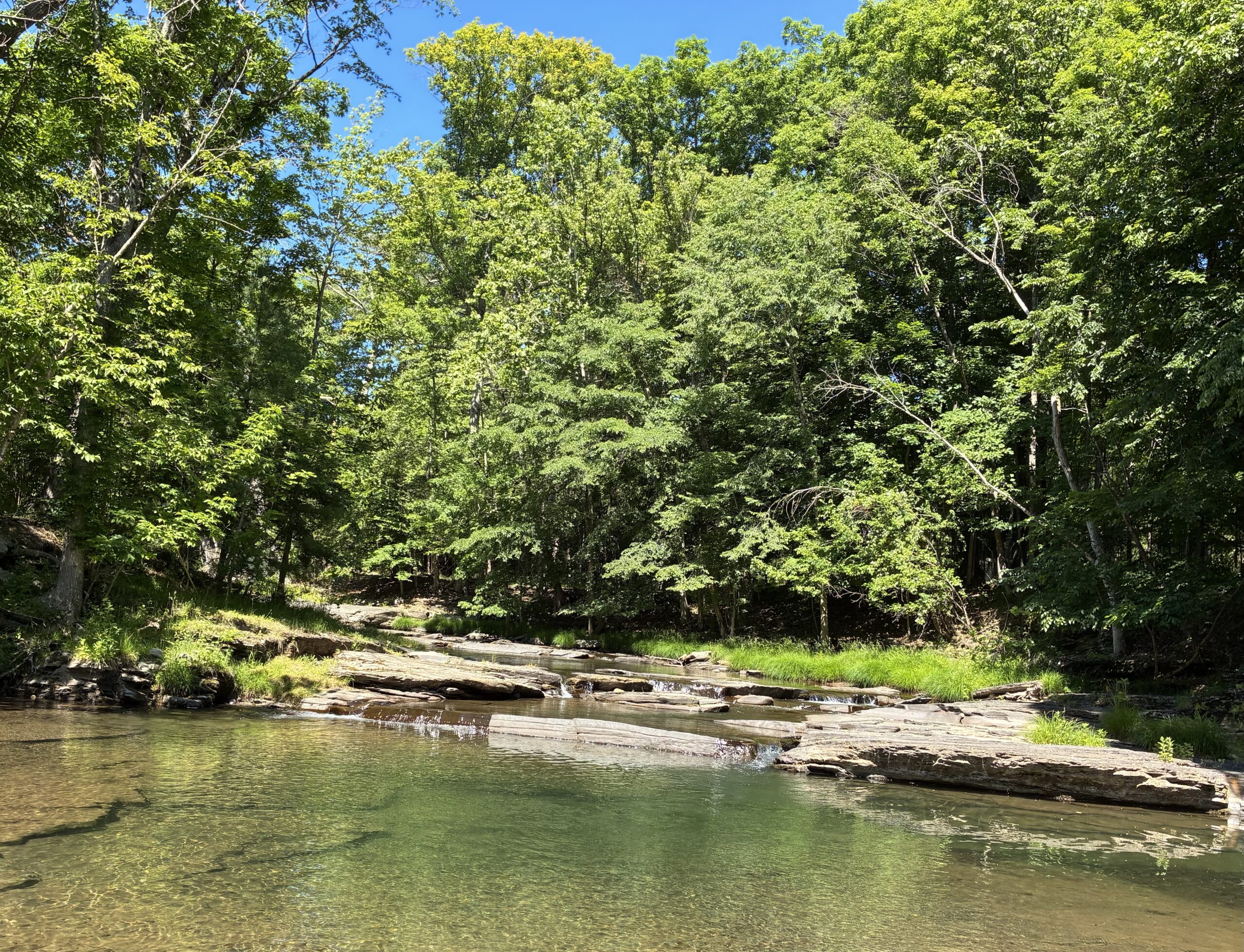
One day during our recent visit, my wife and friends went off shopping for flowers and I was alone. I went down to a stream in a wooded area, sat on a chair someone left on the rocks probably for just this purpose, and meditated. I started by counting my breaths; but once focused, I let go of the counting and just listened. Cars and trucks were passing by on a road nearby. There was this constant, steady, almost humming sound, which, as my mind quieted, was recognized as the stream speaking. And so many birds. So many I hadn’t heard until then and didn’t name until later– crows, robins, nuthatches, the harsh, loud voice of a pileated woodpecker. The quieter I was, the more I heard. And the less– no more myths or moods. No more getting lost in thoughts and memories….


*To read the whole post, please go to The Good Men Project.


When All that Remains of Me is A Deep and Gentle Laugh

It was about 9:00 am. I opened my eyes and got lost in colors and sounds, some of those sounds soon becoming voices. The voices were possibly from outside the house or inside, outside my head or inside a dream. They were just sounds, with a hint of something familiar. And I was just there, listening; listening to everything, and not wanting to do anything but lie there in the easy tired warmth that can come at the end of night.


I remember one time sitting with one of my cats. She gets so happy she almost talks, her words a language of cries, snorts, and kneading of the blanket. It’s a language I of course didn’t totally understand, but I get the drift. She also loves to rub noses, which always evokes a deep smile in me. I feel so full in her presence that all that remains of me is a deep and gentle laugh.


In both instances, I’m right there. But let’s say I want to tell someone about it. I get an urge to write this blog, for example, to talk about my funny cat or my taking refuge in the deep comfort of a warm morning, and I lose it. To write about her, I need to step out of my deep loving laugh as a snorting cat and look at me thinking about, and distinct from, her. But I guess writing can be another way to feel full or immersed, another sort of magic.


I was reading Zen master teacher Dainin Katagiri’s book, You Have to Say Something: Manifesting Zen Insight. He talked about there being a subtle feeling that exists before we decorate, expand, separate from or bury it with words. Before we move to approach, avoid, or stay still; before like, dislike, or feeling neutral arises. There’s a subtle state, he says, that we usually zoom right past. In that state, there’s “a oneness of our feeling with the object of our feeling.” A oneness with no sense of someone looking at it, no impulse to speak about it. His words shook me up and felt so alive and fresh. But as soon as I wrote them down

that life of meaning disappeared.


Back in February, I wrote a blog about re-discovering a leonine version of a Teddy Bear that I was given back when I was 5 or 6 and now lives on the back of the couch in the den of our home. That lion has seen so much of my life.


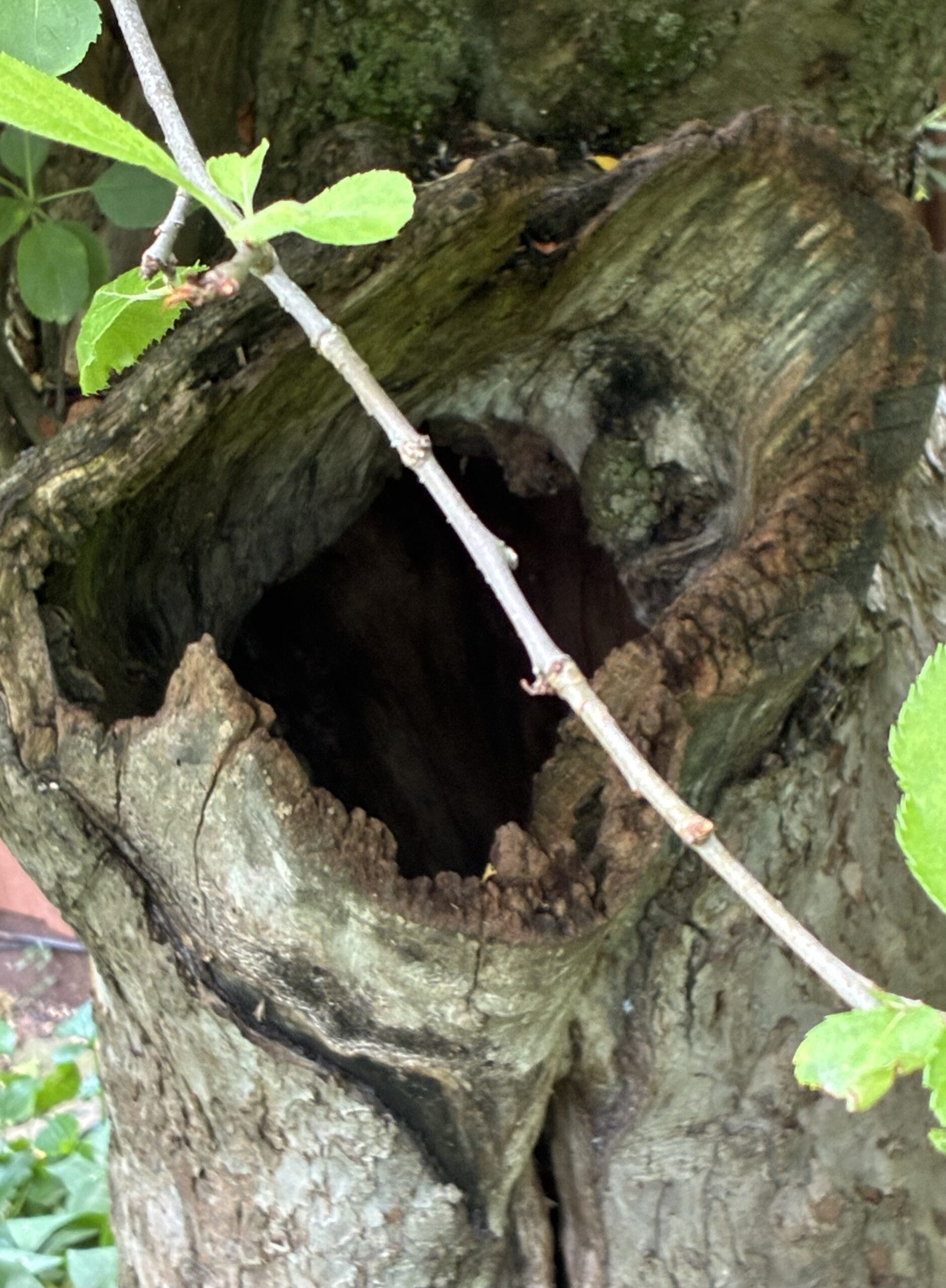
I look out my window at an apple tree that has been living outside our front door since we first built that door in 1972. That tree is so old, and so many limbs have fallen off, that what remains is a shell of what it once was, hollow, seemingly held up only by history and memories. And that tree goes back to other trees, a maple that had once lived in front of my ancestral home in Queens, NYC, back to when I was gifted with the lion. It goes back to pre-school, to a drawing of a tree that was used to formally teach me the word. It goes back to when I first spoke any word, probably MamaMama maybe being the root of all words. It goes back to ancient Sumeria and the roots of written language. It goes back to prehistoric caves like Lascaux in southern France and maybe the first symbolization. It goes back to the first humans or first hominids or first creatures to draw a breath. Or back maybe to the wind.


The tree isn’t me. Yet, without me and my wife and cats, who would know it, enjoy it, tell stories about it?  When I see it, a universe of me can appear….


*To read the whole article, please go to The Good Men Project: