When We Turn Reality into Myth: Supposed Mythical Beings Now Walk the Streets and Stop to Stare Us in the Face

In the past, it seemed that the mythical meanings of events were more subtle and hidden, but no more. They walk the streets with us and often stop to stare us in the face. Myth can mean a traditional, sacred, or universal story, a story of heroes and heroines, creator beings and destroyers⎼ a story revealing a more intuitive way of viewing life, an invisible realm that parallels our usual one. And it can also mean an untruth or false belief.


And today, our president illustrates both meanings. He has taken lies, corruption, a lust for power and vindictiveness against opponents to such historic levels he has created for himself an image of a being larger than human. Many recognize his behavior as that of a wannabe deity, a destroyer being walking the halls of our capital. But for too many others who follow him blindly, he’s an angel of vengeance.


But instead of this mythical being living only in story and legend, he’s very human and all too real. And what we, the rest of us, are called to do can feel like something only a hero could accomplish. But usually we don’t feel heroic; we feel like ordinary beings facing a reality that is extraordinarily unbelievable, frightening, and despicable.


For example, the DT administration is planning to destroy or abandon satellites that collect information about pollution and carbon build up in the atmosphere, as well as terminate the collection of weather data that collects vital information on hurricanes.


And why such enmity for something as basic as weather information? Why terminate the satellites unless the goal is to end scientific research into⎼ and proof of⎼ human-caused climate change? He’s blocking the availability of information that can be used to protect the environment and sustain human life on this planet. And instead, he’s empowering private entities and corporations to abuse the environment our lives depend on.


Politico reports that DT has stopped information from the Defense Meteorological Satellite Program from being distributed to users. This includes data on hurricanes that has been crucial in protecting people who live on the coast from dangerous weather conditions. Weather collection has greatly improved since Katrina, but DT’s actions can put that at risk, and put lives at risk. Will free weather reports and all regular weather satellites be destroyed next?


When I was teaching high school, students wanted me to not use the word ignorance. They disliked anything that sounded like bullying, abuse, being unfair; and calling someone ignorant can do just that. And I loved that concern by students. But ignorance can also serve a powerful descriptive purpose. The root ig means not, opposite of. And nore comes from the Latin gnarus, meaning aware or to know. Ignorance is not knowing, not-seeing what’s right there to see and know. It has a connotation of willful not-knowing.


In the past, ignorance was considered a detriment, even dangerous for a politician. Now, we have a president working to create a reign of ignorance, particularly about who he is. He’s pushing ignorance and greed over accurate knowledge and favoring the advancement of a few wealthy and politically powerful individuals over protecting the health and safety of all of us on this planet.


Unbelievably, instead of protecting our health, he’s directly undermining it….


*To read the whole piece, please go to The Good Men Project.

What Feeds The Waters of Heart: The Care We All Need

I woke up one recent Sunday morning with chest pain. As I got out of bed, the pain gradually grew until there was almost nothing else left in my mind and body but pain. Each breath was a question. Most of us know what’s it like when we have some physical ailment and don’t know the cause; and thus, we don’t know what to do about it. The not-knowing becomes an additional mountain of pain. We don’t know how serious our situation is. We don’t know if we should go to the ER. I would’ve called a doctor, but it was Sunday⎼ none were available. Was this IT? Was my life at stake? Could I die?


My wife and I were hesitant to go to the ER because we’d been there earlier in the week and had spent hours without getting any clear answers. But pain can overwhelm doubt and provide its own dictates. We went.


The drive was both horrible and hilarious. It was early in the morning. I wanted my wife to drive through stop signs and redlights. She wouldn’t. She said we’d get a ticket. I said if any cop stopped us, they’d escort us to the ER. I turned on the flashers. She turned them off. We laughed; we wanted to cry, or I did, but didn’t. It would hurt too much. I was never so glad to see the mechanical doors of the ER.


I had called the ER before leaving home, and maybe that helped get us in sooner. Still, it took hours before they could get a hint about what was going on with me and do anything at all to reduce the pain, let alone begin treatment. I wound up being admitted for 5 days. And this changed my whole perception of hospitals.


I’m lucky; I still have good health insurance from my former job. My room was on the fourth floor of a community hospital that overlooked a lake carved out of steep hills by ancient glaciers. At each different time of day, and differently each day, the quality of light changed. At 5:00 am, amidst the thrill of mutedly hearing through the thick walls so many birds greet the morning, the trees and hillsides appeared in the lake as cloudy representatives of themselves, vague mysterious hints of who they were. In the afternoon, maybe at 3:00 pm, the light was stark. The reflections, if there were any, were clear. They tricked my eyes; I could almost see the reflection as the reality.


Each day, I walked the halls as much as I could. And as I did so, I realized I was learning lessons I never anticipated. I was learning respect, for one thing. Not just an obvious respect, of not talking too loudly, not disturbing others at rest. But a respect for a shared humanity. This was a unique situation. All around me, the normally hidden was exposed. I heard people cry or shout out in pain. I heard buzzers ring for nurses. I heard a team of doctors explain to my roommate their diagnosis and need for possible life-saving surgery. Luckily, everything turned out fine. Pain and suffering were right there for all of us. Our mortality was right there. And it was accepted, let in, so it could be faced. So, it could be admitted.


And care, compassion. This, too, surrounded us. It was the core of the place, despite the profit motive, despite insurance company dictates, rigid procedures made to protect the hospital and caregivers at least as much as patients. Despite an often-formulaic education that made it difficult at times for doctors and nurses to see me, the individual human in the patient. Sometimes profession got in the way of avocation. But the compassion was there, with both doctors and nurses. Patients learn to care for others from the nurses, to care for each other. I had a roommate and after 2 days we were sharing phone numbers. When we care, our perception and thinking opens. We see more.


And I noticed something weird as I walked. My mind was in a way like the lake. Amidst all the pain, a pain that felt unendurable at times, there was this quiet base. Just as I could see the beauty of the lake even as I felt in myself confusion and fear, there was this base of sheer knowingness in everything perceived or thought. There was an awareness without pain. That felt as real, as immediate as life could get. That made everything possible, all of this, all of what was frightening, what was hopeful, and what was joyous.


And who knows how this happened, but in the morning of the second or third day at the hospital my wife was helping me wash and change clothes. I was trying to put on shorts, and for some reason I felt incredibly astonished that I had 2 legs. Can you believe it? I had 2 legs? And I started laughing. My wife thought I was going nuts and asked what was going on. I tried to explain about having two legs being so much fun. And that my shorts, too, had 2 openings for legs. A perfect fit. And this was the most amazing thing in the world. And then she, too started laughing, giggling crazily, which made it very difficult for me to get my shorts on. It was a breaking or waking point, maybe, for us in dealing with the whole situation.


And it wasn’t drugs laughing. Some might say I sounded like I was high on drugs. But for various reasons, I can’t take painkillers and don’t do recreational drugs. Maybe this was the high, the delight that naturally inhabits the waters of mind but which we don’t notice often enough. Maybe it was just being absurdly tired or feeling the absurdity of the situation. Maybe we both just needed a great laugh to relieve the great stress….


*To read the whole post, please go to The Good Men Project.

Entering the Darkest Time of Year, and the Yearning for Gifts of Light; Are There Any Gifts We Can Give Each Other to Help Us Survive the Coming Years?

Both politically and seasonally, we’re entering the darkest time of year for those of us in the northern hemisphere and the US. The winter solstice is this week, along with several other seasonal and spiritual holidays. And in the next year, next month, a new political reality arises, filled with so many unknowns and threats, threats that might convince us to physically or emotionally emigrate from the new reality in the US. So, are there any gifts we can give each other to help us survive the coming years? And to find the awareness, the strength to better perceive opportunities for appropriate action and better take care of ourselves and our loved ones?


I would like to suggest a different sort of holiday gift, a gift of resources, programs to listen to, books to read, different emotions to share to strengthen ourselves, our friends and others. The first is difficult right now for many of us⎼ gratitude. With so many threats and unknowns staring us in the face, we might ask what do we have to be grateful for?


I was driving home earlier in the week listening to Here and Now on NPR, and there was an interview with Monica Bartlett, Professor of Psychology of the Positive Emotion and Social Behavior Lab at Ganzaga University. She spoke about how gratitude can be healing in times when we’re frightened and feel isolated and powerless. We all share a negativity bias. We tend to think first about our safety, more about what might hurt us than what might uplift us. And this negativity just enhances our fear. In contrast, when we feel gratitude, we feel more powerful and capable. And when we care for others, it’s easier to feel cared for.


Professor Bartlett suggests practices like pausing near the end of the day and writing down 3 things we’re grateful for, no matter how small, and recognizing who we interacted with or why that event happened. This can include a person we know well, or the person at the supermarket who showed us where to find what we were looking for, or a pet. Their research showed such a simple practice highlights the connections between ourselves and others, the good others bring to our lives, and the power in relationships to better the world.


Then there’s compassion⎼ it’s such a powerful source for freeing ourselves of suffering. One day as I was meditating on compassion, by doing a Buddhist practice of taking a moment to stop what I’m doing, sit down in a quiet space, and saying to myself “may I be happy, may X be happy. May I be healthy, may X be healthy. May I be at peace, may X be at peace. May all beings be free of suffering.” And I just felt the breathing, in and out. And suddenly, my problems, worries, and plans stopped repeating themselves in my mind. There was a silence so deep no thoughts appeared, yet nothing was missing.


Compassion goes beyond empathy, to not only recognize the suffering of others, or myself, but a readiness to act to reduce that suffering. Meditation teacher Sharon Salzberg points out it’s the opposite of passivity. It readies us to act in recognition of our interdependence, our shared presence in the world, and for the benefit of all. Of doing whatever we feel ready to do, to help a neighbor in need, or to support or start a political action to help millions in need.


A third recommendation returns us to the healing power of a pet, or to the bond with or care for another being…


*To read the whole post, please go to The Good Men Project.

More Is Being Asked of Us Now Than Possibly Ever Before in Our Lives: We Strive, Not Yet Knowing How, Not Yet Knowing If We’ll Succeed. All We Know is the Need to Act

How do we read the signs that the world and our own hearts and minds are giving us? The universe doesn’t just text us one, clearly typed message, explaining all we’re facing. Would we even welcome such a message? Maybe we do get such messages sometimes and aren’t sure if we’re hallucinating it?


I’ve been reading Being-Time: A Practitioner’s Guide to Dogen’s Shobogenzo Uji, by Shinshu Roberts, and just started to alternate it with Seaglass: A Jungian Analyst’s Exploration of Suffering and Individuation, by Gilda Frantz. Dogen is a 13th Century Zen teacher and founder of one of the main schools of Japanese Buddhism. I usually read only 2-4 pages at a time, because each paragraph is like a puzzle requiring considerable reflection. But the beauty that can be discovered in doing so is immense. Frantz’s book was recommended by 2 Facebook friends. It’s been a remarkable find, of essays, personal stories, and interviews about facing the difficult in life and revealing the myths and motivations that drive us.


And yesterday, after reading a little in both books, a deep realization, frightening in its scope, grabbed my mind and challenged my emotions. Both books synchronistically seemed to be sending one message, a message of something being asked, no, demanded of me. Something more than I’ve already given, to the world, to myself. It was less a regret for something left undone than a glimpse into an opportunity⎼ if I could take it. Frightening in the risks involved, both in the doing or undoing.


There’s a sense of inevitability posed by life in these times, hidden between news reports and the sounds of rain. Between bare tree branches, deep gray clouds, and the feel of tension in my hands and shoulders. Between the ordinary, the known, and the extraordinary and unknown. And a question⎼ We know we must act. But how?


More is being asked of all of us than probably ever before in our lives. No matter how much I might want this not to be so, that is the reality. We must let go of so much of what’s normal to our lives so we can do what the times require of us. What our inner selves demand of us.


How do  we change our lives internally so we can respond skillfully to the fear DT incites and manipulates in us? To the assault on our values and humanity? How do we respond to his blatant assaults on our security as a people and a nation? To our health care? To our incomes? To threats of deporting immigrants of color, from Latin America? Threats to LGBTQ+? To anyone who opposes him? To the rule of law? How do we respond to the expanding climate and ecological crises?


How do I feel less the me isolated from the rest of us, and more of the rest of us in me? Doing so might not only reveal how to help others, and maybe help others realize what they, too, can do, but inspire or expose unseen depths in myself. I want to meditate even more than I do. To learn more than I know. To do more.


To help me do this, I plan to read poets and writers from Ukraine, Gaza, Israel, and the US, about how to face the horrors caused by one group of humans against others. Or read writers from the distant past, in ancient China when the social order had collapsed, or even in Ukraine or Eastern Europe, in the villages where my own family might have once lived⎼ so we can feel any horrors of life can be faced, and the strength in ourselves to act can be found….


*To read the whole article, please click on this link to The Good Men Project.

Looking Within as an Act of Defiance and Sanity: Don’t Make the Mistake of Strengthening Our Opponent Before We Fight Their Actions

Over Thanksgiving, I saw the movie Conclave with close friends. It was a wonderful film. Without giving up too much of the plot to those who haven’t seen it yet, one of my favorite scenes was a pivotal, impromptu speech by the Bishop of Kabul, responding to a previous Bishop who spoke about a supposed threat from Muslims and terrorists to Christianity. The Bishop of Kabul said;


What is it you think we’re fighting?

Do you think it’s those deluded men

who had carried out these terrible acts today?

No, my brother.


The thing you’re fighting is here…

inside each and every one of us…


The idea of the enemy within has a long history, not only in Christianity but Islam, Judaism, etc. It’s often referring, as the Bishop of Kabul did later in his speech, to feeling hate.


The phrase has also been used by politicians to serve their purpose of manipulating public opinion and public psychology with fear, anger, as well as hate. Joe McCarthy used the phrase to stir up fear and hatred of Communists, claiming without evidence “Commies” had infiltrated and were taking over our government. DT used the phrase to increase suspicion, fear, and hatred of brown and black immigrants, Democrats, and his other opponents.


I’d like to use the term in a slightly different way. I’d use it to describe what the fear of DT, misdirected by DT and others like him, might unleash in us. But ‘enemy’ might distort the issue. The fear is very real, but it can both undermine or enlighten us. When we view the emotion with compassion for all we’re going through, it can get us to look within as an act of defiance and sanity.


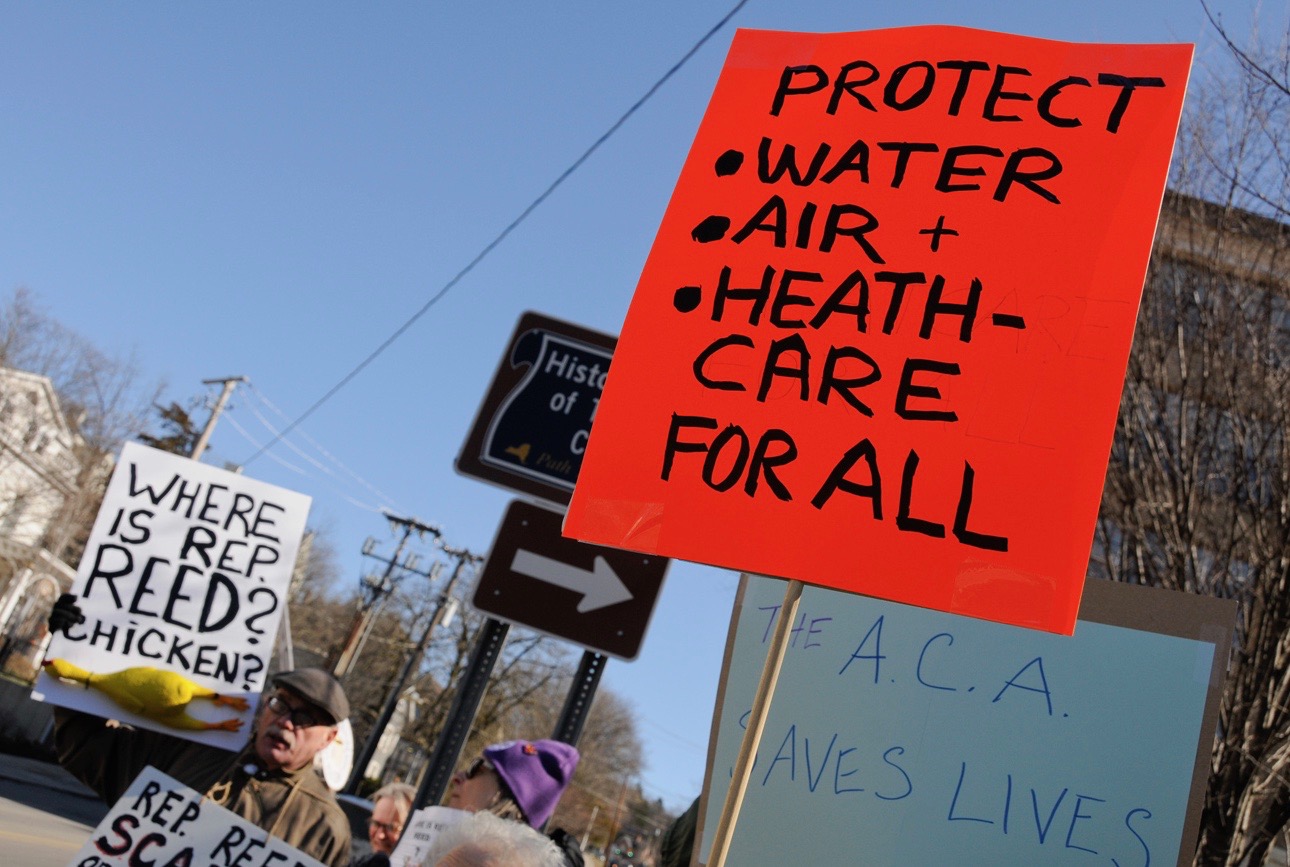
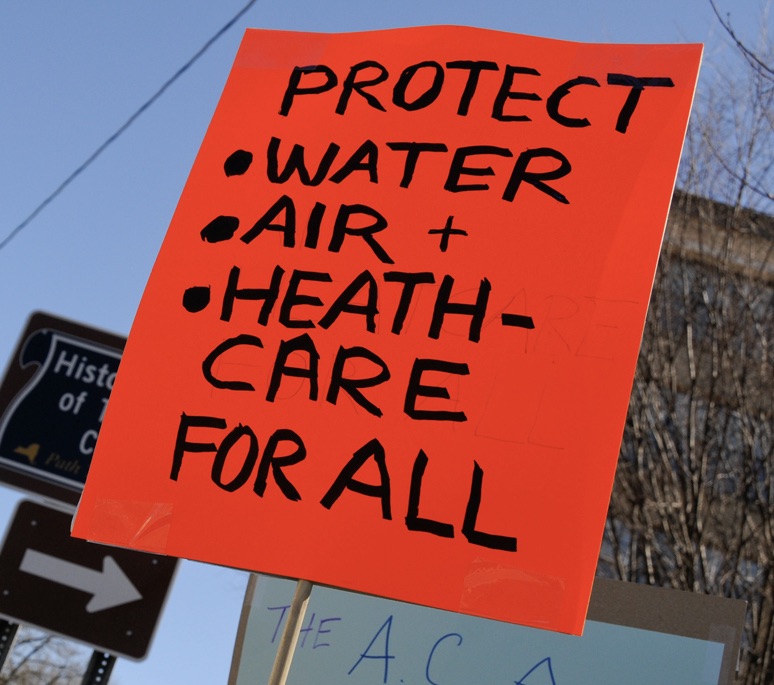
Most of us realize he threatens literally everything. Certainly, the environmental protections would go, which would not only undermine our health, our clean air and water, but undermine the future of humans and other species on our planet.


DT also threatens the rule of law, our right to vote, to speak out, make our own health care decisions, etc. His appointment first of Matt Gaetz and then Pam Bondi for Attorney General illustrates that he has chosen people not for competence or their care for the general welfare of all of us. He’s chosen those he knows will do his bidding, like dismantling the DOJ infrastructure and arresting his opponents. Once laws are made to serve one-man’s interests, the interests of the rest of us are dismissed. No longer could we rely on the law to address injustices of all kinds, including being deported for one’s race or ethnicity, or to address sexist policies, being ripped off financially, dangerous work conditions, etc.


Fear and confusion can create hopelessness and withdrawal. I’ve seen it in others and felt it in myself. We might want to turn off the news, or immigrate to another country or to another universe of distractions. And this might be become necessary for us. Some say, “there’s nothing I can do.” Others claim small actions are a waste of time. These responses, while understandable, can cede too much power to the would-be white nationalist dictator.


Actions like calling Congress to oppose DT’s cabinet picks or prevent  H.R. 9495⎼ the Stop Terror Financing and Tax Penalties on Hostages Act ⎼which would stop organizations that speak out and oppose him⎼ from passing in the Senate are necessary….


*To read the whole article, please go to The Good Men Project.

When We’ve Chased Ourselves from Our Home: Under Siege

Just yesterday, I was on my computer when I was tired. This is something I usually avoid. And there was an email labeled “scam alert.” My thought-brain screamed “fake.” Yet, as I said, I was tired. I opened it, regretted it immediately, deleted it, and became worried about possible malware. Then I was angry at myself for opening it and angry at the spam itself.


Every day, we all get so many scam emails, texts, or phone calls, or calls for donations or sales, things we just don’t want to interact with. And every year, it seems to get worse. We now need to erect a wall against our own phone, all communication devices, snail mail ⎼ so much wasted paper. Wasted time. So many businesses we interact with get hacked, so much of our information stolen. I won’t even go into social media. We need security on so many aspects of our lives, so many walls to put up and maintain, so much distancing.


And then there’s the news that can be so scary, of the climate emergency, of the threat to our right to vote, to job protections, to the right to control our own bodies and medical treatment. It can feel like we’re under siege. Being under siege, it’s difficult to feel comfortable, at home in ourselves, at home even in our home.


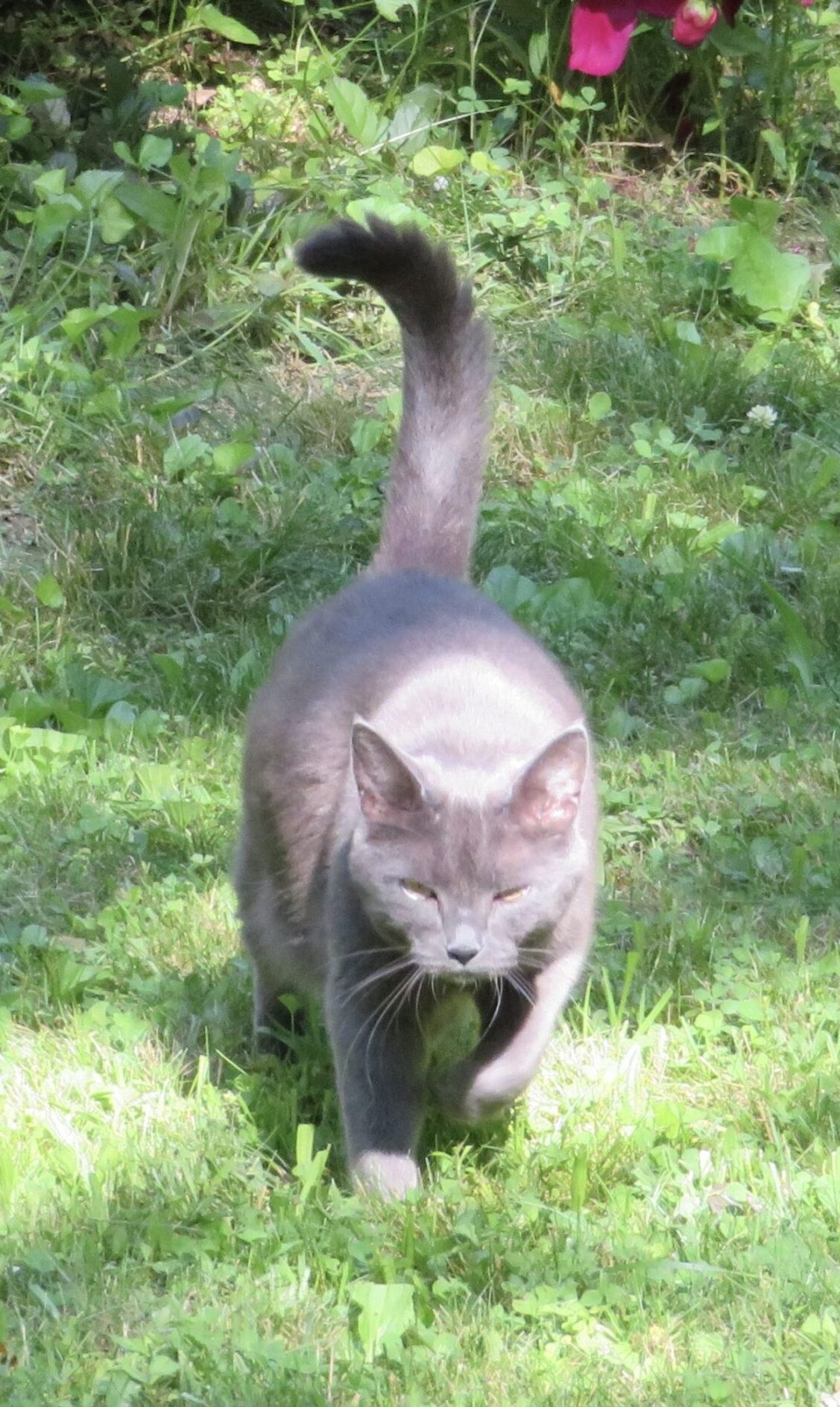
Yet earlier today, I remember watching one of my cats, Mikey, walking comfortably and with attention through the flower beds. I realized these beds, these flowers, and the trees around them, the stones and wind were his home. Not only our house, not even us, but all of it. Everything within his territory, at least, was home. Not just home but him. The borders of his territory were the borders of his skin.


We often suppress this border, this skin of place, by imagining our skin is our end⎼ and not a border that allows us to touch other borders and be embraced by other beings. We pay an enormous price for this suppression.


The American poet Robinson Jeffers wrote:

A severed hand

Is an ugly thing, and man dissevered from the earth

And stars and his history…

Often appears atrociously ugly.


Many humans have known the importance of place, indigenous cultures and others. I’ve been re-reading a book called Hunger Mountain: A Field Guide to Mind and Landscape, by the poet and translator of Chinese literature, David Hinton. Hinton says, “Things are themselves only as they belong to something more than themselves: I to we, we to earth, earth to planets and stars…” We recognize and become truly ourselves only with others, in whatever place, time, and universe we are in. We recognize the air we inhale is the air others exhale; we feel the streams of the earth as the veins of our bodies.


When I felt the fear from the possible malware embedded in the email, I at first didn’t want to deal with it. I knew intellectually that since I didn’t click on anything in the email itself⎼ and quickly turned off my computer, later changed my password and checked Malwarebytes⎼ there was little to fear. But still, some fear remained. And I wanted it gone. I wanted it out of my body and out of my mind….


*To read the whole article, please go to The Good Men Project.


Worried About Your Finances and Your Future? He’s Just So Incoherent, So Racist, and So Weird

This question can give me nightmares: how can people follow him? Economic matters, high costs, have been of such concern for so many of us. But which Presidential candidate might best help reduce these burdens? And which candidate would protect our vote, our power and rights so we could influence government policies to serve our needs? Wouldn’t that take someone who cares about the quality of regular people’s lives?


DT said the following on 7/26/24: “Christians, get out and vote, just this time. You won’t have to do it anymore…. [For in] four more years it will be fixed. It’ll be fine. You won’t have to vote anymore…” In other words, vote for me now, and you’ll never be able to vote again?


He said of V.P. Kamala Harris “She was Indian all the way, and then she became black.” And “She is a DEI hire.” As if a woman, or someone black just isn’t talented enough to earn on her own merit any important position, for example as a prosecutor, Senator, Vice President or President?


He even told his own nephew, whose son has a physical disability, “these people (with disabilities), all the expenses…they should just die.” And a few years later he literally told his nephew he should just let HIS OWN SON die because of his physical disabilities. Would this person care at all about the majority of us except to get our votes?


Commentator Brian Tyler Cohen added⎼ DT threw his own VP candidate under the bus by saying: You’re not voting for a VP candidate—you’re voting for me. This reminds me of how he treated his former VP, when he stood by watching the Jan. 6 insurrectionist mob chant “hang Mike Pence”? Only I am important. And maybe DT’s right to dismiss his new VP choice, who said in 2021, the nation is run by a bunch of “childless cat ladies,” who have no stake in America and are miserable at their own lives. America must go to war against the idea that women don’t have to have children. And: people without children are “psychotic,” “deranged.”


Over the last 5 years, many people have had to face awful choices due to high prices for purchasing a home, food, or other goods. But: Will a person who cares only for himself improve the economic situation for most of us if he ever became President again? Or: Would we be better off now if he had lost his influence once he had lost the 2020 election?


DT boasts about his great economy. From the distance of 4 years, the past might seem better than the present. We might forget the harmful chaos of the DT administration. And who really benefitted, especially in the long run, from his economic policies? Did his economy help cause the pain many of us now feel?


The only big economic legislation he helped pass was the 2017 tax act, which heavily favored the rich. “As a share of after-tax income, tax cuts at the top — for both households in the top 1 percent and the top 5 percent — are more than triple the total value of the tax cuts received for people with incomes in the bottom 60 percent.[2]Most of us had a temporary tax cut; corporations (and thus rich executives) had a permanent one, from 35% to 21%. As a result, government income was greatly reduced, and a heavily increasing debt was created.


In testimony to The Senate Committee on Budget and Policy Priorities, Samantha Jacoby, a tax and legal analyst, said:

Cutting corporate taxes costs significant revenue, and evidence is sorely lacking that the benefits have trickled down. Executives, disproportionately wealthy corporate shareholders, and highly paid employees have reaped virtually all the economic gains from the corporate rate cuts, research suggests.

With less money going from the rich to the government, the rest of us pay more, for schooling, to maintain infrastructure, to finance health and science organizations, for the military, etc. By 2019, DT was leading the nation into a total downfall that had begun even before the pandemic….


*To read the whole article, please go to The Good Men Project.

If 6th Graders Can Learn to Do This, Why Not the Rest of Us, and Society?

There are moments in life when we’re given an opportunity to participate in something special, a once in a lifetime moment.  Or maybe, it’s an opportunity to realize that every moment can be a unique, once-in-a-life moment.


This past weekend was the 50th Anniversary Reunion of the Lehman Alternative Community School {LACS] where I taught for 27 years. It’s a school that gives students, and it gave me, the opportunity to figure out who we were. For me, it was where I spent many of the best years of my professional life. It provided the chance to learn how all the disparate aspects of my life made sense and showed me how to pull all those aspects together. Just when I needed it most, and maybe when the school most needed me, we found each other.


The event began Friday night with a meet and greet dinner. Saturday, we gathered in the gym for welcome activities, photos, a talk from all 4 principals of the school⎼ the one who founded the school and led it for 30 years, and then the 3 principals who followed him.


Then there were school tours, art shows, and workshops; examples included The Seeds of Pedagogy, Climate Activism, Work in the Garden, etc. And the one I helped plan, on how our experiences in theatre classes and productions at the school and elsewhere empowered our lives.


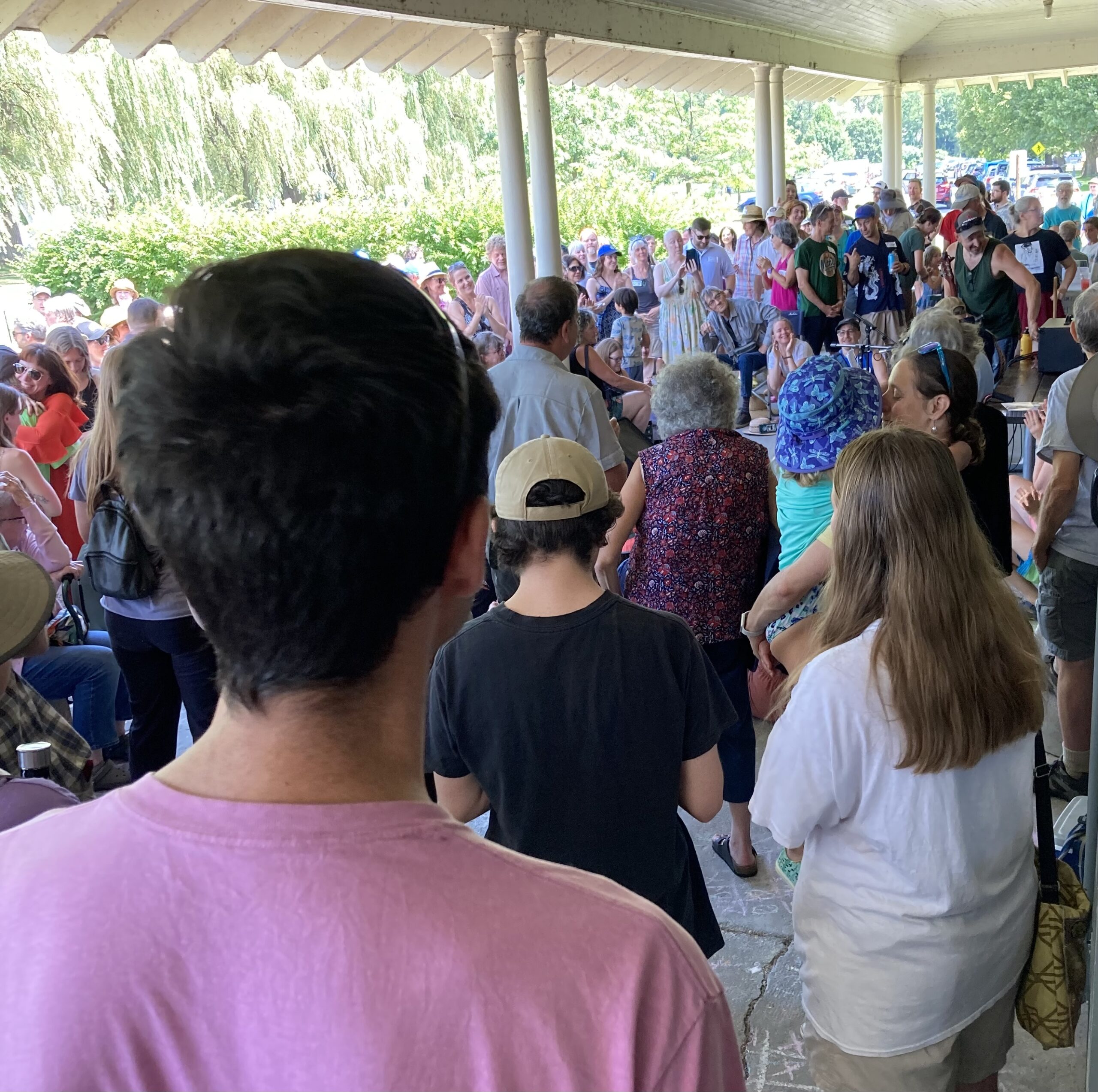
On Saturday afternoon, a movie on the school was shown; there were meet ups for different groups, and an All-School Meeting was held. At night, a talent show hosted by graduates. And on Sunday, a lunch together at a park⎼ that nobody wanted to end until we were all exhausted.


The theatre workshop was a panel of graduates discussing two questions:

How has theatre helped you in your life?

What has been your experience pursuing your passions and exploring your career since leaving the school?

The panelists covered almost 45 years of our history. The moderator was a contemporary senior. 4 of the panelists were theatre professionals or studying in college to be one. The 5th used their theatre experience in their corporate career.


I had few coherent images of how the panel might turn out, just dreams and wishes. But the reality exceeded the dreams. The event was a testament to the profound possibilities that can occur when any group, certainly any group of young people, are trusted and given the opportunity, guidance, and support to openly be themselves⎼ and are encouraged to think deeply about the real issues of their lives and the world.


I was totally engaged with stories by graduates about how theatre, and the school in general, shaped and benefitted them, including how to face adversity and pain. There were stories about how theatre prepared one panelist to testify to congress and directly face all the giant cameras focused on them. Another panelist discussed how their experiences at the school showed them how to love auditions and be successful in movies and tv. Another talked about how it prepared them not only to direct theatre productions in Manhattan, but also to teach acting to college students. Or to follow their hearts and act to benefit others and society in general. An audience member, who is a medical examiner in New York City, shared how theatre prepared them to testify in trials.


Democratic decision-making is at the heart of the school….


*To read the whole article, please go to The Good Men Project.
Healing Divisions, Both in Ourselves and With Others: The Brittle Weakness Exposed by Not Compromising

There’s the old, oft-repeated story, that if frogs are placed in a pot of water that is gradually heated, they will not realize the danger of eventually being boiled alive until it’s too late. However, says psychologist and science journalist Adam Grant, frogs will leap out as soon as they sense the heat. But we human beings are feeling the increasingly hotter world temperatures caused by climate change but are not leaping out and are not doing all we can to turn the heat off.


Maybe frogs are more intelligent than humans. Or maybe we are just too good at imagining reality as being other than it is?  At creating “alternate facts” and diversions? Or are too many of us just afraid of change? Or too traumatized?


How do we loosen the boundaries in ourselves? How do we let go of rigid ideas of who we are or must be or of what is real? And how do we help others do the same?


One of the biggest obstacles to changing anyone else’s mind, or our own, is realizing not only it can be done but it’s happening all the time. For example, before 2012, the country was opposed to gay marriage. In 2013, the majority supported it. In 2015, the Supreme Court struck down all state bans on same sex marriage.


Another science journalist, David McRaney, in his book How Minds Change: The Surprising Science of Belief, Opinion, and Persuasion, argues we evolved to work to consensus, to helpful adaptation. But it can happen in punctuated spurts, times of great argument and division and no clear change, then a sudden burst of change. Hopefully, we’re near such an evolutionary adaptation now.


And lately, I’ve found in myself this same resistance to facing people with rigidly held opposing ideas. It seems impossible to reach or even talk with those who disagree with me about climate change, or the “Big Lie,” for example. With the global earth and ocean temperatures rapidly reaching such high levels, the increasing number of dangerous weather events, wildfires, droughts, and floods all make climate change seem so obvious. And I saw the 1/6 attempted coup and the big lie enacted live on national tv. It just feels like what seems so clear to me should not be so hard for others to see.


But part of that difficulty comes from the fact that for all of us, our beliefs and even rationally constructed understandings of the world are the ground our lives stand on⎼ or appear to stand on. To question those views can feel like we’re washing away the ground under our feet; it can feel like abandoning our sense of ourselves.


In Think Again: The Power of Knowing What You Don’t Know,  Grant points out we often prefer the “comfort of conviction over the discomfort of doubt.” We resist rethinking, or talking with those with different views, not only because of the time and energy required, but because it would mean questioning ourselves. Such questioning might add more unpredictability to an already unpredictable, often threatening world. We need to recognize that what we believe is not who we are. We’re a universe infinitely larger than our worst opinions. It takes courage, not only to face those with diametrically opposing beliefs, but to unlearn what we believe, or think is true.


Especially now, it’s become difficult to change our minds. It can even be dangerous. Politically, acts mislabeled as flip-flopping are considered by many cowardice, or a sin….


*To read the whole article, please go to The Good Men Project.
Are We All Just Trying to Figure It Out? Changing Hurtful Habits

In Mary Oliver’s spectacular poem, The Summer Day, she asks,


“…What is it you plan to do

With your one wild and precious life.”


Of course, for some, life is more frightening than precious. But her evocation of such a spectacular day is so visceral and truthful.


And maybe we’re all always trying to figure this out, in our own ways. It’s certainly a question as old as humanity, as old as self-reflecting awareness. What can or what must we do with our lives?  Who or what are we? How can we or must we respond to a situation, to just waking up or going to work or school⎼ or to the threats that loom over all of us? Like the threat from those who are trying to impose a white nationalist dictatorship on all of us? The threat of the climate emergency, from wars, and who knows what else? Every moment the question of Who are we arises. We create ourselves through our answers to this question. And for most of us, our answers change.


Mary Oliver talks about attention, deep attention, as she rolls in the grass. As she feels herself as the grass or the creatures around her. And maybe this is one thing for all of us to do. We might let ourselves simply be with as much of what’s around us as feels right⎼ grass, trees, streams, and other living beings. This is one way to help save it, or them. To get us to care deeply enough to take action to save it, or us.


Did you hear that sound? The air disturbed by a moving car? The cough-talking of a raven? That peeper? That sparrow? That raven is cough talking not only the beauty of the day, but the grief it feels over the depleted air. Do you hear that sparrow? It’s not only calling its mate. It’s calling out in grief over the diminishing food resources it can find to feed its children.


I notice that when I regret something I did or didn’t do, maybe I misunderstood something, or treated someone unfairly, and I might call myself names. Wonder how I could ever be so mistaken. And this hurts. I might even imagine that mistake is frozen in time⎼ that I’m frozen in time, merely a memorial to a mistake. And that I can’t change or free myself from it. We might even try to blame someone or something else for what we’ve done so we no longer feel the pain.


Why do we do this? It’s such a weird way of thinking about ourselves and our lives, isn’t it? So distorted and inaccurate. If instead we listen deeply to this self-talk and imagining and go beyond it, not get stuck in it, so much might be revealed. Recognizing a mistake is the first step in correcting it. It can be a growth of awareness if we just listen mindfully and take it and our response as a lesson.


We might do the same anytime we look at ourselves….


*To read the whole article, please click on this link to The Good Men Project.