Biden v DT: What is the REAL Debate? Only Action by All or Enough of Us Can Save Us

Even before a word was uttered, it was difficult to believe what we saw. So much hype. So many emotions. So many watching. So much on the line.


When he first emerged, I couldn’t quite read DT. He seemed a bit unsteady but determined. President Biden looked stiff, like he was fighting something internally.  With the first question, he hesitated, couldn’t get his words out clearly. With his stumbling, it seemed, at first, that I was witnessing the destruction of our future.


At the end, a commentator on MSNBC, as well as former Obama campaign strategist David Plouffe, called it “kind of a Defcon 1 moment.” The fate of democracy, this election, had reached a threat level of DEFCON 1. Some called for Biden to step aside.


Meanwhile, columnist Scott Dworkin said Biden won the debate by a landslide and DT should’ve stayed home. He had good reasons to say so, but a landslide? No, or at least not at first look.


While Biden was giving his first, halting, almost indecipherable response, looking like he had a cold or the flu, DT seemed to be smirking. Like he had caught the opponent he had long dreamed of. Like he had his enemy in a trap and was salivating at the thought of attack. And attack he did. That was all he did all night. Attack. He showed he was good at attacking. But we all knew that.


He showed that he was just familiar enough with truth to know how to fashion the most outrageous lies. He knew he was a criminal, so he called President Biden a criminal. He knew he was an incompetent President, so he accused Biden of being one. He knew he disparaged soldiers and the military as “suckers and losers”; he knew he had said of Senator John McCain, a captured war hero, “He’s not a war hero…I like people who weren’t captured.” So, at the debate he denied calling soldiers “suckers and losers,” and attacked Biden’s use of the military.


In contrast with Biden, who shows empathy and concern for others, DT cares almost nothing about anyone but himself. So, in the debate he said he had a gigantic heart. Come on. He knew he struggled with mental acuity, so he claimed he had passed competency tests. Look at me, the genius. The genius who avoided more questions than he answered. A genius who had sacrificed millions to COVID through his malignant incompetence and lies.


A genius who used lines modeled on or borrowed from Hitler. A genius who pushed tax cuts to the rich, calling them a tax cut for all. But it resulted in a tremendous increase in the debt, and a tremendous shift of wealth and power to the rich, leaving the rest of us to pick up the bills. A genius at deception, at lies, yes.


In fact, the section of the debate on the economy was, according to Dworkin and others, one of Biden’s best moments. “There was no inflation when I became president,” Joe Biden said. “You know why? The economy was flat on its back. He decimated the economy. Absolutely decimated the economy. That is why there was no inflation at the time. There were no jobs.” Biden mentioned DT’s new tax plan for the rich which would, according to most economists, cripple our economy and raise the de facto tax burden for 99% of us up to $8300, while reducing the burden on the superrich….


*To read the whole article, please go to The Good Men Project.

The Conversation that Arises Out of Everything: What We Feed in Ourselves Lives in Ourselves

When a conversation begins in our mind, what do we do? When we respond to such a conversation by just listening, wondering, then letting it go, we learn from it and it usually passes. When we talk back, or hold onto it, the conversation continues. Even if we step back from it for a while, it carries on someplace in us. What we feed, lives.


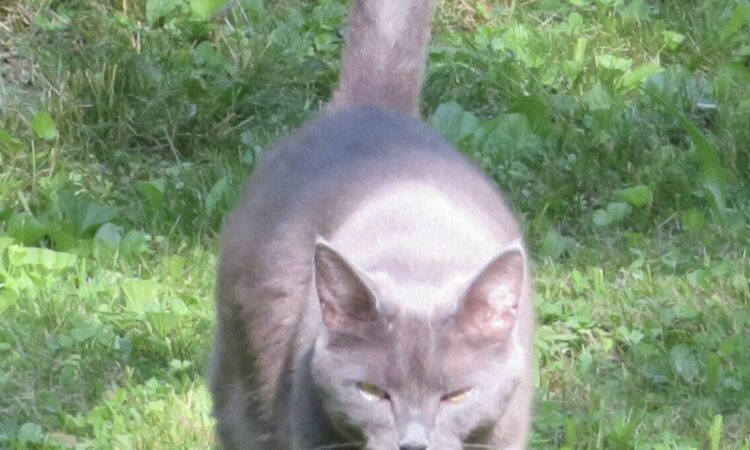
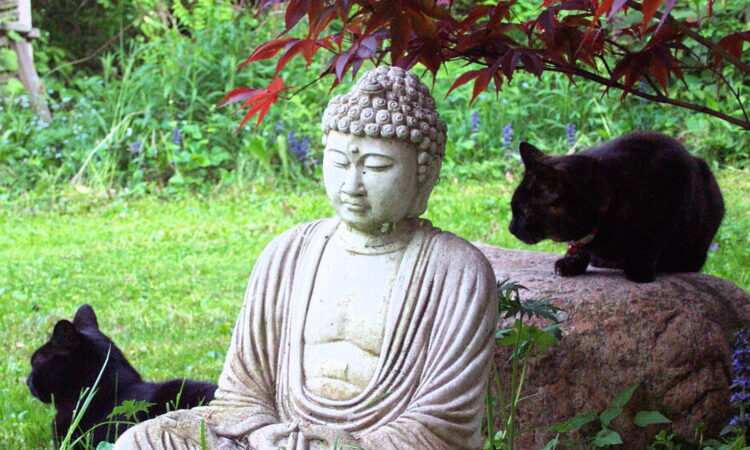
A feral cat has lived in our neighborhood for at least 6 months. For months, he kept coming to our house. He would show up at different doors of our home and call to us. He would hang out with one of our cats sometimes, or at least not get in a fight. But if we’d try to get close to him, or even open the door when he was there, and he’d run quickly away. He’d never let us close.


Then one day, my wife gave it food, despite knowing the likely consequences. It was just too painful to hear him cry or see his need. Then a few days later, she did it again. The cat appeared more often, but still ran when we opened a door and roamed without us seeing him for hours or days. Then my wife did it again. And then every day. Then twice a day. Then he let her touch him. Then he let me pet him. And now? Now he acts like he’s ours. He follows us around or hangs out by the front door on our deck, looks in the kitchen window with pleading eyes, and dreams of us taking him in.


It’s the same with the content of our mind. What we feed becomes us, or “ours.”


The painful follow up with the cat is that we took him to the ASPCA, who vaccinated and neutered him, but wouldn’t take him in for adoption; they were too full. We next took him to our vet, for tests and further treatment. It turns out he has feline AIDS. Now, we must figure out what to do next. We have two other cats, who are indoor-outdoor. Even though feline AIDS is not easily transmissible, and humans are safe from it, there’s still a chance he might infect our other pets. In fact, our vet said that if we took in the stray, infection would be inevitable. Plus, he would need to live only indoors so he doesn’t spread the disease or get injured himself.


He must’ve had a home, once. Did they kick him out of their home and cut him from their heart? Or did they just run out of money to care for him? I wonder if they even knew he was sick and were afraid of, or didn’t want to face, a cat with AIDS?


What we try to ignore or cut from our hearts stays with us. The cat might be physically gone for this person. But the memory? The pain? The guilt? Cutting out is just another and more harmful form of feeding. It’s feeding what psychologist Carl Jung called our shadow, the part of our self that we deny, won’t or can’t acknowledge and try to project onto others but carry with us as a weight. To let go proficiently, we must do it with awareness, care, compassion, even love. What we feed in us becomes us.


I have to say that hearing that the cat had AIDS hurt so much….


*To read the whole article, please go to The Good Men Project.

A Convicted Felon, Finally: When the Language of Democracy is Used to Destroy Democracy, Or the Language of Legal Matters is Used to Destroy the Rule of Law

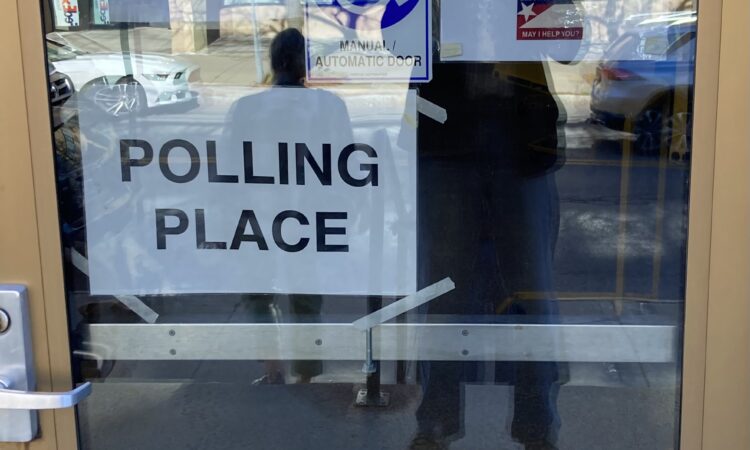
It’s been almost 2 weeks, and I’m still amazed to know DT was convicted, and so quickly and definitively by the jury. I heard the news just as I was worrying about the possible effects of a not guilty verdict. What a relief!


Yet, it was disturbing to hear GOP politicians continue to or even increase their desperate attempts to defend him from his conviction. Who knows what chaos and instability they might yet create? They echo DT’s baseless claim of a justice system “rigged” against him and the GOP, despite the blatant example of Hunter Biden’s guilty verdict being announced less than 2 weeks after DT was convicted. They do this despite the fact DT was given such special treatment, and treated so gingerly, and fairly, with breaks and delays that no one else would ever be given.


During the trial and afterwards, the GOP who tried to protect him did not spend much time presenting evidence of his innocence or pressuring him to testify in his own defense. Instead, they focused on attacking, seeking vengeance against anyone who tried to hold him responsible. Many GOP either lied about or attacked the justice system itself, the judge, his family, witnesses for the prosecution; and now they’re going after the jurors. One pro-DT forum accused Judge Merchan of treason and suggested that he should be hanged.


DT’s followers just revealed a blind obedience to their leader and a craving for power, calling for politically motivated investigations of Democrats. They cover their own weaponization of government (for example, using the power to investigate supposed wrongdoing by House committees) by accusing others of weaponization. For over a year they searched to find, or to create, something illegal to accuse President Biden of doing; and they found nothing. They recently went after Attorney General Merrick Garland, and for two years, they pursued Dr. Fauci, and they looked foolish in the face of witness testimony.


These GOP do this not only for retribution, but to undermine the rule of law itself. They want to hide the facts of this obviously fair jury trial behind clouds of distortions or lies. Maybe they hope to make this fair trial seem as suspect as their own investigations.


I should be inured by such acts by now, after 8 years of hearing DT and his followers spout ridiculous and malicious claims. On the street, they can get away with lying or saying almost anything that pops into their heads. In the courtroom, to say anything they must first meet a burden of proof.


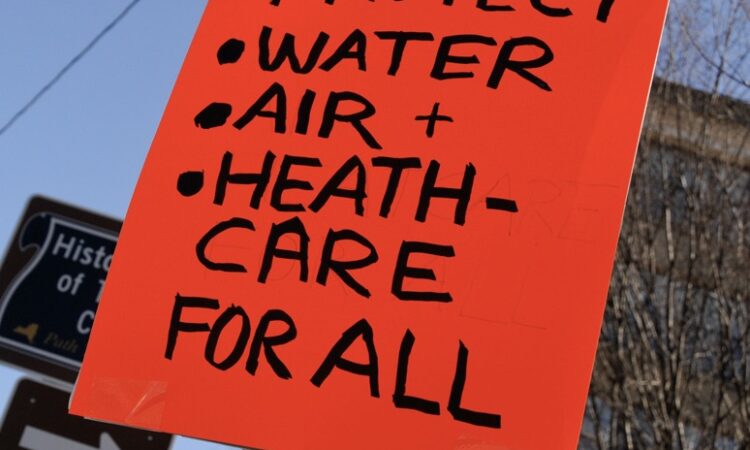
Each of us who cares about having the vote⎼ or having the freedom and right to speak our minds⎼ the right to control our own healthcare, our own bodies⎼ the right to clean air and water and a livable planet⎼ the right to have free public education, not enforced religious indoctrination⎼ the right to have a jury of our peers and to be presumed innocent unless proven otherwise, instead of being presumed guilty unless we support a DT dictatorship⎼ each of us needs to do all we can to speak up and get out the vote in November if we want to stop the DT/GOP from taking all of this and more from us.


No matter how compassionate we are or try to be, it can be difficult to even look at him….


*To read the whole article, please use this link to The Good Men Project.

Aging Isn’t an Illness to Recover From: Lowering Our Resistance to Living with Kindness

As I get older, I realize the images and expectations I once held of “old” people were distorted. We are not those images. I can do so much more now at 65, 75 and older than I once expected I could do. And I sort of laugh gleefully. Aging is a more complex, engaging experience than I ever realized before.


The same applies to facing death. Our culture has a prohibition against speaking openly about the subject, which can be so damaging and isolating to us all.


I once imagined being older was a time of increasing feebleness or diminished capacities. That people spent more time looking backwards than forwards. And that except for maybe having more “free time,” there was nothing positive about it. A popular meme was “don’t trust anyone over thirty” ⎼ until my whole generation was way over thirty. I’ve found there’s plenty of looking back, but there’s even more of an appreciation of each moment now.


It’s true, however, that when I was younger, I might see a doctor once a year, at most. Lately, it’s almost every week. A frequent question that arises when I feel pain or physically “off” in some way, is whether the symptom is due to “normal aging,” or something else. In the past, when I was injured or developed some medical condition, I approached it as a problem to solve. Bodies could usually recover, injuries usually heal. But now, ankle or hand pain, for example, doesn’t heal as quickly as it once did, or at all.


Aging isn’t an illness to recover from. But our attitude or understanding of it is another story. We hopefully re-learn daily who we are. We re-learn what change means, what living means, that living is change. To even breathe we change, every second, taking in, letting go.


And as we get older, so many of those we know leave the world before us. I remember my father, who lived to be exactly 96.5, saying, “I’m the last of my friends, and the last of my relatives from my generation.” There’s an awful pain and loneliness in this. In each friend or loved one’s death we can feel friendship dying in us. We can feel loving is dying; loving is being vulnerable. To love is to make ourselves vulnerable to loss, yet we do it anyway. Dying is there in the loving itself; the two are almost indistinguishable.


So, every once and awhile now, I look up and see the reality of death getting closer. I can’t claim I’ve accepted it. Surprisingly, it doesn’t depress me, despite the moments when I experience intense fear. Or when I realize everything beyond what I can see in front of me right now, beyond what anyone can see, is an unknown we haven’t yet learned how to embrace or face. Maybe death is there as a sign, or a reminder, a message from reality.


And this reality touches and hopefully improves my relationship with everyone, with good friends and relatives, and especially my wife. My wife and I have been together for so many years, and the commitment to each other is as real, as clear as anything could be. As wonderful. As present. There is less judgment. Less impulse to distance. Just feeling.


Yet, different ways to trick myself into ignoring the reality of death still occasionally leap into mind….


*To read the whole article, please go to The Good Men Project.

Healing Divisions, Both in Ourselves and With Others: The Brittle Weakness Exposed by Not Compromising

There’s the old, oft-repeated story, that if frogs are placed in a pot of water that is gradually heated, they will not realize the danger of eventually being boiled alive until it’s too late. However, says psychologist and science journalist Adam Grant, frogs will leap out as soon as they sense the heat. But we human beings are feeling the increasingly hotter world temperatures caused by climate change but are not leaping out and are not doing all we can to turn the heat off.


Maybe frogs are more intelligent than humans. Or maybe we are just too good at imagining reality as being other than it is?  At creating “alternate facts” and diversions? Or are too many of us just afraid of change? Or too traumatized?


How do we loosen the boundaries in ourselves? How do we let go of rigid ideas of who we are or must be or of what is real? And how do we help others do the same?


One of the biggest obstacles to changing anyone else’s mind, or our own, is realizing not only it can be done but it’s happening all the time. For example, before 2012, the country was opposed to gay marriage. In 2013, the majority supported it. In 2015, the Supreme Court struck down all state bans on same sex marriage.


Another science journalist, David McRaney, in his book How Minds Change: The Surprising Science of Belief, Opinion, and Persuasion, argues we evolved to work to consensus, to helpful adaptation. But it can happen in punctuated spurts, times of great argument and division and no clear change, then a sudden burst of change. Hopefully, we’re near such an evolutionary adaptation now.


And lately, I’ve found in myself this same resistance to facing people with rigidly held opposing ideas. It seems impossible to reach or even talk with those who disagree with me about climate change, or the “Big Lie,” for example. With the global earth and ocean temperatures rapidly reaching such high levels, the increasing number of dangerous weather events, wildfires, droughts, and floods all make climate change seem so obvious. And I saw the 1/6 attempted coup and the big lie enacted live on national tv. It just feels like what seems so clear to me should not be so hard for others to see.


But part of that difficulty comes from the fact that for all of us, our beliefs and even rationally constructed understandings of the world are the ground our lives stand on⎼ or appear to stand on. To question those views can feel like we’re washing away the ground under our feet; it can feel like abandoning our sense of ourselves.


In Think Again: The Power of Knowing What You Don’t Know,  Grant points out we often prefer the “comfort of conviction over the discomfort of doubt.” We resist rethinking, or talking with those with different views, not only because of the time and energy required, but because it would mean questioning ourselves. Such questioning might add more unpredictability to an already unpredictable, often threatening world. We need to recognize that what we believe is not who we are. We’re a universe infinitely larger than our worst opinions. It takes courage, not only to face those with diametrically opposing beliefs, but to unlearn what we believe, or think is true.


Especially now, it’s become difficult to change our minds. It can even be dangerous. Politically, acts mislabeled as flip-flopping are considered by many cowardice, or a sin….


*To read the whole article, please go to The Good Men Project.

Are We All Just Trying to Figure It Out? Changing Hurtful Habits

In Mary Oliver’s spectacular poem, The Summer Day, she asks,


“…What is it you plan to do

With your one wild and precious life.”


Of course, for some, life is more frightening than precious. But her evocation of such a spectacular day is so visceral and truthful.


And maybe we’re all always trying to figure this out, in our own ways. It’s certainly a question as old as humanity, as old as self-reflecting awareness. What can or what must we do with our lives?  Who or what are we? How can we or must we respond to a situation, to just waking up or going to work or school⎼ or to the threats that loom over all of us? Like the threat from those who are trying to impose a white nationalist dictatorship on all of us? The threat of the climate emergency, from wars, and who knows what else? Every moment the question of Who are we arises. We create ourselves through our answers to this question. And for most of us, our answers change.


Mary Oliver talks about attention, deep attention, as she rolls in the grass. As she feels herself as the grass or the creatures around her. And maybe this is one thing for all of us to do. We might let ourselves simply be with as much of what’s around us as feels right⎼ grass, trees, streams, and other living beings. This is one way to help save it, or them. To get us to care deeply enough to take action to save it, or us.


Did you hear that sound? The air disturbed by a moving car? The cough-talking of a raven? That peeper? That sparrow? That raven is cough talking not only the beauty of the day, but the grief it feels over the depleted air. Do you hear that sparrow? It’s not only calling its mate. It’s calling out in grief over the diminishing food resources it can find to feed its children.


I notice that when I regret something I did or didn’t do, maybe I misunderstood something, or treated someone unfairly, and I might call myself names. Wonder how I could ever be so mistaken. And this hurts. I might even imagine that mistake is frozen in time⎼ that I’m frozen in time, merely a memorial to a mistake. And that I can’t change or free myself from it. We might even try to blame someone or something else for what we’ve done so we no longer feel the pain.


Why do we do this? It’s such a weird way of thinking about ourselves and our lives, isn’t it? So distorted and inaccurate. If instead we listen deeply to this self-talk and imagining and go beyond it, not get stuck in it, so much might be revealed. Recognizing a mistake is the first step in correcting it. It can be a growth of awareness if we just listen mindfully and take it and our response as a lesson.


We might do the same anytime we look at ourselves….


*To read the whole article, please click on this link to The Good Men Project.
Trust: What Does it Mean? How Can We Better Trust Ourselves?

Trust, such a common word. But such an important ingredient in a “good” life, a fulfilling life, a full life. But what is trust? What’s going on in ourselves and in our relationship with the world when we feel it?  How do we even know it is what we feel?


In the introduction to poet David Whyte’s wonderful book, Consolations: The Solace, Nourishment and Underlying Meaning of Everyday Words, author and poet Maria Popova observes that words are not artefacts, not our possessions, not things, not static, but alive and always evolving. They feed on us as we feed on them; as we use them, we are used by them. In his book, she says, Whyte repatriates us in the land of language and thus repatriates us in ourselves.


For example, take the word courage. It tempts us to imagine bravely facing opposing forces in a military or physical or maybe even a political battle. And above all, to be seen as doing so. To reap the rewards.


But the roots of the word reach back to old Norman French, to coeur, heart. Courage is what we feel and show when we live life, relate to our community, to friends, with heart. To seat our feelings and actions deeply in our body and world. It is a type of love. Courage, Whyte says, is what love looks like when we’re tested by the everyday necessities of being alive and respond with caring, with surprise, with belonging. We realize an awareness of vulnerability is a necessity in taking a step forward. On the inside, it might seem like confusion. Only from the outside, or looking back, does it appear like courage.


And it seems to me, trust shares a related etiology. According to the Encarta: World English Dictionary, its roots are in the Old Norse traust, meaning confidence, and treysta or trust. And even further, to an Indo-European base, meaning to be solid, which is the ancestor of the English true, tryst, and tree. An interesting grouping. The word is normally used to mean confidence in and reliance on the good qualities, fairness, truthfulness, honor or ability of someone or something. It assumes responsibility, caring, even hope, or giving credit to somebody or something. It’s part of being daring. And maybe, it includes a bit of the love expressed in courage.


It’s such a wonderful thing to say, “I trust you”. At some times and places, trust was signified by a handshake. Pre-COVID (and hopefully, post-COVID), we might hug. We might say, someone is trusting, or worthy of trust. Just recently, I realized so much of my life depends on trusting myself. Even meditation requires trust, in the process, in ourselves.


When a thought arises in meditation or elsewhere, or a fear, or insight, we might respond by feeling jumpy or excited; our belly, hands, or leg muscles might clench. We feel life speeding up. And we think we can’t afford to miss this thought, can’t afford not to respond. We must shift our attention to it, shift our life to possess it. A sort of FOMO, or fear of missing out. For example, we might feel that if we don’t write it down or act on the thought right then, we’ll miss out on an opportunity, or we’ll forget and lose it. We won’t reap some reward or avoid some future disaster.


Just the moment by itself then becomes not enough for us. Life itself becomes not enough….


*To read the whole article, go to The Good Men Project.

The Silence that Speaks the Eloquence of the World: Two Liberating Questions

In every breath we can experience the whole of life, and death. We breathe out, and reach a point where there’s no breath left, almost no oxygen. We must let go, shift focus, and breathe in so we can live. And when inhaling, we reach a point where we’re too full. We must stop and let go. Life depends on these two ways of letting go⎼ to let us open more to life, or to stop what causes hurt and delusion. A sort of yes, no. Living and dying together.


When we inhale, there’s a pause, or can be⎼ if we put our attention on it⎼ when everything naturally gets quiet. We might hold our breath to hold the silence, the peacefulness. When we exhale, there’s also a point where we easily pause. We can become very awake and focused on everything that’s right there with us. We breathe ourselves awake.


Zen teacher and author Susan Murphy talks about the deeply mortal fear sitting at the back of every breath, unless we take time to notice and examine it. The fear of death, of breathing out for the last time, or feeling we lack something we need or want. It sits there, unseen, in the breath, waiting⎼ a fear that we can’t face life moving on, that nothing is forever⎼ that we can’t face reality and must separate ourselves emotionally from “it.” Or we cling to the delusion that we will always be here, that we can step out of time.


But there are several practices that help me feel the strength to examine and even transform that fear. Here are five: creation, exertion, being in nature, compassion, and love.


It’s not just any sort of creative act that does this, but one we do with total honesty. When we get very quiet inside, and nothing is in mind but the moment of noticing, then insights emerge seemingly on their own. They speak, not me. Even a brief visit beforehand to this silence, to take a breath with full attention, to meditate opens a natural door to creating.


Walking in nature can do something similar. I’m walking in a forest, next to a stream; or I’m on the rural road near my home and hear water running. And I want to get lost in the beauty of the sound. I look at the gulley beside the road, to see where the sound originates, or to better hold onto it, but can’t. It disappears on me when I try to grasp it. Maybe trying to grasp or cling to anything does this. We can grasp a hammer, a shirt, maybe even a Presidency, for a while. But a musical note, a moment, love, peace, even life⎼ no.


We spend so much of our time now enraptured or entrapped by the ways corporate and social media distract and manipulate our attention, and break everything into tiny bits of information or enticements. We focus so much on not missing out, on doing more and more, and the internal pace of our lives speeds up. We can habitually feel we’re falling behind. We feel what philosopher and Zen teacher David Loy calls a sense of lack, of inadequacy, in ourselves, in our lives. That if we don’t own the latest I-phone, hear the latest record, believe the latest theory, join a certain group there’s something wrong with us.


All this fragments our attention and speeds us to the edge of feeling threatened and anxious. But it might also open us to what was the central question in the life of Buddha, to maybe a central question of modern psychology and human society: what is, what causes, what ends what Buddha labeled Dukkha, or unsatisfactoriness, suffering⎼ or mislocating the sense of lack, suffering as being out there, separate from us, so we never get free of it….


*To read the whole article, please click on this link to The Good Men Project.

The Immensity of the Moment: Reaching the Other Side of Fear

All events can create unpredictable responses and results. The bigger the event, maybe the more unpredictable is what follows it⎼ the responses, the takeaways, the lessons learned.


This week’s eclipse had predictable effects. If we could see it, along with so many others, the moment was startlingly immense. Unavoidably present. But for others, we couldn’t see it at all.


My wife and I drove about 25 miles to a park on a lake near the path of totality. Earlier in the day, clouds shared the sky with the sun. But, as the moment drew closer, the cloud cover deepened. The air grew very cold. Several robins started singing loudly and then grew completely silent. And to the north, a darkness rose through the clouds. Although we knew it was coming it still defied expectations. It was black, darker than a heavy storm cloud, but only for a portion of the sky. And in 2 minutes, it was gone. Even such big events can last but a moment.


It reminded me, maybe most of us who made the effort to experience it, that the universe is not under human control. It’s impossibly bigger and beyond us. We felt small, maybe some of us felt humbled by it, frightened as well as awed. I imagined the terror our human ancestors must have felt at moments like this, in times before the development of science and maybe before primal people’s had their own ways of anticipating cosmic events.


One thing I didn’t predict was an insight into the hyperobjective nature of climate change that I wrote about in my last blog; the fact that the dangers posed by the climate emergency are beyond our comprehension, beyond what evolution has prepared us to deal with.


During the daytime, as we look up to the sky at the infinite blue emptiness, or we witness this eclipse ⎼ or on a clear night, when we see the unfathomable array of stars ⎼ we can feel so small, so powerless to affect the universe on this cosmic scale. And maybe one reason we can’t digest the threat posed by the climate crisis is because it entails truly believing, feeling we humans do affect the universe, or this world at least. We do have some control. We are the universe.


Maybe our personal effect on the universe is incalculably small, but collectively, here on earth, it’s noticeable. We can dry up or burn down the surface of the earth; we can darken the cloud cover with pollution or shake the heavens with aircraft. This isn’t quite the moon eclipsing the sun. But we can eclipse the sun in other ways, for example by burning fossil fuels we change climate patterns. And these effects last far longer than the eclipse did.


And I wondered why we don’t feel this immensity of sky and universe more often. How can we change this, and change our as yet inadequate response to climate change? A total eclipse doesn’t happen every day. But an incomprehensible sky is with us every day. A desire to fully embrace our lives is here every moment. The climate crisis is here every moment.


Sometimes, we feel regret, maybe for not getting to see the eclipse or for something we’ve said or done. But the most fortunate regret, one we might experience most often, is the regret over a half-lived or ignored moment. Or maybe any regret is a mirror of this regret. Regret over a lost past is really a realization of a lost now. A lost future. Regret over a future we might never get to see or a dread over what that future might be like for ourselves or our children. Or maybe what I’m describing is regret transmuting into grief or fear. …


*To read the whole article, please go to The Good Men Project.

4 Scientific Rules Helpful for Approaching Complex Situations: A Lens Through Which to Get Clarity on Many Problems We Face

Sometimes, we read or listen to something, a book, article, podcast and immediately realize, “Yes, this explains so much.” This happened recently when I started reading Notes on Complexity: A Scientific Theory of Connection, Consciousness, and Being, by Neil Thiese. The title first drew my interest; and after reading (so far) the first 3 chapters, my impression has been confirmed.


Complexity theory looks at the class of patterns of interactions that are open-ended, evolving, unpredictable, yet adaptive and self-evolving, in other words, life itself. It can predict that new properties or behaviors will emerge in a group or an individual, but not the precise nature of what will emerge. Biology, ecology, climatology, anthropology, the economy, all demonstrate complexity.


The theory bridges the gaps between viewing the universe at its most infinitesimal, described by Quantum Mechanics, and at its most vast, described by Relativity. It is a step beyond Chaos Theory, which basically reveals that the whole is greater than the sum of its parts, but predictably so. It describes the behavior of cumulous clouds, whirlpools, waves, ice, repetitive patterns in nature, and such.


This might all seem very intellectual or abstract at first, but with more reading the relevance to daily life became abundantly clear. The theory can be a metaphor or lens through which to get clarity on many problems we face.


We might assume that if we understand all the parts in an organization or system, we can predict the behavior of the whole; we likewise treat the universe as a massive, predictable machine, often without realizing we do so. Complexity reveals a different perspective. It shows, for example, we can predict how the water in a glass might act overall, but not the location of any single molecule. We can use the computational agility of computers to model how aspects of a human body will act but can’t do the same with a human being as a whole. We might research and study a question all we can, but still need to be humble and not assume we are in possession of the only right answer.


Complexity postulates 4 basic rules to explore the universe, and it is these rules that I found truly applicable to our lives.


  1. Numbers matter: A complex system only arises when there are sufficient numbers to do so. For example, if we have just a handful of ants, no self-organizing properties occur, like cooperative tunnel building, or cooperative finding and sharing food. If you get 25 or more individuals, you do. A thousand, and even more cooperation can emerge.


  1. Interactions are local, not global: Numbers matter, and so do individuals. We might think interactions happen mostly top-down. For example, we might imagine there’s one boss ant, or that our brain oversees every bodily interaction. We might expect that we can control all that happens in our lives. But it’s more complicated than that. There’s no one part that sees and controls the whole. The mind influences the gut; the gut influences the mind. In nature as well as in our human body, organization arises locally, from one part, cell, or individual meeting others.


Authoritarians imagine they are in control, or crave to be, and they do whatever they can to assert this. Clearly, some individuals have more influence than others, or control more higher-order details than others. But no one person stands outside the web of human connection, the web of life. No living being, no earthly one anyway, is ever outside the universe looking in. They, we influence others and are in turn influenced….


*To read the whole article, please go to The Good Men Project.*