If We Can’t Be Silent, How Then Can We Hear Deeply? Expecting God to Send a Text

How often do we look up to the sky, or sit at our desk or in our bed, and we ask a question, or want to, of a God or the universe?


We want the universe to be like AI, or social media. Or we want God to speak at the other end of a text but never get Her, Him, It, or Them. Or we want a voice in a cloud to speak to us, in English or whatever language we prefer. Or maybe we engage in one of those conversations with ourselves that so occupy our time, and we divide ourselves in two, into a questioner and a responder, but all we get in response is a repeat of something old and familiar. The universe then feels silent to us, even empty. Oh, or something happens to us, and we think the universe is sending us the event as a message.


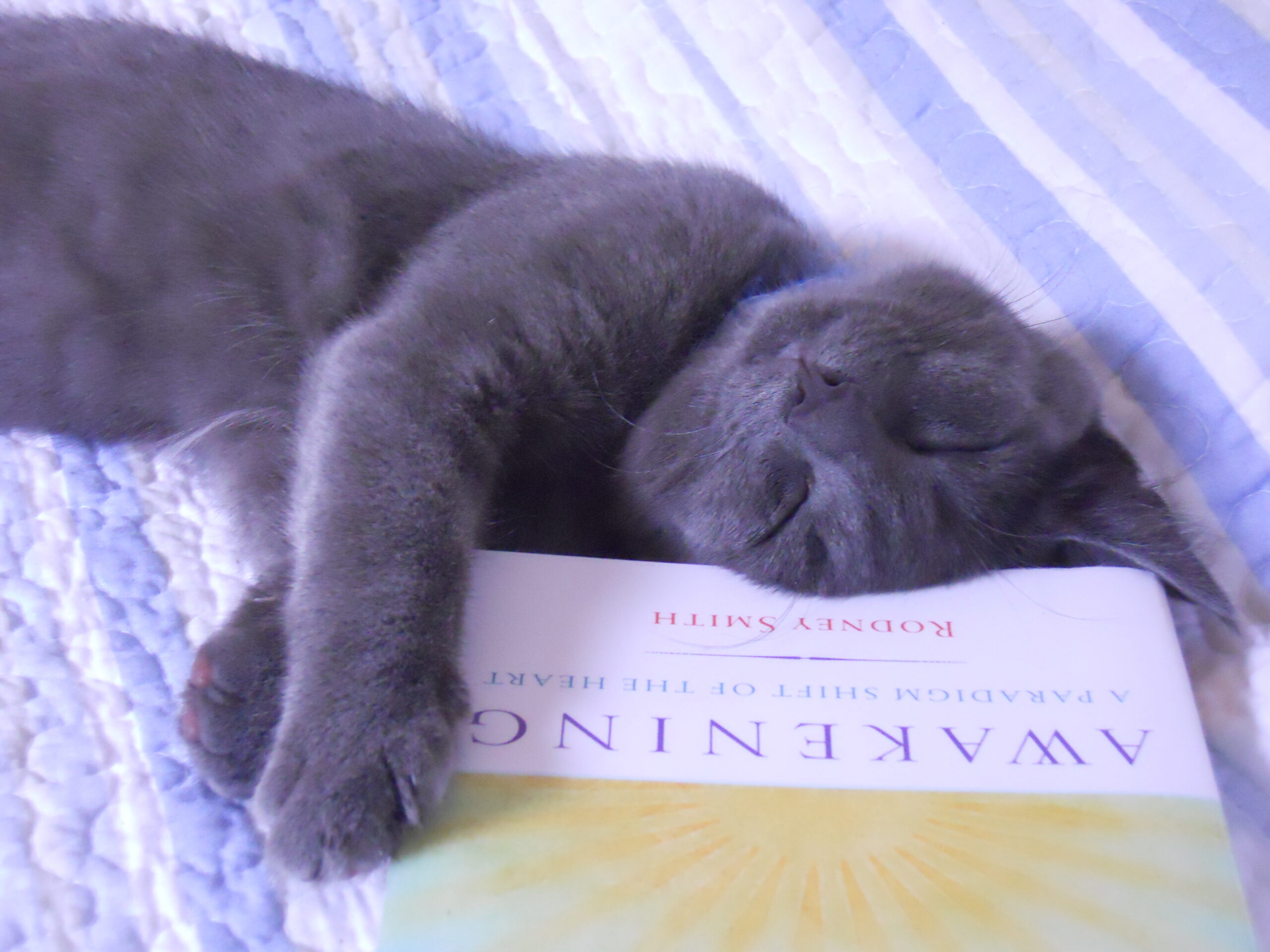
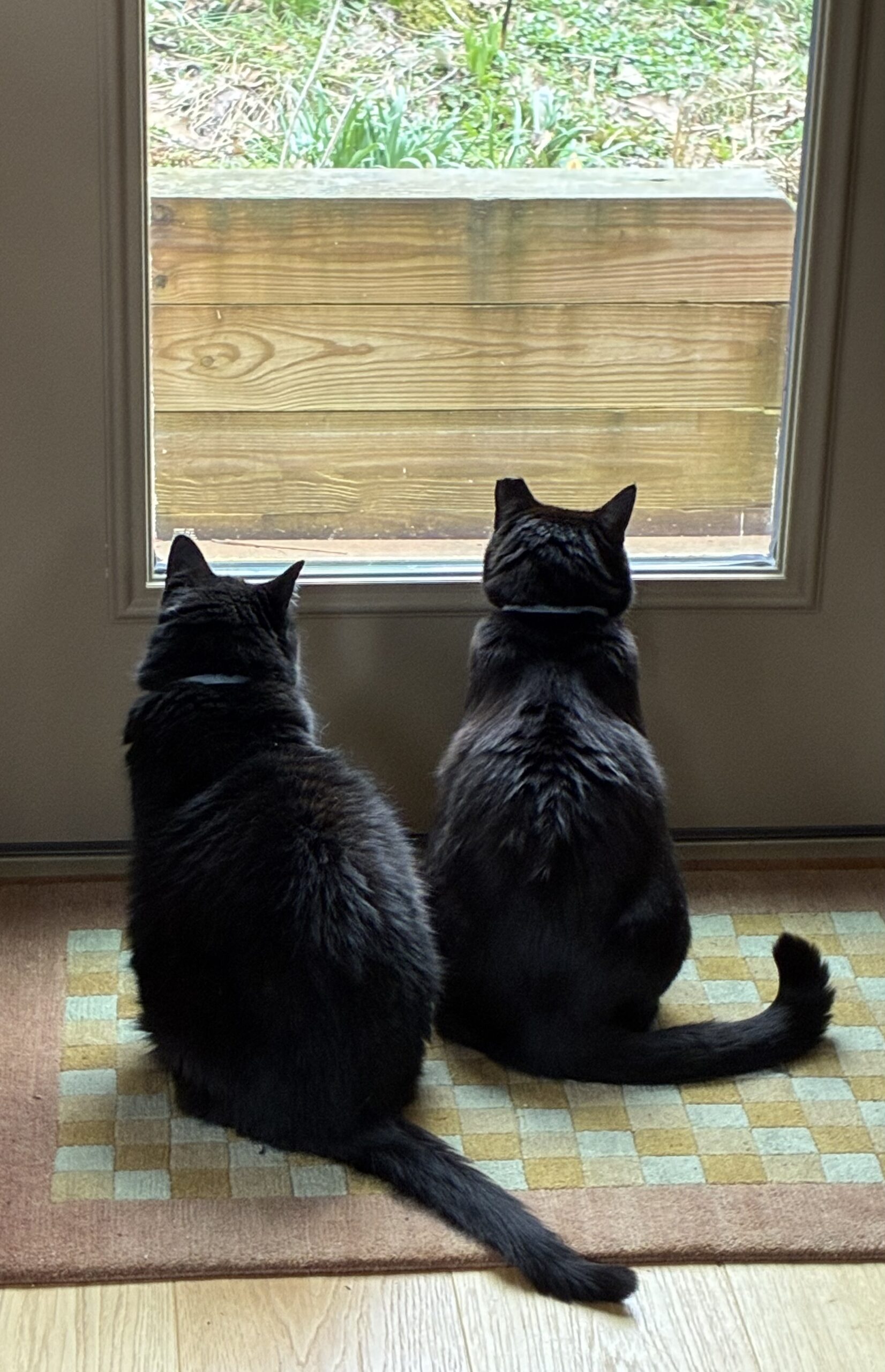
As I was thinking about this, one of my cats, then another, went to the glass outer door in my den and intently stared out the window. One, our girl, looked slowly from side to side, as if following something, while the other stared straight ahead. I don’t know if it was her eyes that were tracking something, or her hearing, but whatever it was, it was invisible to me. They were both seeing with more than their eyes. There was no distraction for them from looking, just attention.


Maybe the problem is in where we look, or how we ask. In Exodus 3:1-6 God says to Moses, from a burning bush, “Moses, Moses! Here I am.” Or in the 1950s classic religious movie, The Ten Commandments, Charlton Heston stands over the Red Sea, parts his arms, and speaks “Behold His mighty hands.” And God answers by parting the sea. Maybe we’d like such a clear and dramatic response, but it’s a bit much to ask. I’ve never personally seen seas parted by command or heard God’s voice in a bush.


Maybe we expect the answer to come in a certain way, and the expectation blinds us to the answer. We might look, for example, outside ourselves, or to some authority or a defined being not ourselves. Or to the thoughts and images in our minds, not the feelings and sensations in our bodies.


Maybe we’re hearing the speech of the Burning Bush wrong. Maybe, as some scholars say, we could hear God’s “Here I am,” as “Look Here;” see all this, see this right here.


Describing Buddhist practice in his book, You Have to Say Something: Manifesting Zen Insight, Dainin Katagiri, a central figure in the early transmission of Buddhism to the US, says that to truly see a teacher, or see anybody, you cannot maintain an expectation of a certain response. If you have a preconceived idea of a meeting, there’s no meeting.


We often create such noise in ourselves. We know this. We know people who can’t stand silence and constantly play the tv or listen to their earbuds or search social media and suffer from FOMO. The world right now is bad enough, so terribly frightening. So, silence, if we can hear it, can be so healing. We need to give ourselves a break, a pause, a bit of kindness. If we can’t be silent, how can we listen deeply?


Maybe we’d hear more if we asked ourselves a question and then just listened, listened not just to words, but to the entirety of the moment when we heard the question in ourselves? We ask and then feel the asking. Maybe then we’d hear our own mind more clearly….


*To read the whole article, please go to The Good Men Project.
 

How Accepting Aging Can Heal Loss and Pain; Finding Ourselves in the Sound of Rain

When my father was in his nineties, he said one of the worst things he was facing was the sense of being alone; that almost everyone his own age or older was gone. Sure, he was lucky to have lived so long and been mentally clear, able to remember all these people, able to manage his own life. Able to even do his own taxes. He was an accountant, so this was especially important to him. He was also lucky to have sons and other, although younger, friends and relatives. But the number of losses in his life, and the sense of emptiness was staggering.


He also thought about how his aging and dying would affect others. One morning he called my wife and me to tell us he was going to die that day. He wanted to say goodbye. I found out he also ordered presents for several people, baskets of fruit. But he did not die that day. The next day he did go into a rapid decline and died 2 weeks later.


He lived 8 hours away from us, so we immediately packed the car and drove to see him. I didn’t realize it then, but the act of thinking about and caring for others made his own passing, for the moment, less fearsome. Caring for others, compassion, love just has this benefit. It surely can hurt, and terribly. But that hurt, that grief, placing ourselves in another’s heart and mind, and valuing their life and perspective can help us value, understand, and expand our own perspective. By feeling some responsibility to others, feeling the need for kindness, compassion, we feel more able to be kind to ourselves.


I know that some of us think about others and their judgments of us, more than we recognize ourselves. We impose an image we think others hold of us on top of our sense of self, obliterating our sense of ourselves. This is different from what my dad talked about. He was actually giving up his self-concern, not replacing his own inner awareness with what he imagined others thought of him. Not replacing a living feeling of his own sense of inner reality with an abstract thought. And this allowed him to notice and be more.


I don’t want to romanticize this. My dad wasn’t entirely selfless, certainly not fearless. He greatly feared a painful death. The end was not easy. But for several days his concern for others helped him approach his own death with more grace and maybe less suffering.


And there’s great research on this, on the link between compassion for others and compassion for ourselves. By looking beyond ourselves to others, we think more clearly and better notice the larger context we’re part of. We feel ourselves right here, not in some time in the future or past, not as a thought or memory, but as right now.


We don’t put things off or separate our feelings and awareness from thoughts or with thoughts. We come alive in what gives us life, now.


I thought of this because I’m now having similar feelings as my dad did. As I lose more people I once knew, and so many of those around me have severe medical issues, I appreciate what he had told me more now than I did then. His experience then is educating mine now.


I wrote a short story years ago that was published by Sunlight Press and my website. It was about a walk I took with the headmaster of my school in 1969, when I served in the Peace Corps in Sierra Leone. We were debating whether political change was possible. He said no; I argued yes. It started raining. I opened my umbrella and said, “I just changed the situation. We’re no longer getting wet.” He replied, “No, you changed nothing. It’s still raining.”…


*To read the entire article, please click on this link to The Good Men Project.

DT Has One Great Ability, to Manipulate and Destroy: If He Had Set Out to Purposely Hurt Our Nation, His Actions Couldn’t Be More Destructive

In 1919, at the closing edge of the first world war, and when the waves of the flu pandemic were beginning to spread and kill millions, the poet William Butler Yeats wrote: “Things fall apart; the centre cannot hold, mere anarchy is loosed upon the land…” A time of political, social, and moral breakdown seemed at hand. The old values, old ways of thinking, were dying.


And today, we’re clearly facing our own time of pandemics, political, social, and moral breakdown, of old ways, maybe once reliable ways of understanding the world being ripped from us, plunging us into depths of unknowing.


Judd Legum wrote an article called “Making Measles Great Again.” In it he described how DT and his health secretary, Robert Kennedy, Jr, instead of making our nation great are making the measles threat great. They’re making us greatly more vulnerable to future pandemics.


Measles is extremely contagious. About 92% of unvaccinated people exposed to it get infected. But by the year 2000, the WHO declared the disease eradicated in the US, due to an extensive vaccination program. In 2000, there were 86 cases reported in the US. Halfway through 2025, there were already 1274 cases, 155 hospitalizations, and 3 deaths, marking the first time in a decade with a death from the illness.


And the cause? Increasing distrust of science itself, of reliable information. People like RFK, Jr. spreading misinformation. Despite the fact that almost all the spread of the illness is amongst the unvaccinated, RFK claimed that the vaccine caused the deaths, the illness.


RFK is doing the same with the deadly bird flu, saying we should let it run wild, while cancelling research into vaccines and other methods of ending its spread. The magazine Science published an article from virologists, veterinarians, and health safety experts on the inanity of this approach: “Essentially, the longer you allow a virus that has shown to be effective in infecting multiple hosts survive in an environment, the greater the chance you give it to spread, to mutate, and to try its luck at adaptation,”  said Erin Sorrell, a virologist at the Johns Hopkins Center for Health Security. “Worst case scenario, the virus adapts and expands its host range to become transmissible in humans … Now we have a pandemic.”


Undermining public health institutions is one deadly way to unravel the core of a nation and “loose the blood-dimmed tide,”  and “mere anarchy upon the world.” DT’s big beautiful/ugly bill passed just a week ago could undermine the core program that keeps our hospitals and healthcare system functioning. Although the worst effects of the bill were purposefully delayed until after the 2026 midterms, the bill could kick up to 16 million people off MEDICAID and health insurance. Yet DT and his GOP continue to lie about or try to distort how devastating these effects could be.


In Texas, at least 109 people have died, 173 remain missing due to the extreme floods. Concerns have arisen that cuts by DOGE in the Weather Service, and the GOP assault on climate science might have contributed to the disastrous situation there. According to Jake Johnson, writing for Common Dreams, “Though local National Weather Service (NWS) forecasters did issue warnings in the lead-up to Friday’s flooding—which killed at least 82 people, including dozens of children—key roles were reportedly vacant ahead of the downpour, prompting scrutiny of the Trump administration’s mass firings and budget cuts, in addition to years of neglect and failures by Republicans at the state level.”


It’s unclear how much staffing shortages at the NWS undermined the efficacy of the response, of warnings and preparations by officials in Texas. However, it’s certainly clear that climate warming is making such events more common and fearsome. What the DT administration and the GOP are doing will only assure that such tragedies continue to occur, even grow in frequency, by undermining research into climate science and by hiding information needed to mitigate the harmful effects of climate instability. The Big Ugly bill terminates many federal investments into alternative wind and solar energy thusly increasing the threat of carbon pollution and climate warming.


DT even plans to cut FEMA and turn disaster response to states or run the federal responses right out of the White House. Is this another way to enforce obedience to him, as he’s done in the past, by withholding aid to states that do not bend a knee to him?….


*To read the whole post, please go to The Good Men Project.

Aging Isn’t an Illness to Recover From: Lowering Our Resistance to Living with Kindness

As I get older, I realize the images and expectations I once held of “old” people were distorted. We are not those images. I can do so much more now at 65, 75 and older than I once expected I could do. And I sort of laugh gleefully. Aging is a more complex, engaging experience than I ever realized before.


The same applies to facing death. Our culture has a prohibition against speaking openly about the subject, which can be so damaging and isolating to us all.


I once imagined being older was a time of increasing feebleness or diminished capacities. That people spent more time looking backwards than forwards. And that except for maybe having more “free time,” there was nothing positive about it. A popular meme was “don’t trust anyone over thirty” ⎼ until my whole generation was way over thirty. I’ve found there’s plenty of looking back, but there’s even more of an appreciation of each moment now.


It’s true, however, that when I was younger, I might see a doctor once a year, at most. Lately, it’s almost every week. A frequent question that arises when I feel pain or physically “off” in some way, is whether the symptom is due to “normal aging,” or something else. In the past, when I was injured or developed some medical condition, I approached it as a problem to solve. Bodies could usually recover, injuries usually heal. But now, ankle or hand pain, for example, doesn’t heal as quickly as it once did, or at all.


Aging isn’t an illness to recover from. But our attitude or understanding of it is another story. We hopefully re-learn daily who we are. We re-learn what change means, what living means, that living is change. To even breathe we change, every second, taking in, letting go.


And as we get older, so many of those we know leave the world before us. I remember my father, who lived to be exactly 96.5, saying, “I’m the last of my friends, and the last of my relatives from my generation.” There’s an awful pain and loneliness in this. In each friend or loved one’s death we can feel friendship dying in us. We can feel loving is dying; loving is being vulnerable. To love is to make ourselves vulnerable to loss, yet we do it anyway. Dying is there in the loving itself; the two are almost indistinguishable.


So, every once and awhile now, I look up and see the reality of death getting closer. I can’t claim I’ve accepted it. Surprisingly, it doesn’t depress me, despite the moments when I experience intense fear. Or when I realize everything beyond what I can see in front of me right now, beyond what anyone can see, is an unknown we haven’t yet learned how to embrace or face. Maybe death is there as a sign, or a reminder, a message from reality.


And this reality touches and hopefully improves my relationship with everyone, with good friends and relatives, and especially my wife. My wife and I have been together for so many years, and the commitment to each other is as real, as clear as anything could be. As wonderful. As present. There is less judgment. Less impulse to distance. Just feeling.


Yet, different ways to trick myself into ignoring the reality of death still occasionally leap into mind….


*To read the whole article, please go to The Good Men Project.

Giving Oneself a Present: And When Being Present Is the Gift

Haven’t we all had the urge to give ourselves a present after a noteworthy achievement or surviving something difficult? I don’t mean after something as frightening as being attacked or an achievement as deep as graduating college or getting married. Those events warrant something public and memorable. But surviving a medical procedure, maybe, or just living through a tough day at work or writing a great song or article, some celebration is warranted.


Some people might bake a sweet or buy a new shirt, or go out to the movies. My favorite thing, especially before the pandemic, is to visit with friends, go out to eat, or to the library, or even better, a bookstore. Finding a good book to read is so refreshing for me. Not just due to the anticipation of entering a new world or going on an adventure, but expanding the world that I perceive and thus live.


So, this weekend, after a tough week, I bought a book of essays by theoretical physicist Carlo Rovelli called There Are Places in the World Where Rules Are Less Important than Kindness: And Other Thoughts on Physics, Philosophy, and the World. This felt like a present filled with sweetness.


In the book, Rovelli includes an essay on yet another book, one by the Indian Buddhist philosopher Nagarjuna who lived around 150-250 CE. The translation of the book’s title is “The Fundamental Verses of the Middle Way.” It is one of the most important works of the Buddhist and Eastern philosophical traditions. Nagarjuna’s essential point is that nothing exists by itself, but only through dependence on something else or in relation to other things, beings, or perspectives.


Of course, we have cultural conventions, languages, ways of perceiving and thinking which create for us the impression that individual things exist on their own. But this is all just the surface layer of things, an illusion, maybe a necessary one but still an illusion.


Culture itself, says Rovelli speaking as Nagarjuna, is an endless dialogue feeding on our experiences and exchanges, relationships. We are all, continuously, being enriched, hurt, or fed by others.


And the illusion culture creates helps us live in the culture. It provides processes and rules, helps us identify the limits of our body so we can put food in our mouths, or walk through a crowd without crashing into others. But without air and the earth to stand on, without food and water to ingest, without parents to give us birth or teachers to instruct; without friends and family to model how to speak, relate, and hopefully how to love, we don’t exist.


And at the center is the ultimate reality, nothing but a vast, interdependent set of relations. To borrow from ancient philosophers like the Greek Empedocles who said, “God is a circle whose center is everywhere and circumference nowhere,” each of us, each thing and being, is a center extending everywhere ⎼ that is dependent on the universe we are never separate from ⎼ and whose borders are both here and nowhere. The Buddhist teacher Thich Nhat Hanh used to say we all inter-are….


*To read the whole article, please click on this link to The Good Men Project.

What We Once Had, We Might Not Have Ever Again: Speaking for the Majesty of an Eagle Taking Flight

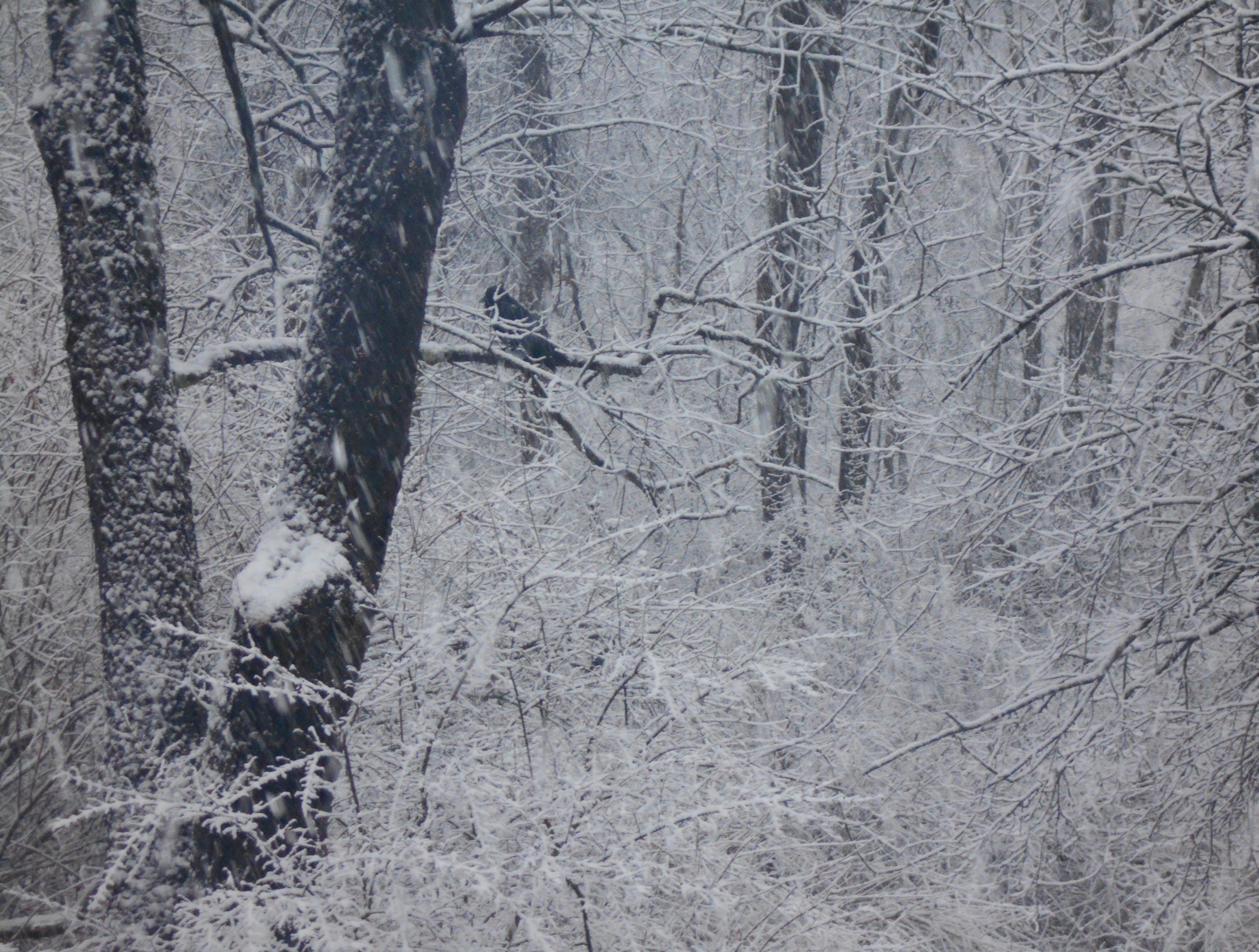
Listen. It’s raining. Luckily, it’s not yet snow. For the last four or five years, we have become more aware of how extreme and precious the rain can be, switching between either drought or flood. It comes like a storm, harsh, or like a shadow, then it’s gone.


But not today. The rain is steady, and the sound is beautiful. Like the sound of crickets and cicadas, the wind, and the waves of the sea, it’s absorbing and surprisingly comforting. For the moment, it even washes away any anxiety over the election.


Even the muted light is soothing today.


I notice the fallen leaves, yellow, burnt orange, a bit of startling red. The leaves almost cover the deep green grass, which is eagerly drinking in the rain. The earth is thirsty.


I close my eyes and just listen. The sound gets more distinct. There are currents in the rain. The pace of falling water speeds up, creating a wind of rainwater pushing against my body even though I am in the house. Then it softens to barely a whisper. What before seemed steady and continuous is now revealed as something else, something unique in its pace. When I simply listen, there is more to hear.


Two days ago, my wife and I drove into town. From the opposite side of the road, just before the farm stand where we buy corn in season, an eagle rose out of the tall grass. Majestically and ever so slowly, it took flight right in front of a dark van. Its wingspan was wider than the van, yet somehow the eagle wasn’t hit. It flew off in front of my car window, unhurt. But the driver of the van barely maintained control of his vehicle and then pulled off the road and stopped.


We can easily assume so much. That one moment will be like the previous one. We walk out of the memory of yesterday’s door and drive on our memory of yesterday’s road.


We might assume that because we can (hopefully) vote, now, or because we have (hopefully) protections on the job now, or can get Social Security, or healthcare, we will have it tomorrow. We might tell ourselves or others we will have it no matter who wins the election on Tuesday, November 8. But as the GOP have said, all this can and will end if they win control, just as they work to take away a woman’s right to make decisions regarding her own health and when or if to have a family.


We need reassurance that our world won’t totally flip over on us. But to get that, we must pay enough attention, and be ready to act, so we’re not shocked when today almost slams into the windshield of our car….


*This is an update of a blog from October, 2020.


**Please go to The Good Men Project to read the whole article.

What Do We Do When It All is Getting to Us? The Value of a Good Honest Conversation

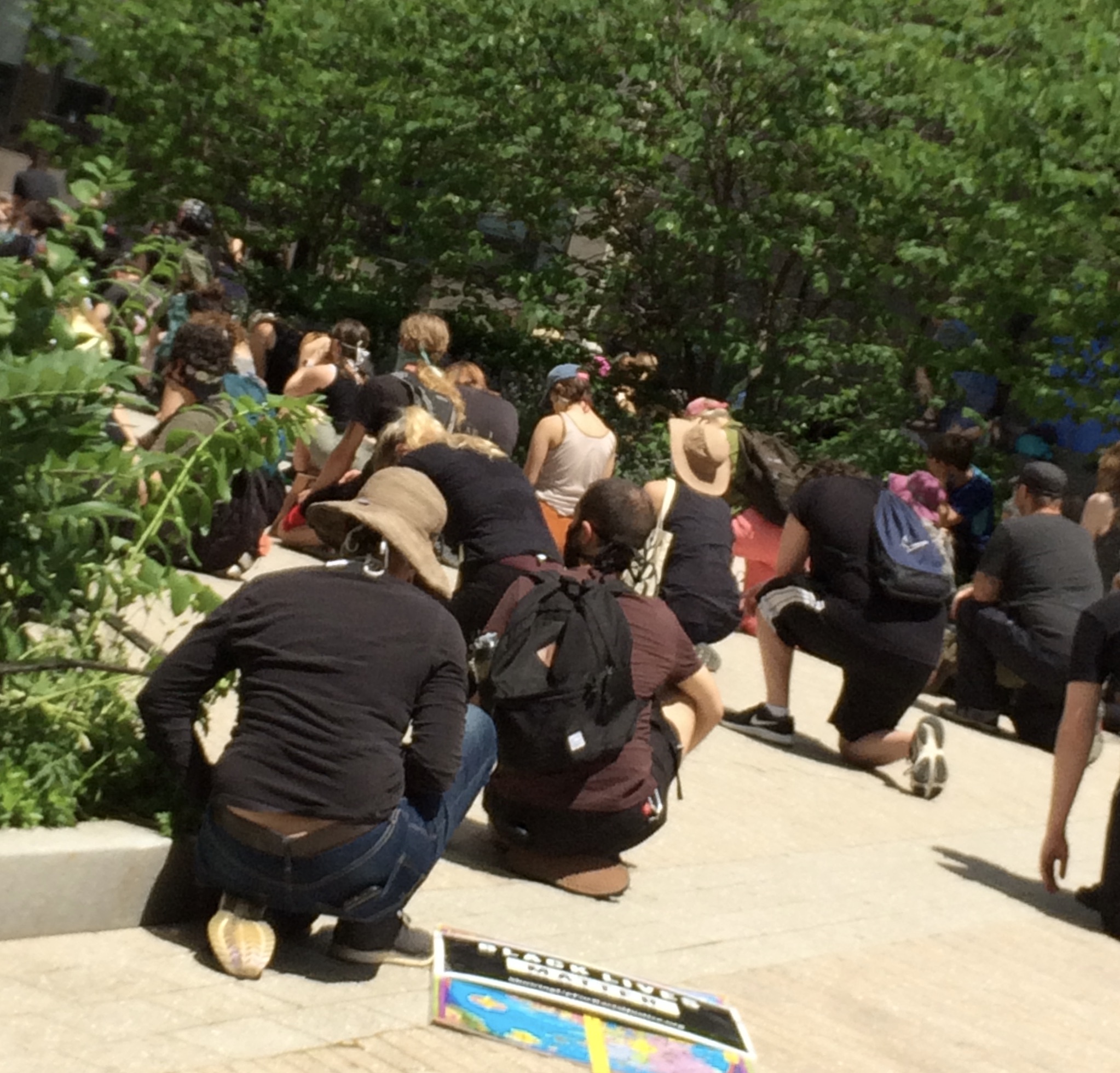
What do we do when we feel it is all getting to us? When the outrage and depression over the killing of George Floyd and so many other African-Americans by police, combines with the sadness and anger over the rising numbers of those sick and dying from the coronavirus, combines with the actions by DT to cut off the information from reaching us that we need to protect ourselves? And all this is augmented by anxiety over our economic situation or uncertainty over the future and, of course, fear of getting sick?


My mind went through a change over the past weekend. Every time we leave home to go to a public, indoor location⎼ shop for food, get our car fixed, what used to be normal activities⎼ a new waiting period can begin. Since the incubation period for the virus can be two weeks, if we do this more than once during that time, we never stop being on edge, monitoring for symptoms. A chest pain, a cough, a tickle in the throat can cause us to isolate ourselves further in worry.


I turned on the tv and there was an ad for a local Public Television program, Behind the Woman, which shared personal stories of women leaders from diverse backgrounds. In this time of different pandemics, those of racism, DT, and the coronavirus, the program reminded me of what a sense of community can be like, with shared concerns and a demand for change.


Then I heard news about protests over the police killing of George Floyd, in Portland, Oregon, being met by militarized Federal agents sent there by DT. These camouflage-wearing agents have been stomping on the people’s right to protest and on the legitimate local authorities and the rule of law, creating chaos to serve DT’s own selfish political purposes. And on Sunday, they  were met by a wall of Moms chanting “Moms are here, Feds stay clear.” I felt a silly sort of joy, a shared interest and feeling, with these women, and with these protestors. Until I heard about the teargas and arrests and the joy was replaced with outrage and fear.


Hearing about the protests, I somehow felt less alone. When we hear about other people in pain, we want to do something to end that suffering. We want to help. Even babies, when they hear other babies crying, join in. And when we hear about people taking action, we can feel more powerful ourselves and ready to act….


To read the whole article, please go to The Good Men Project.


Listen for the Earth Breathing: How About A Moment of Calm and Clarity?

In these times of great fear and anger over the inhumanity and chaos in our political system, we need to find some sort of calm and clarity inside ourselves or we’d want to turn away from the news or go nuts. If we don’t find some sort of clarity, how could we have any idea of what political or social actions to take? How could we help anyone else in need if we can’t help ourselves? So one thing I do is meditate, and treat myself and others as kindly as I can. If I can do nothing else, at least I can do that.


Close your eyes, take a comfortable breath, and simply listen. Many of us do this too infrequently. We don’t give ourselves a break to listen deeply to other people, to our own inner voice, or to the earth breathing. So give yourself a break. Give yourself this one moment. And listen for the earth breathing. Can you hear it?


Maybe it’s summer and a cool wind breathes in and out, cooling the day. Sometimes, it is a deep breath. Sometimes it’s very shallow. Sometimes, you can’t hear or feel it and you wonder if the earth is alive at all.


Then you hear bird calls, especially in the morning and at dusk. And bees and maybe other flying creatures…..


To read the whole piece, go to The Good Men Project.

In Today’s World, Reading Books and Caring for Others are Acts of Defiance

One of the biggest threats of this administration is to your sense of who you are as a human being. It is difficult to believe in mutual love and caring when faced with the actions and words of Roy Moore or Steve Bannon, or compassion when faced with the actions and words of Paul Ryan, or beauty when faced with Mitch McConnell. It is difficult to believe courage is possible when many Republicans, who once criticized the president’s racism or spoke out for health care for children, now support his agenda and this tax bill. It is difficult to believe learning, clear thinking, and scientific research is possible when faced with Betsy DeVos or Mr. T. In today’s world, reading books on topics such as (but not limited to) science, philosophy, anthropology, history or poetry is an act of defiance.


So, as a new year draws close, dedicate yourself to rebel not only against the abuses of this administration, but for the possibilities of human nature this administration seeks to squash. Seek to understand the actions of people like Mnuchin, Pruit, Sessions, and Flynn, but also Elizabeth Warren, Doug Jones, and the courage of women who spoke out against abuse by Moore, Mr. T, and others.


Rebel not only out of understanding how destructive this administration is to our health care, environment, democracy, and national security—but for love, compassion, and a desire for beauty.


When you come home from work tired, tired of long hours of work. Or you return from a protest or from completing phone calls to congress and you feel you have lost the sense of what hope is, read Rubin Alves’ poem Tomorrow’s Child. Or if you need to quiet the noise inside and aren’t able to meditate, or walk along a seashore, read Pablo Neruda on Keeping Quiet. Or you don’t know if you should take a chance on your dreams, read about what happens to a Dream Deferred, by Langston Hughes.


When you feel taking action or even listening to the news is too difficult, or “When despair for the world grows in me,” read Wendell Berry’s The Peace of Wild Things. Or when you feel you are catching the illness of fear and selfishness, or that you have no power, read about the power of Kindness by Naomi Shihab Nye— “…it is only kindness that makes sense anymore.”


When you feel alone in the struggle even though most Americans, most people in the world, agree with you, read The Low Road by Marge Piercy:

“…it starts when you care

to act, it starts when you do

it again after they said no,

it starts when you say We

and know who you mean, and each

day you mean one more.”


And, along with Mary Oliver and her poem What I Have Learned So Far, “Be ignited, or be gone.”


Do not forget that love is a possibility in every life. (I don’t know about psychopaths.) We all share more than we differ. But for some, love is a possession and a wall. They hold tightly onto the few as if to possess them, and wall away all others. And in doing so, they wall away themselves. But for many, love is a second skin. It is a boundary allowing you to feel life, to feel yourself, more intensely, and to contact, open to others, more securely.


Yes, do what you can to find the power in yourself not only to take action and rebel against injustice and ignorance, but to make joy, kindness, education and care for others the central point of what life and even politics is about. This is the greatest gift you can give anyone, including your self, in this or any season.

How Mindful Focus Can Help Free Your Mind From Painful or Repeating Thoughts

How often do you feel plagued by a thought? Or you feel pushed around by an idea or image, as if it were a phantom bully, disrupting your concentration or making a moment of life, of school or work, more difficult? You begin to look more at the ghost that trails you than the people or events that face you. Especially in times like this, it can be difficult to find comfort and clarity.


One way to get free from an obsessive, painful or distracting thought is to center your mind on feeling a sensation. In this way you break the apparent chain of thought. Every time you stop reinforcing an old and hurtful habit and calm your mind, even for a second, you set your mind free and show yourself you can do it. Your mind stops rushing. You give yourself a moment’s respite and allow a new pattern to be created. Find a place safe and quiet enough so you can stop what you’re doing and close your eyes. You can be sitting or standing. And focus your attention on the air passing over your upper lip as you breathe out. Simply feel the air going out. Mind has only one object at a time. If you focus on feeling, you let go of thinking.


You can feel the temperature of the air as it passes over the upper lip, or whether the exhalation is smooth and deep, or choppy and shallow.


Then notice how your body automatically strives to open itself and take in air once again. Notice where you first feel the impulse to inhale and whether the impulse comes quickly or slowly. Then feel the air passing over your upper lip as you breathe in. Feel your whole body expanding, your belly, shoulders, and face as you return attention to the air entering through the nose.


Notice the pause between breaths. You get quiet. For a second, you are simply there. For a sweet second of life, all that is important is the simple enjoyment of life.


And then you want to let go of the air, and let go of tension. You settle into the sensation of letting go as you push the air out. If a thought does arise, congratulate yourself on being able to notice it. And then let it go by shifting your focus to the air passing out, over the upper lip as you exhale. Usually, what is most important is not what arises but how you respond. You become aware of the thought precisely in order to learn from it and let it go.


Breathe in and out through the nose. This is the cycle of a breath. When you are aware of it, you appreciate the simple, basic aspects of living. You are kinder to yourself.


If you are leading a group or class, first study and practice, daily, on your own, to know it from the “inside,” and possibly find a mindfulness teacher or counselor. You might give students a choice of where to focus, on the upper lip, on the shoulders, or on the bottom of your feet—focus wherever it is easier to focus. Focusing on the feet can be helpful for facing anxiety and fear as it helps you feel more grounded, or centered. You breathe out and feel your feet pressing down against the floor or earth as you push the air up, from your feet and out your nose. You focus directly on the breath and let everything else go. Then as you breathe in, feel the air enter your body and go all the way down to your feet. Feel your body expand slightly—your feet expand down, into the floor or earth.


Do this for three breaths, or three minutes, whenever you need it, or at a set time of day. Just a small investment of time can be significant. Start small and your body will ask for more.


You might feel that if you’re not rushed, you’re not important. In our society, it is easy to think the busier you look, the more important you feel. Being constantly connected to social media, for example, means people value you. The ping of the cell phone is an affirmation. So, especially for young people who grow up with digital media, being disconnected from technology or from busy-ness can mean to them they are less valuable or they are missing something. If you don’t fill each moment with tasks or texts or thoughts, you are wasting your time. But being connected to media often means being disconnected from yourself. You miss yourself. When you quiet your mind, you hear the world more fully and clearly.


Focusing on feeling is only one of many methods you can use. You can teach yourself to mindfully face uncomfortable emotions and question thoughts. If you turn away from feeling fear, for example, you let it rule. Usually, when you face something directly, you can break its hold on you. When you face what bothers you, you feel more powerful. Distraction is another technique many people use, reading a book, working out at a gym, or taking a walk in the woods when you want to “get out of your head” and back into the rest of the world.


To let go of a thought, it might also help to understand why you have thoughts. So study yourself. Thoughts are an expression of mind testing and abstracting from reality to create a viewpoint. The initial level of any mental state is what psychiatrist Dr. Daniel Siegel calls an “orienting response.” Brain and body systems become alerted and energized and you begin to feel. Then you get “elaborative appraisal” which involves activating memory, directing energy, and creating meaning. You feel bad, good, or neutral. You explain the world to yourself and you get the desire to hold, as in the emotion of joy or love, or push away, as in distaste or hate.


You might hold on to a thought in order to control what you feel can’t be controlled. You might worry about something occurring in order to magically prevent its occurrence. You might think your viewpoint is the absolute truth in order to prevent yourself from noticing how contingent and subjective a truth is. You might hold on to a thought out of fear of having nothing to hold on to.


When your mind quiets, you are more likely to directly notice the feeling that precedes thought. You can notice an idea without being caught by it. When you mistake the thought about an event or person as the entire story, you miss so much. When you focus on feeling, it shifts your perspective so you perceive and live more deeply the entire reality out of which the thought arises. You feel more centered and enjoy more fully the individual moments of your life. When the mind is calm, you act, teach, and learn more effectively.