When We Don’t Try to Appear Divine, The Divine Within Us Speaks: Last Night, I Spoke with the Pope in A Dream.

I am not Catholic, and not religious in the usual sense. Yet last night, I spoke with the Pope in a dream.


In the dream, he was clearly the Pope. Everyone recognized him, even though it wasn’t clear which Pope he was. He was tall, thin, with a clearly expressive face, and energetic in his speech. But he was lying down, in a bed.


Whether he in the dream bore any resemblance to him in history or in any daytime reality, I have no idea. Maybe the dream Pope was closer to who the Pope was before becoming Pope. Maybe he was an archetype of a Pope or spiritual leader or teacher and his dual nature, and my own, was speaking in the dream.


The setting was night, in New York City. Probably, I was attending a conference on education, or maybe philosophy. In the dream, he was younger than Pope Francis I is now. Friendly. Not a stickler for protocols. Attentive. Wise. Dignified, like someone very familiar with being on stage, or making big decisions. Yet, down to earth. He was just there, lying down yet there with me, talking.


I kept on wanting to scream out with excitement to any passersby, “Here is the Pope. This is the Pope lying here. On this bed.” And to totally focus on him. Just ask him questions, like “How are you doing? What’s it really like to speak to God? What’s going on with the Yankees?” Or “is heaven really a realm separated from the known physical universe? Or is it a metaphor for what we could experience right here and now?”


I didn’t ask those questions. Didn’t even ask about the sex abuses of priests or justice for DJT’s crimes. Those questions would break the mood, the atmosphere, and send him and me back to daytime reality.


He asked about me, who I was. About my teaching. Not intrusively, but respectfully, subtly. He was a very subtle person.


And humble. I think he was enjoying the conversation and enjoying life. But why was he lying down? Was he not feeling well? Was he tired? Was it because in my actual body I was lying down and in bed? Was this a reference to the Buddha, reclining or lying down during his final illness, and death, before he entered parinirvana or complete enlightenment?


It was never clear how it happened that I came upon the Pope.


I soon woke up. It was the middle of the night. I wrote down what I could remember of the experience and then fell back to sleep.


And re-entered the dream ⎼ but from a different angle….


…But I can accurately record the feeling that remained after part one and still remains now. It was of grace and beauty. Or of love and compassion actualized in a person. Or maybe of the potential lying in all of us, to speak from God ⎼ or from whatever truth lives within us. If only…


**To read the whole post, please go to The Good Men Project.

The Sound that Quieted the World: Saying Farewell to a Friend and Regrets

Max died recently. He was one of our three cats. When we were out of town visiting my brother last week, there was an awful storm here that knocked out the power for 18 hours. We don’t know for sure, but from the report of the cat sitter and the awful images in our imagination, the loud scream of our generator joined with the lightning and thunder to frighten him into hiding, a hiding he never came out of. Or maybe, he just knew it was his time. Cats seem to know such things.


We looked for him for days. We looked and looked and called and called and always expected, or maybe so wanted him, dreamed of him, prayed for him to just emerge from the bushes or from wherever. But he didn’t emerge. I finally found him hidden out of sight in one of his safe places. Until that moment, we could never accept that he was dead.


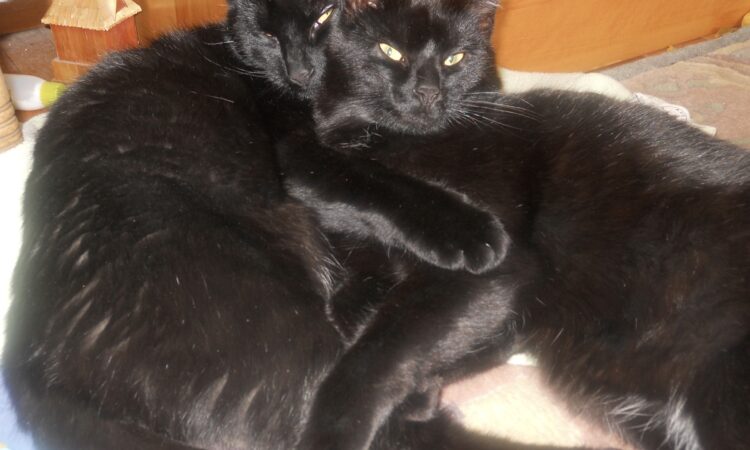
He was such a good friend. He was originally found on the streets with his sister before being taken to the ASPCA. And he remained a street cat in spirit all his years, loving to be outdoors. He’d come inside at dinner time, ask for food, but not eat it until we put it outside. But when he did come in to see us at night, or to rest or sleep, he was our only cat who cuddled. Who sat in our lap or slept on top of one of us.


He had a heart problem. One night, when he was a few months past his first birthday, we heard a scream outside. We guessed he was in a fight. I ran outside, looked up into the ancient apple tree that sits outside our front door. And Max fell from a high branch into my arms. Literally.


We took him to the best vet we knew. She said Max wouldn’t live for more than a year. His heart was not able to adjust to any deep stress he would face. She prescribed surgery to give him a pacemaker. We then took him to Cornell Veterinary College for a second opinion. They said don’t do the surgery. It probably wouldn’t work, and if it did, he’d never be able to roam outside again. That would have killed him. He clearly didn’t die that year, or for another 12.5.


It hurt so much when I found him. All the worry and wondering where he was and what had kept him away turned to anger, guilt, and pain. When the fearful wall of death meets the universe of love, an intensity of what ifs, of should and could have beens, can arise. The intensity of regret increases with the number of half-lived, half-hidden moments we’ve stored away. And it decreases, hopefully, with the gratitude, amazement, even grace mixed in with the grief. There’s something so naked and mysterious in many relationships between humans and beings of other species.


We had a funeral for him in our yard. As we covered him with soil, we also covered him with memories, with “We love you, Max.” “We’re so sorry.” And then, unplanned, I started chanting “Aum.” My wife joined in. The notes seemed to rise up and quiet the world….


*To read the whole post, please go to The Good Men Project.


Touching Life in All Its Forms: Summer, Walking, and Treating Living as Learning

I so enjoy spring and summer. Despite the drought this spring, and the continual rains that have so far marked the summer, I feel like I’m once again a child on vacation. I hear the song “Summertime” in my head, and feel that every day I can play, do something new, create, get together with friends. Everything is so alive. In both spring and summer, so many birds, peepers, cicadas, etc. speak up, and seem to speak to me.


So, taking a walk during the summer or spring, in any natural setting, or in the blocks or parks of a city, immerses us in this beauty. It can be a meditation if we bring full attention to it. We don’t need to do a formal walking meditation. We just walk normally, and let the exercise remind us it’s not just what we do that determines how we feel, but how much awareness we bring to it.


Since the beginning of the pandemic, two things I’ve been doing even more frequently than before is reading about and practicing meditation, and taking long walks or hikes. And I’ve found a few things that increase the joy I have when walking. One particular reading that inspired me was Old Path White Clouds, the Story of the Buddha, by the revered Zen teacher and activist Thich Nhat Hanh. It was recommended by a friend and co-worker. The book gives us a wonderful insight into the deep history of meditation and mindfulness practice.


In the book, the Buddha is described as walking “just to enjoy the walking, unconcerned about arriving anywhere at all…[not] anxious or impatient… [T]heir steps were slow, balanced, peaceful…yet they covered a good distance each day.”


I’d like to walk like this. How did the Buddha and followers do this? One method described was making a moment of walking a moment of practice and potential insight, “observing each breath,” step, and part of the breath. In other writings, Thich Nhat Hanh explicates further how to be at one with the walking, so we notice the whole universe walking together.


It’s so easy to get distracted or lost in thoughts or worries, or to lose awareness of where we are. So, whatever reminds us to pay attention to where are, who we’re with, what our body-mind is telling us, can help our overall sense of well-being.


Even before we start, we can stop. Close our eyes partly or fully, and just greet our body, be aware of what’s going on right now. Or we feel our feet on the earth, or the pace and depth of breath, how tense or relaxed are our shoulders and belly. Then we walk.


Walking, the capacity for upright, bipedal movement, is, after all, a major defining characteristic of being human. It can be great fun when we do it just to do it and it’s not solely a means of transporting us from where we are to where we aren’t. Or we don’t do it only to meet exercise goals recorded by devices like a fitbit or apple watch or satisfy societal created images.


Such motivations can lead us to walk only to get it done, to check off a box in an accomplishment ledger. This focuses us on the future, and we miss what’s here, now. And 10,000 steps can seem a lot; one step can be simple and easy….


*To read the whole article, please go to The Good Men Project.
Maybe There’s a Joy So Deep the Whole Universe Is in It: The Curious Power of the Wind

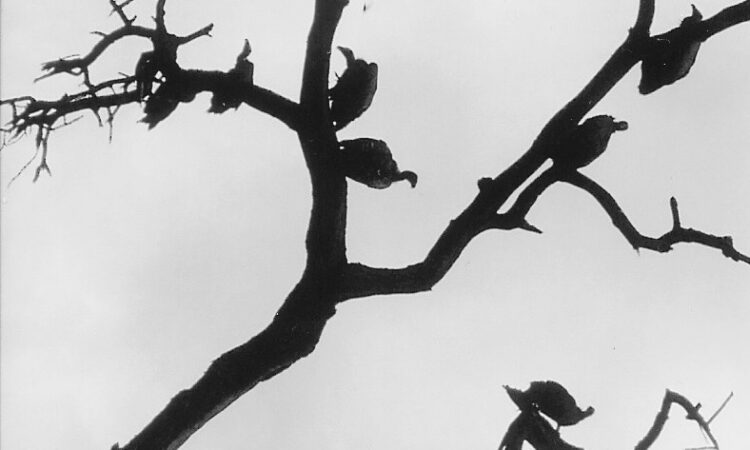
Sometimes, just staying still and listening to the wind can be an event of great beauty. Nothing else is needed to feel full, satisfied. Happy. Those are rare and glorious moments.


Sometimes, wind is a gentle touch, a cooling breeze on a torrid day. Sometimes, it disappears. Sometimes, and too often lately, the day is hot, dry, seemingly lifeless; then it suddenly gets cold and the wind rages, sounds like a speeding train, and is too powerful to stand up to. Tonight, the earth gently whispers, a soft, steady sound. Then it almost goes silent. Then it builds until it sounds like a rainstorm is about to slam us, but there’s no rain. No rain clouds. Just wind. Then it calms before it rises once again.


The wind animates the world around us. It builds, and the trees dance; falling leaves, and papers lying in the street, fly around; bushes rattle, clouds stir, oceans wave. Just like the breath animates us, the wind can animate the world.


Ancient humans made a connection between wind and human breathing. After all, breathing involves air moving in and out of the body, animating us like wind animates the world. So, in India, for example, there was the concept of the five winds in the body, discussed in the Hindu sacred book, the Upanishads, in yoga, and later in Ayurveda, an ancient Indian science of medicine. When we breathe, we take in the wind of the world.


The Greek word pneuma can mean both breath and wind, as well as soul. The presocratic Greek philosopher Anaximenes said, “just as the soul (psyche), being air (aer), holds us together, so do breath (pneuma), and air (aer) encompass the world.” Anaximenes thought of air as the first principle out of which all else is composed. The Bible uses the word pneuma in a similar fashion. There can be spiritual as well as a mental and physical dimension to breathing practices.


If only we listen carefully enough, every wind can remind us of these interconnections. We can feel our surroundings calling to us or hear people all through time calling to us. We are not two. We are not two. Maybe if we listen, we might hear in the wind the trees, birds, leaves, and clouds speaking of our natural inseparability with the universe in which we exist. No air, no us.


We can make listening more deeply, with more curiosity and compassion, a regular component of our lives, along with exercises, as in yoga, martial arts, and mindfulness meditation that help us breathe and live more fully.


We can also think about what animates us besides the breath. What stirs us? What stirs us so much that, afterwards, we don’t feel we’re lacking anything? We don’t feel more in pain afterwards than we did before. But instead, it leaves us with a sense of Ah, yes. This I love. No other time or place or anything is needed. Just this, this moment, is sufficient. Wonderful.


What stirs us so much we hear our inner world coming alive, and hear the universe speaking?…


**To read the whole article, please click on this link to The Good Men Project. Enjoy.

The Darkness Closest to Us: Don’t Get So Absorbed in the Universe of Words that We Lose the Universe of Being

One thing I love about many of my good friends is that they’re honest with me and willing to find and kindly tell me about holes in what I’ve said or argued, and to hear what I didn’t speak.


A great friend and college roommate found a point in a recent blog of mine that I had left unexplained and that had filled him with questions.


The lines were: Black holes the shape of trees, buildings, and hillsides stood silhouetted against a gray sky, a massive gray cloud filled by moonlight, yet with no moon visible. And the darkness appeared to begin in close to myself and lessen as it spread out into the distance. And he asked: “How did the darkness appear closer to yourself?” Or “why did it appear darker the closer you came to yourself?” Did you realize the implications of what you said?


Perceptually, the world was darker closer to myself because the only physical illumination was far off, from the lights of a nearby city, or from the moon itself.  But I rebelled against my own first understanding of the psychological or metaphorical meaning of the line. I heard “dark” as meaning sinister, something negative or evil. But I didn’t mean sinister or evil.


I later realized other meanings of dark, as in unknown or unknowable. As in beyond words. As in unrealized possibility. As in the unknown before from which everything after emerges. Before we speak there is an emptiness, a silence. Buddhists, Taoists, mystics speak of this.


Lao Tzu spoke about the emptiness out of which the universe, or fullness of life, emerged:

“In the beginning of heaven and earth there were no words,

Words came out of the womb of matter…”


Of course, since we don’t know what will happen or what will emerge from the womb of time and matter, we can feel frightened. We don’t know if what emerges will be helpful or hurtful. We don’t know if we’ll have the ability to face the unknown or do something with it we can be proud of.


We often think we know so much about ourselves, maybe too much. We might think we are so clear, obvious, unchanging. In fact, we can never fully know or fully capture ourselves or be contained in any number of words, thoughts, judgments.


Each word, each thought is an abstraction, a recording, or occasionally, as philosopher J. L. Austin argued, a performance or action. Think about an officiant saying. “I now pronounce you man and wife.” Or when we are overcome with beauty and all we say is “wow.” Words facilitate remembering and can help us evaluate, analyze, think about something. They can be so beautiful⎼ or painful to see or hear. They can lead to rumination or take us out of it. There’s so much that just can’t be spoken. Yet here we are talking.


In every moment, we have this choice….


*To read the whole article, please click on this link to The Good Men Project.


I hope you have a wonderful celebration of Juneteenth, and a Happy Father’s Day.

Compassion Is a Key to Understanding: When the Sky Is Burning and the Earth is Coughing

There’s no rain, no rain clouds. It hasn’t rained more than a few drops for a month. Yet it’s midday and the sky is dark as dusk. But not that dark blue-grey verging on night black, but a red-orange gray, a color I’ve never seen before. Almost unnatural, certainly unusual; a color with a warning attached, a threat. Unnerving.


And the smell of the air is like fire, like burning leaves, trees, or garbage, and it tastes crunchy, topped with ashes. At first, yesterday, we only smelled and tasted it outdoors. But today, it has seeped indoors. Even the color has seeped in. No escape.


Over the last few days, it has gone from a health alert to an advisory, to hazardous. “Do not go outside for any unnecessary activity.” And if you do, wear a mask. This is one thing that COVID

has prepared us for.


Canada, especially Quebec and Ottawa, is burning. People in California, the Northwest and Southwest, have known this sky too well, along with people in many other areas of the world. And here in the US, in the Northeast, Northern Midwest, now we, unfortunately, also see and feel it. Our homes, workplaces, communities of nature are not burning, now, yet we share this burning sky, this coughing earth. New York City, for example, experienced the worst air quality it’s had on record.


Before this happened, when the days were clear, the sky blue and a fresh taste in the air, it might’ve been difficult to accept the reality of global warming. Now, it’s difficult to escape the taste of ash. The rich can mitigate it better than the poor, hide more comfortably, get faster and better treatment for scorched lungs, infected stomachs, stress. Yet, we all can be infected. Something else this climate emergency shares with COVID: we’re all in this together. When the earth itself is threatened, we’re all united in vulnerability, in no escape.


Yet yesterday, despite having read and written blogs about the climate emergency, I had a difficult time taking in and accepting what my senses were telling me. Yesterday, I went for a walk on my rural road. I had been somewhat aware that I should only take a short, moderately paced walk. But during the walk, a neighbor, driving home in the late afternoon, stopped her car to offer me a mask. I thanked her, we talked, then she drove on. And it hit me. I had not acknowledged the threat. I took off my hat and used it as a leaky mask. Today, no walk.


My wife also wouldn’t accept the reality of what she was feeling. She was gardening without a mask. She was already freaked out by the drought. Looking at, acknowledging the taste, color, and smell of the sky was too much for her to do.


But we have to acknowledge, accept it. ‘Accept’ meaning take in, look directly at what’s happening. The earth itself is burning, getting sick, coughing at us⎼ this is a warning. Take it seriously. Do more.


Do more to learn what we can do. Do more to hear what the earth itself is saying and what our own bodies are telling us….


*To read the whole article, please click on this link to The Good Men Project.

Perceiving Ourselves More Clearly So, We Can Perceive the World Around Us More Clearly and Act More Powerfully

A wonderful friend wrote a powerful and frightening article about the situation we humans face right now. I can’t share it here because he’s sent it out and it hasn’t, yet, been published. But I would like to share its central insight.


Most of us already know how difficult the situation is now, between climate change, the threats of autocracy, hate-manipulated gun violence, war, etc. We might be consumed by so many concerns that we get lost in fears and retreat to the usual, the safe. But what we face is not usual and not at all safe.


I sometimes wonder if we can even conceive of the challenge we face. We need our rational minds to evaluate all the evidence. But maybe we need to feel it even more than grasp it. We certainly can imagine what a small town looks like after a massive tornado; or what a city like New Orleans looked like after the flooding of Katrina. Or what burned out towns in California look like or cities when sidewalks and streets melt from the increasing heat. This is the face of the climate emergency. And whatever we’ve seen in the past, we’ll probably be seeing worse in coming days and years.


We might read about what it was like living in cities like London before environmental regulations were passed, when people couldn’t go outdoors without getting sick due to torrential smog. Or we can imagine a world without any wildlife outside zoos, no lions, tigers, and bears, no elephants, no eagles and ravens, no owls. Or no honeybees. Without bees, no honey, no fruit, no crops.


Or what happens to a nation when increasing hate fueled violence, like in Buffalo, NY fills the streets. The number of hate crimes has more than doubled since 2015, when DJT first ran for office. Or what a dictator like Putin is doing to Ukraine or what would happen if a white nationalist or Nazis became president or Dictator.


Or what happens when children are forced to read or learn about only what people driven by hate, bigotry, and lust for power want them to read. Or when women are no longer allowed to control their own healthcare options or how their bodies are treated.


My friend feels the terrifying frustration of seeing a threat so clearly yet also feeling powerless to stop it. I think he speaks the fear and concern that a majority of Americans feel. But for him, only dramatic changes will be noticed. Little changes can get lost in the storm clouds of images of what might be coming. Crying out to the world, “Why can’t anyone stop this?” can drive anyone crazy.


Yet, a democracy is all about many people doing relatively small actions together. The wheels of law and change can move with painful slowness.


A few close friends talked with him about not obsessing over these awful possibilities. And he knows this. But words do not reach deep enough to lift us out of an image of oblivion.


He spells out or shouts out a clear line of action we can all take….


*To read the whole post, please go to The Good Men Project.
Instead of Shrinking Our Lives, Expand Them: Going As One United Being into a Beautiful Day and Into that Good Night

Why does feeling the sun on our face, or even seeing it out the window, create a sense of happiness?


Most of us love it when, after days of rain or cold weather, the sun is visible, and the sky is clear. Especially in the spring, and the blue color just goes on forever, the day is not just physically but emotionally brighter.


Of course, if there’s been a drought or we’re allergic to the sun or worried about skin cancer, that spoils the fun. But a sunny day? We use that as an expression of being happy; or a sunny disposition as being positive, uplifting. Or we see the sun and feel that, as we look up, for now at least, we can enjoy a moment. We can allow ourselves a respite before the clouds move in.


And sometimes, we can find a sun living in ourselves. Or we might find a sense of quiet presence or get absorbed in something we love. Maybe it’s writing a story or meditating. Or we’re practicing a martial arts kata, dancing, listening to music, or walking next to a waterfall, and we’re gone. There’s nothing left of us but the creating, the kata, the dance, the music, the waterfall. It’s so amazing that we can feel most ourselves when, as the 13th century Japanese Zen teacher Dogen Zenji put it, we forget ourselves in action.


Contemporary Zen teacher, environmental activist, and author David Loy put it very clearly for me in a recent talk. When we do something not as a means to something else, or to get somewhere else; when we do an activity for it-self, not for what prize we may get from doing it, we can be transformed. We cease to be self-conscious and become more deeply conscious. We become sun conscious, activity conscious; we become more aware, more mindful of how one action, emotion, sensation, or thought flows into the next and forms our quality-of-life experience, so we can adjust, deepen that experience. In his talk, David Loy illustrated his point with the explanation of Karma yoga, the yoga of action, from the Hindu spiritual classic, the Bhagavad Gita. When we do something without being attached to the results, but aware of the rightness of what we do, we are more likely to be transformed positively by the action.


When we work for social justice, for example, we do the best we can, being as strategic as we can. We want to create better conditions in the world and make a difference; but our personal achievement is the action itself that we take. No matter what we do, we are most likely to have good results if we focus on doing the best we can, now, and not on worrying about the future or how far away it is.

One passage in the Gita says:

“You have a right to your actions.

But never to your actions’ fruits.

Act for the action’s sake.”


I remember, when I was teaching secondary school and students read this passage in the Gita, they at first disagreed with it, or disliked to it. They asked, “Why not be concerned with the fruits of our actions? When we do something well, don’t we deserve praise? Don’t we want to foster a concern with the fruits, or at least the ethical consequences of our actions on the world?” …


*To read the whole article, please go to The Good Men Project.

Companions Who Walk with Us Moment by Moment

COVID has been devastating to our communities and culture, terrifying to so many of us. But it had one positive result for me, and others. Our relationship with other species in our neighborhoods was enriched. As we became more distanced from other people, birds, turkeys, fox, peepers, possum, deer, bear, rabbits, eagles, owls⎼ all our non-human neighbors, depending on where we lived, jumped more frequently to the center of our attention, and became, sort of, friends.


Of course, the bear that crushed our bird feeder one early morning and knocked on our front door was a little scary and we had to chase it away. And one night at about 3:00 am one of our cats stood up on our bed, hissed loudly, and woke us up to a raccoon coming in the cat door. The raccoon got stuck and I had to push him out with an oak cane.


In the spring morning, the gold and purple finches, cardinals, and red winged black birds added color and songs to the air, and later, the peepers such comfort. And taking walks with such companions as oak trees leaning against each other to speak, and ravens coughing as they flew overhead added wonders to my day.


But hearing about the climate emergency and the extinction crisis we face⎼ I felt so bereft. I felt such grief over the increasing instability of nature itself, weather disasters, and the loss of species ⎼ for example, frogs, peepers, and salamanders, about one-third of amphibians ⎼ 12% of bird species, all threatened with extinction, as well as ash trees which used to fill the forests near my home. We must all take this emergency very seriously.


These species are not just companions. They are intimate mirrors of our lives and mental state that we can see them everywhere. The deep red of the Japanese maple in the garden, which is more of a bush than a tree⎼ what amazing feeling is right there. A crow flies overhead and its harsh call echoes in our body.


We often think of ourselves as located behind these two eyes, a mind isolated in this shell of a body, a shell within a shell within a shell. And only within this shell can we locate what is most intimately ourselves. Or we think of the red color and harsh call as coming from “outside” us.


Yet, is not that Japanese maple and the crow also, in some way, intimately ourselves?

Don’t we carry those colors and sounds in us? We don’t just hear and see and feel them. We give them life. The red of the cardinal is how our mind gifts color to the electromagnetic or light waves bouncing off the bird’s breast. Color is the way we perceive a wavelength of light to which our eyes are sensitive.


The harshness of the crow’s voice is how our mind translates the sound wave frequencies emitted by the bird. That red, that song is intimately us. No us, no song, just wavelengths.

Because conscious perception is awareness aware of itself, it simultaneously looks within as it looks out. It is a deeply felt mystery that we live. When we stop playing the shell game, the world is most intimately ourselves.


*To read the whole article, please go to the Good Men Project.


Remembering Those Who Have Loved Us: Only By Being Open Can We Understand What Love, And Life, Can Bring. Revisited.

Love is a mystery. Certainly, we can talk about what it feels like when we love or feel loved. Neuroscience can tell us about our brains in love, poets can expose some of the depths of the emotion, and psychology and mindfulness can awaken us to how it arises in ourselves. Yet, relationships touched by love have qualities that go beyond anything we can consciously explain.


My Mom died 15 years ago, yet every Mother’s Day I still have an urge to do something for her. I feel she is alive and have to remind myself she is not. She so often reminded me to be aware of other people’s feelings, not just my own, that I still search for her within myself.


She didn’t talk about empathy and compassion but showed it. She was able to take people in, to see who a person was and embrace them. When I first brought Linda, who is now my wife, to meet my parents, my Mom accepted her right away. There was no mother-girlfriend conflict. The same was true with her relationship with my brother and his wife.


She still appears in my dreams at times and talks to me. Maybe we all have similar experiences, not only with our moms but with anyone dearly loved.


One night, just as my wife and I were about to enter a restaurant in our hometown to eat dinner, I got a lesson about just how deep a connection can exist between two people. As I grabbed hold of the door to the restaurant, I suddenly felt an intense pain in my chest. I let go of the door and bent over. I stayed there for a few minutes, unsure what to do. In a few minutes, the pain dissipated, and we went in to eat our meal, feeling a bit worried and confused.


When we left, I checked my cell phone for messages. I often turn it off.  I had only one message; it was from my Dad. However, as I listened, I didn’t hear my Dad speaking to me. Instead, I heard his voice, sounding upset, and at a distance, mixed in with other loud voices. At first, I was bewildered. But as I listened, it became clear I was hearing a recording of EMTs trying to revive my mom. It turns out she had had a heart attack just as we were about to enter the restaurant. My dad found her a few minutes after the attack and called the EMTs. Then he called me and accidently left his phone on recording my Mom’s death.


If I didn’t have a witness, many people would doubt that this occurred. I even doubt it myself sometimes. To borrow from Shakespeare, there is more to love than can be dreamt of in any of our philosophies.


My mom modeled what it is to love. She did this in the way she took care of us. She did this with my Dad in the way they cared for each other. My parents showed me what relationship was about. They showed what life could give us. Whatever or whomever I love carries their influence. My Mom and Dad live in my ability to love.


It’s weird that we must learn and re-learn these basic lessons over and over again….


*This revisited blog was published by Medium and an older version posted by The Good Men Project.