
Our Families Are a Door to Infinity: Asking Questions Before It’s Too Late

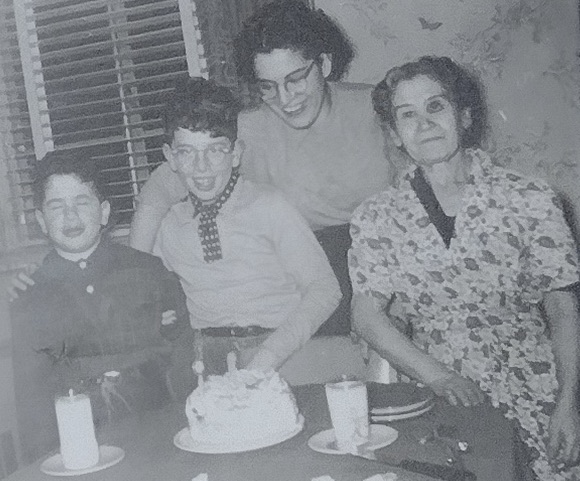
When I was growing up, I just didn’t think to ask my parents or my grandparents about “the old country” or their own childhoods. When my father was in his nineties and my mother had already passed away, I realized the time I had with him was coming to an end. He had in his memory a whole history of our family and of this country, that I knew little about. I didn’t want to lose all those connections. So, during the last year or two of his life, whenever possible, we looked through old photo albums and I asked him about his childhood and parents, but even he knew or said little of his family’s background in Europe.


My grandparents all came from eastern Europe, Russia, Poland, and Ukraine. Did I hear so little about their lives before coming to the US not only because I seldom asked but because the memories were so intertwined with trauma? Had they felt deprived of their voices?


In  the novel Wandering Stars, by the mid 19th and early 20th century novelist and playwright Sholem Aleichem, one of the main characters sings a prayer in a “plaintive, authentic Yiddish melody.” It captures well one aspect of the lives of the characters in the novel, which takes place in a small Russian shtetl or predominantly Jewish market town at the end of the nineteenth century.


“…Dear God, the truth of exile

Is told in tears.

How long, how long, dear God, The awful fears

Of being beaten, driven

And no one cares.

When, oh when, dear God, wilt thou

Be who hears…”


Life wasn’t all pogroms and terror. There was love, family, and friendship. There was the Yiddish Theatre, religion, art and creativity. The singer was herself a possible future recruit for the theater. The culture and time described in the novel was also the culture and time into which my grandparents were born. Had they, like the fictional characters, lived in Europe as exiles from a “promised land,” or promise of home?


When I was young, my family lived in a ranch style house in a suburb of New York City. My grandmother on my mother’s side lived with us, with me, my parents, and brother, for half of the year. The other half, she lived with my aunt. Grandma was a short woman, in her sixties or seventies. She spoke little yet tried to live in accord with her memory of traditional ways of living and believing. When she was with us, for example, we ate Kosher meals so she would feel comfortable. But when she was gone from our house, she didn’t try to tell us how to live. And she provided a link to a reality, a history beyond what we knew in the U. S.


Despite her age, she could be fiery and passionate. She hated violence, for example. Maybe she’d seen too much growing up. One time, 2 older boys started a fight with me right in front of our house. I was actually holding my own against the two when grandma came rushing from the house with an umbrella in her hand. She started beating on the two attackers until they ran away. Then she started beating on me, while yelling “never get in fights. Never. Never.”


One evening, when I was six or seven, she and I were home alone…


*To read the whole piece, please go to The Good Men Project.
More Is Being Asked of Us Now Than Possibly Ever Before in Our Lives: We Strive, Not Yet Knowing How, Not Yet Knowing If We’ll Succeed. All We Know is the Need to Act

How do we read the signs that the world and our own hearts and minds are giving us? The universe doesn’t just text us one, clearly typed message, explaining all we’re facing. Would we even welcome such a message? Maybe we do get such messages sometimes and aren’t sure if we’re hallucinating it?


I’ve been reading Being-Time: A Practitioner’s Guide to Dogen’s Shobogenzo Uji, by Shinshu Roberts, and just started to alternate it with Seaglass: A Jungian Analyst’s Exploration of Suffering and Individuation, by Gilda Frantz. Dogen is a 13th Century Zen teacher and founder of one of the main schools of Japanese Buddhism. I usually read only 2-4 pages at a time, because each paragraph is like a puzzle requiring considerable reflection. But the beauty that can be discovered in doing so is immense. Frantz’s book was recommended by 2 Facebook friends. It’s been a remarkable find, of essays, personal stories, and interviews about facing the difficult in life and revealing the myths and motivations that drive us.


And yesterday, after reading a little in both books, a deep realization, frightening in its scope, grabbed my mind and challenged my emotions. Both books synchronistically seemed to be sending one message, a message of something being asked, no, demanded of me. Something more than I’ve already given, to the world, to myself. It was less a regret for something left undone than a glimpse into an opportunity⎼ if I could take it. Frightening in the risks involved, both in the doing or undoing.


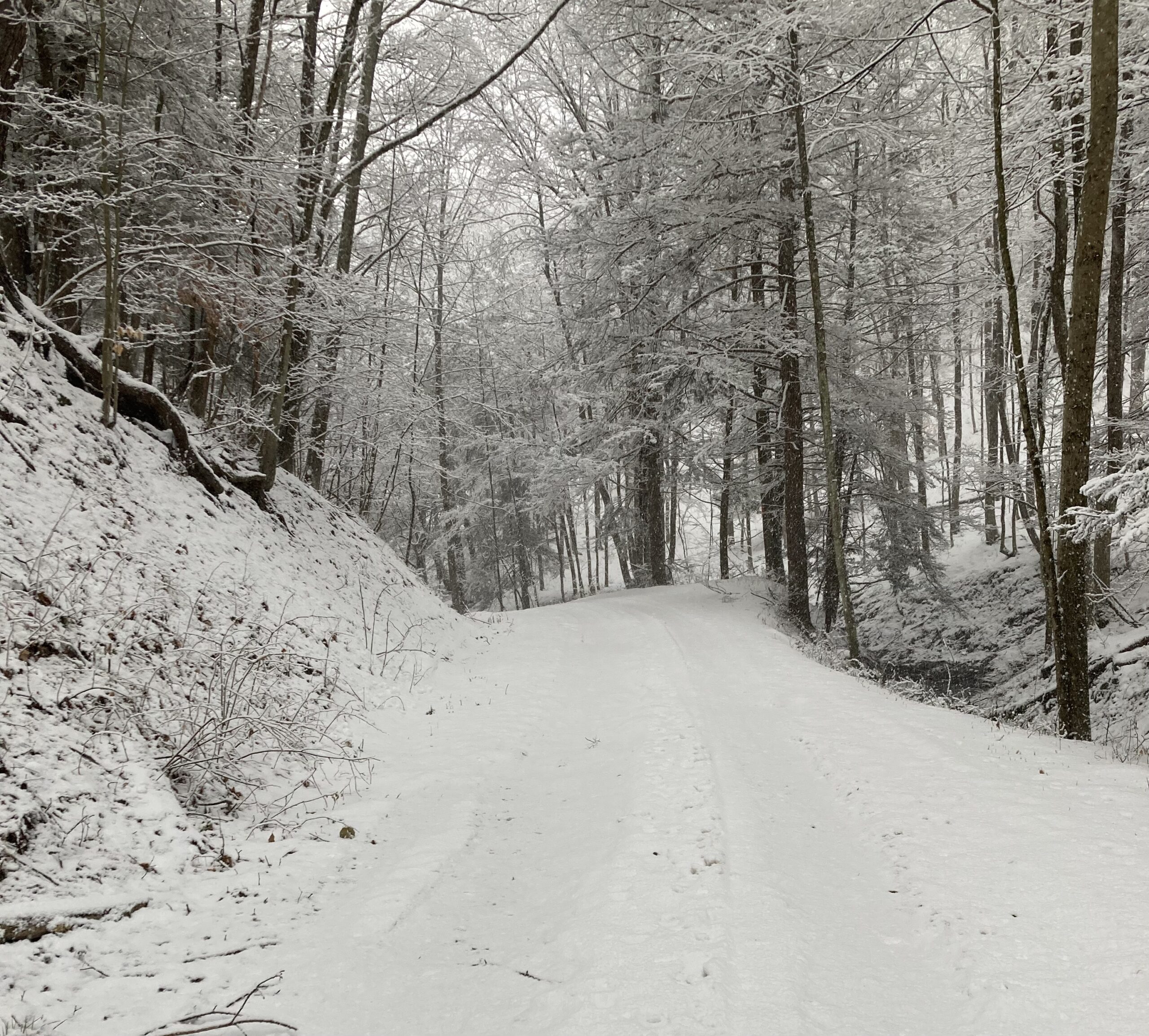
There’s a sense of inevitability posed by life in these times, hidden between news reports and the sounds of rain. Between bare tree branches, deep gray clouds, and the feel of tension in my hands and shoulders. Between the ordinary, the known, and the extraordinary and unknown. And a question⎼ We know we must act. But how?


More is being asked of all of us than probably ever before in our lives. No matter how much I might want this not to be so, that is the reality. We must let go of so much of what’s normal to our lives so we can do what the times require of us. What our inner selves demand of us.


How do  we change our lives internally so we can respond skillfully to the fear DT incites and manipulates in us? To the assault on our values and humanity? How do we respond to his blatant assaults on our security as a people and a nation? To our health care? To our incomes? To threats of deporting immigrants of color, from Latin America? Threats to LGBTQ+? To anyone who opposes him? To the rule of law? How do we respond to the expanding climate and ecological crises?


How do I feel less the me isolated from the rest of us, and more of the rest of us in me? Doing so might not only reveal how to help others, and maybe help others realize what they, too, can do, but inspire or expose unseen depths in myself. I want to meditate even more than I do. To learn more than I know. To do more.


To help me do this, I plan to read poets and writers from Ukraine, Gaza, Israel, and the US, about how to face the horrors caused by one group of humans against others. Or read writers from the distant past, in ancient China when the social order had collapsed, or even in Ukraine or Eastern Europe, in the villages where my own family might have once lived⎼ so we can feel any horrors of life can be faced, and the strength in ourselves to act can be found….


*To read the whole article, please click on this link to The Good Men Project.