Time Tunnels and Meditating Lions: Searching Beyond Memories for Who I Was Then, And Who I’m Being Now

There is a lion, a leonine version of a Teddy Bear, sitting on the back of the couch in my den. When I look at him, I don’t know what to make of him.


When I was young, maybe 5 or 6, my parents gave my brother and me stuffed animals. I thought my lion had a very dignified expression and so I was a bit reluctant to cuddle with him, even though I was of an age when cuddling with stuffed animals was the way of things; and where the imagination was so powerful that simply holding something in mind made it real. The lion resided at the end of my bed, absorbing not only my presence but my dreams, pains, and wishes.


And although I wasn’t conscious of it at the time, it spoke to me of my parent’s love. I was so engulfed in it then, I didn’t distinguish it from the home I lived in, my brother, our cousins and neighbors, our dog, the flowers, the rose bushes my mom had planted, the maple tree in the front of the house. It took a while for the maybe inevitable separation to occur.


I certainly didn’t realize when I was so young how many people didn’t have the love and resources in their lives that I did, or how much my parents had given me. I was deeply disturbed by but didn’t understand the lack of loving care in many lives, and certainly didn’t understand the poverty, hate and violence that too often plagued the lives of so many. But when I was in college and 3 friends came home with me and stayed overnight, they woke me up to how privileged I was. They joked they wished they had had my parents, and my dog, and maybe the lion, for themselves.


I don’t know exactly when, and I don’t know to where he disappeared, but for many years the lion was gone from my life. Probably most of us let go of childhood creatures of comfort, as we no longer feel a need for them– or don’t want anyone else to know that we once felt a need for them. But sometime about 10 years ago, after both my parents had died, my brother found him amongst their possessions and returned him to me.


And as I look at him now, I don’t know what to make of him. He’s certainly an artifact of my deep past and is somehow larger in meaning than anything I could say about him. Sometimes, he seems to be me, or to be my 5-year-old self, sitting there on the couch. And he’s trying to talk with me from down a long tunnel made of silence, trying to share some secret, or some game we had played. Or maybe to share what life felt like back then. When I see him, my mind and emotions often jump back and forth, searching beyond memories for the sense of who I then was.


We’re all surrounded by such time tunnels, of people, images, buildings, trees, and maybe little lions and bears or the equivalents. Their silence takes us back to memories, feelings, or just to presence. There can be love and joy there. There can be fear, pain, and terrible loss there, not only in the memory but in the journey.  And by taking time to stop and just focus on what’s around us, or on a breath, the feel of air on our face; acknowledging what’s there, noticing as best we can in that moment what lives in the tunnel without feeding it, our lives benefit greatly….


*To read the whole post, please go to The Good Men Project.
The Well of Ancients: We Live in a Universe, Not A Room

Have images of someplace you have never been, or of a time or situation you have never lived, ever appeared in your mind masquerading as a memory?


Years ago, my parents lived in Atlantic City, New Jersey. One night we were driving on Atlantic Avenue, the main street of the city that runs parallel to and often just a block or so away from the ocean. It was raining and the yellow lights reflected off the wet street. The houses on a long section of the avenue are large, expensive dwellings, some old and going back to the 1930s or before. And suddenly I felt we were back in the 1930s during prohibition when some of the homes were owned by mobsters. The whole mood had changed into a feeling different from any other I have ever felt. This happened two or three times.


My great aunt Fanny, sister of my maternal grandmother, died when I was in my thirties. When I think of her apartment, I get something closer to a dream than a memory, and just pieces, not the whole. And those pieces are not from the second half of the twentieth century. They are from sometime earlier⎼ with dark hallways, a bedroom with a wall of ornate glass doors which she didn’t have, a window that looked out not onto modern streets but gray mists, people in dark clothes in a village of wood homes, in the “old country” of Eastern Europe from where my relatives emigrated.


And from where do our interests come? Why do some subjects, seemingly from before we were born, excite or shake us up, turn us off or get no response at all? I love the art of Japan, Tibet, Indigenous North America, Central Africa, Ancient Greece, and the Middle East, but other places less so or not at all.


Twenty years ago, I was on sabbatical from teaching, and my wife and I went to Greece. I taught philosophy to high school students and looked forward to visiting the birthplace of Western European philosophy.


We were on the island of Crete, not far from the city of Chania, driving through the mountains after visiting the ancient City of Aptera. The city had come to an end possibly in 1400 CE due to an earthquake. We stopped at the ruins of a Minoan palace, and Roman and Byzantine structures. My wife saw a herd of sheep grazing on the side of the road and asked me to stop. The sheep were not fenced in but moving freely about.


We stopped, got out of the car, and walked over to the sheep. I happened to look down, and there, partly exposed, were ancient bricks, Roman, maybe 2000 years old. An archaeological site was close by unearthing a Roman villa from that time, with sculptures, lintels and other artifacts just lying on the ground. We continued our walk and found ruins of a Roman cistern. Overlooking the Mediterranean Sea, we saw a German bunker from World War II, and later, an Ottoman fortress.


What is it like to live in a place where we literally step on thousands of years of human history? …


To read the whole article, please go to The Good Men Project.


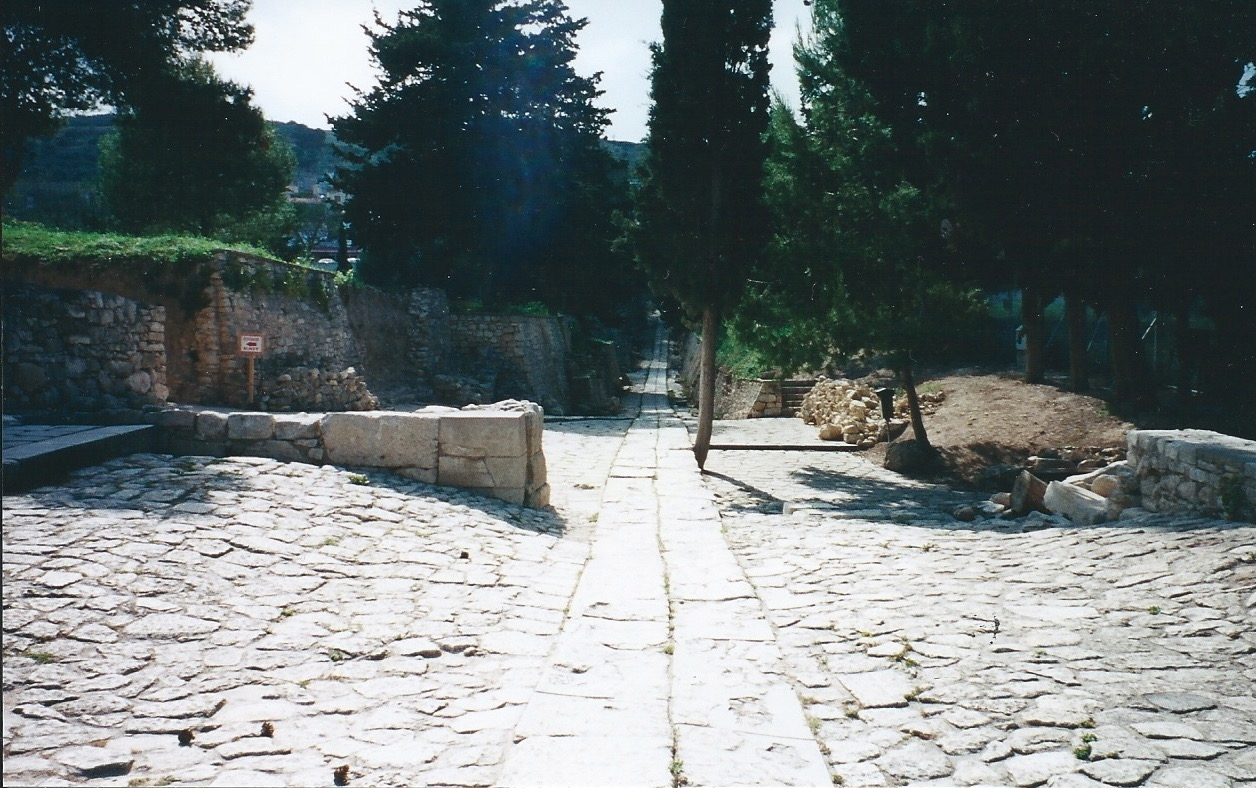
**The photo is of what might be the oldest road in Europe, from Knossos, Crete.

Reflecting on Time

Sometimes, I marvel at time and how my life seems to flow. I can’t believe how old I am. Or I can’t believe how quickly yesterday becomes today, ‘now’ becomes ‘then.’ Yesterday afternoon I was in the middle of a wonderful conversation. I was totally absorbed, enjoying myself. Then, suddenly, it was a day later. Is this due to a lapse in attention? Many people say that as they get older, time passes more quickly. Is that the same as what I am describing?


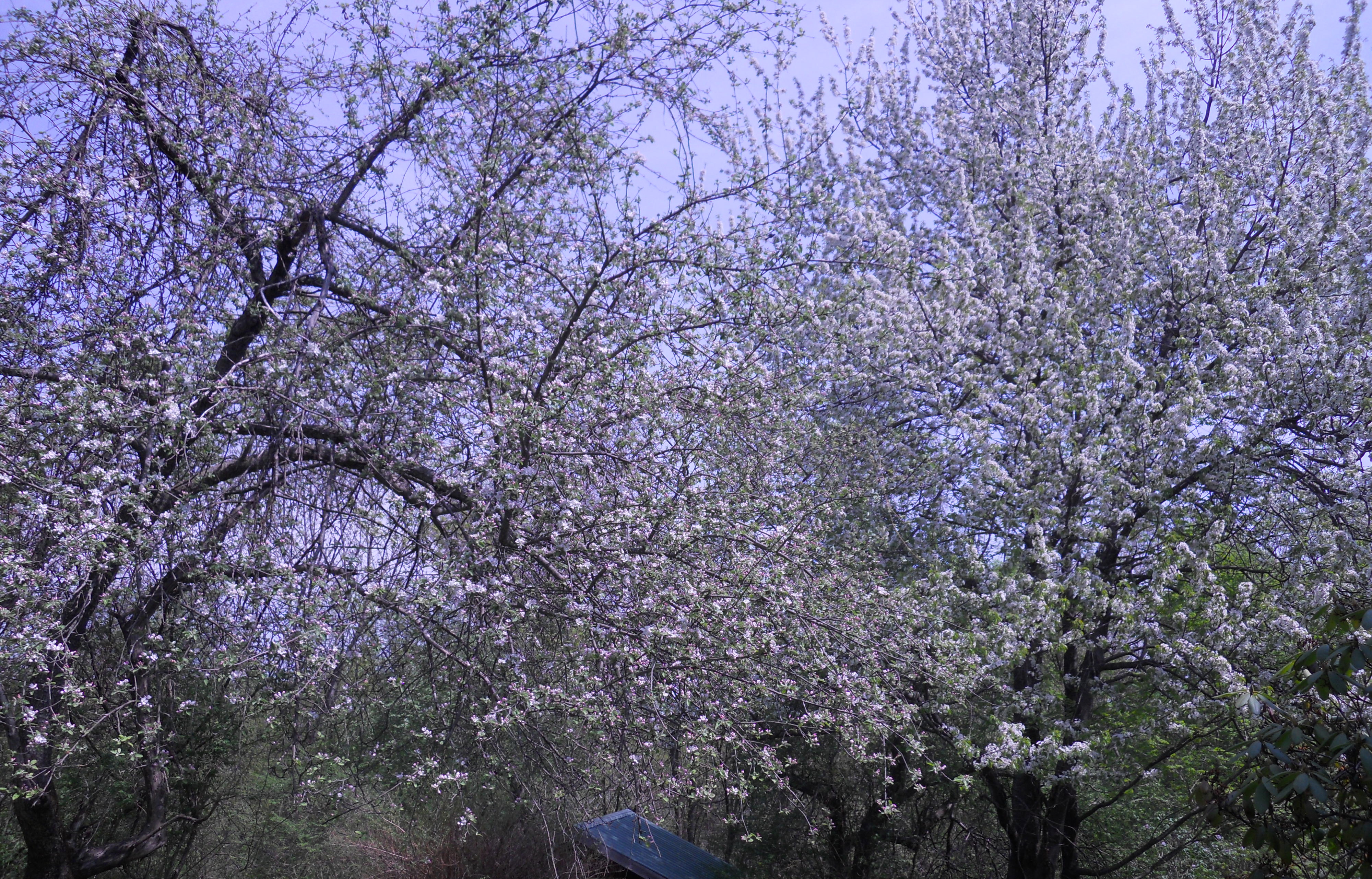
Right now I am in the middle of everything. Everything I see and feel is so present, real, rich. I can see the apple tree blossoms, smell the lilac bushes, and feel my stomach expanding with my breath. I feel the rhythm of the wind in the apple trees. I don’t feel time. I feel this….. For an instant, there is only feeling. Then I try to remember what just happened. And as I write it down, I lose it.


I can’t locate time except as, for example, a number on my digital clock or something scheduled on my calendar. A minute, an hour is life transmuted into abstraction and memory. When I feel life going by so quickly, I am distant from it. It becomes like reviewing memories. Remembering is often like watching a movie, watching life summarized and miniaturized into individual frames. And I become a character in the movie. The nature of movies is to speed by so I speed by.


And when life speeds by (or you want it to speed by), it hurts. There is nostalgia there, but also regret. Nostalgia can’t compensate for losing the here and now. As described in the classic book, Flow, and different meditation traditions, when your life is full sized, close up, and embraced, there is no sense of being distant from others, the world, and one’s life; your time sense is altered. There isn’t a you being hugged but just the feeling of hugging. Time is not separable from each breath, movement, perception lived.


So, I guess the question is, can life always feel full? Can even regret be embraced? I think so. I think being open to the awareness of distance is a step in eliminating it. The heart of what I experience is my attitude toward it. In order to write this, I need both time and the timeless; the two are wrapped together and I need to embrace both. The timeless is the smell of the lilac and the rush of creativity when writing. Without the distance of time, I couldn’t step back and reflect. Without memory, I couldn’t write a word, couldn’t name the fragrance, couldn’t learn, couldn’t keep in mind even who I am relating to. I couldn’t appreciate people from my past, couldn’t identify who I carry within me. Memory is usually tied to an uncovering and release of emotion. But what is the ultimate aim of reflecting—and remembering? Creating great theories or conclusions? Or actually living more inclusively and deeply?


If you want to explore this for yourself and, if you’re a teacher, with your students: sit back in your chair and relax. Focus on your breath. Maybe close your eyes. Let come to mind a moment when you did something meaningful or fully. When you were fully involved. Picture or feel the details of the moment. Where were you? Were you with anyone? Who? If you were with others, how did your actions affect them? How did you work together? What did working or living fully feel like? How did you open to it?


And when you open your eyes and return, examine your responses. Hold them in memory and feel what they have to say. What made the moment so full and successful? What motivated you to do whatever you did?


Be aware in yourself how time and the timeless weave themselves together. Life is more exciting and rich when the patterns of this weaving are noticed and embraced.


*For an interesting reading on time for yourself or secondary school students, see: The Dharma of Dragons and Demons, by David Loy and Linda Goodhew.