
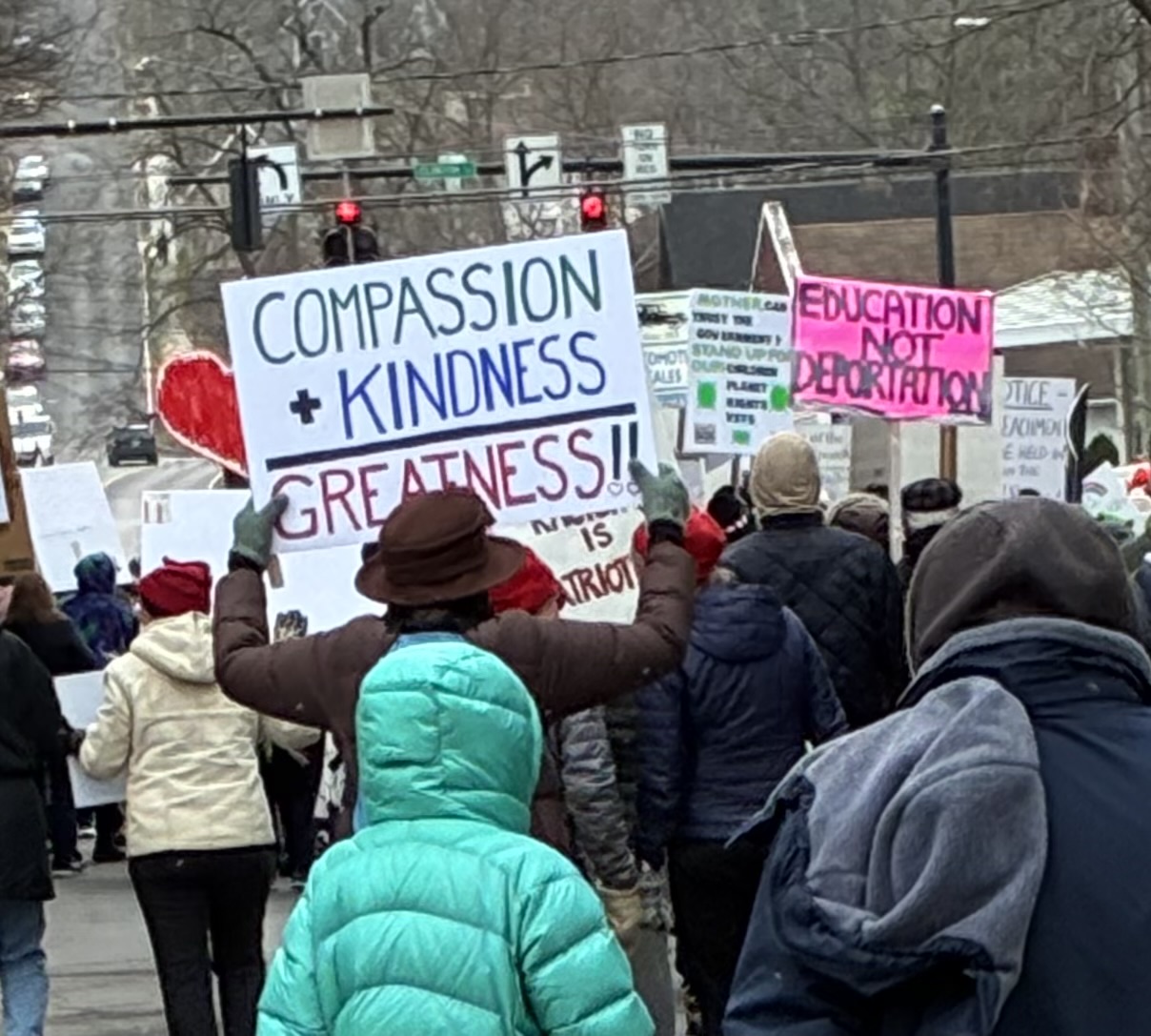
Outrage Directed by Compassion Can Save Us: How Do We Recognize and Call Out the Hate and Blindness that Others Carry Without Letting It Turn Us to Blindly Hate?

Sometimes lately, I worry I’m losing empathy, losing an ability to see myself in others. And this scares me. It can lead me to feel I’m losing the heart of who I am.


I was listening to a program on NPR hosted by Tonya Mosley. She was interviewing Jia Tolentino, a staff writer for the New Yorker, on an article she wrote called Our Plastic Surgery Nightmare. The program went into totally unanticipated topics that I previously thought had little to do with plastic surgery.


Or maybe I should say plastic surgery has had unanticipated consequences. The technology has become so precise as to be practically undetectable. So, what’s the problem? With such advances, it’s easy to feel even more pressure to work to maximize our appearance and make it conform to what we think other people consider beautiful. And when every face can be “optimized,” it becomes less a window into character and emotion, and more another field of artificiality. It becomes something to buy, not to live our way into. No longer will we see smile and tension lines, or other signs of character and the realities of a lived experience. A dimension of the face as a vehicle of communication will be lost. Instead, another vehicle to hide ourselves from others and from ourselves will be born.


What Tolentino found is that the images people are using to model their appearance on are AI generated. And these images are predominantly of people who are white, young, and based on one idea of what’s beautiful. They are also very much alike one another. The face is being separated from the person, the person from their humanity or soul.


The program then went on to talk about “Looks Maxxers,” a purported self-improvement or men’s rights movement I never heard of before and had trouble understanding. It largely began around 2010, during the “Me-too” movement and the Presidency of Barack Obama. It was a reaction against a perceived rise in prominence of feminism and maybe of African Americans, and diminution of strong white men. A large segment of this group blames women for their problems building romantic relationships. This perception tipped these young men into a reactive, hateful belief that women are less than men, more superficial, who do not deserve equal rights.


According to Tolentino, it’s also an attempt to discover and classify the bodily characteristics of successful men to imitate those characteristics. In the “manosphere,” an influencer named Braden Peters became famous for striking his jaw with a hammer, as well as using softer methods like work outs, peptides, supplements, etc. to make his body and face more rugged, more “masculine,” and in his eyes more attractive.


But all these efforts to be attractive are not for sex or even happiness. These men are purportedly heterosexual but show little or no desire to get closer to women. Their purpose is to attract women to display power and dominance over them, and to be seen by a virtual, disembodied audience. She called this “eroticized attention;” it’s also attention that could be used to make money from internet forums.


Tolentino’s article and my emotional response to it alerted me to how much I feel the human world is severely straining my ability to understand it and is close to spinning out of control. We might be facing an array of threats way beyond what was faced by any other generation I can think of. The philosopher Noam Chomsky warned that humanity is approaching [or is now in] the most dangerous and critical moment in history. We have a climate emergency, an economy that doesn’t serve most of the people, as well as too many unjustifiable, unbelievably destructive wars. We even have a fairly new technology, AI, that some reputable experts warn has at least a 10% chance of causing the extinction of all humans in the next decade.


And we have a president specializing in undermining every aspect of our lives as part of a human community. I hope I’m not pushing an analogy too far, but I think this administration is causing many of us to feel what’s been called moral injury. I first heard the term used in describing, along with PTSD, part of what many soldiers experience from serving in a war. According to the Moral Injury Project at Syracuse, University, the injury entails damage to one’s conscience from perpetuating, witnessing, or failing to prevent acts that violate one’s conscience. Many feel harmed by a betrayal of core values, of justice, fairness, and loyalty, by our leaders, by other members of our community, or by our own actions or inaction. We know that many of our leaders have failed not only to protect us but even care about us. We feel our very humanity is being threatened.


Even more than ever, and as much as we individually can, we can ask ourselves several questions. Maybe the most important is how can we hold compassion in the face of hate? Instead of sacrificing our empathy, as the “Looks Maxxers” seem to be doing, how do we instead protect and act in accord with it?


Does every generation of people feel an inability to understand or feel empathy for those born in different decades? It certainly seems true here, in the US. When I was a teenager, I felt my parent’s generation didn’t understand me. They couldn’t understand the reality of life for my cohorts and myself and kept wanting me to conform to their images of success and reality, not mine. Is my trouble feeling empathy for or understanding the “Looks Maxxers” anything like what my parents experienced with me?


And for those of us older people, what might it be like to be part of a generation that grew up with social media and the increasing climate and other previously mentioned threats dominating their world?…


*To read the whole article, please go to The Good Men Project.
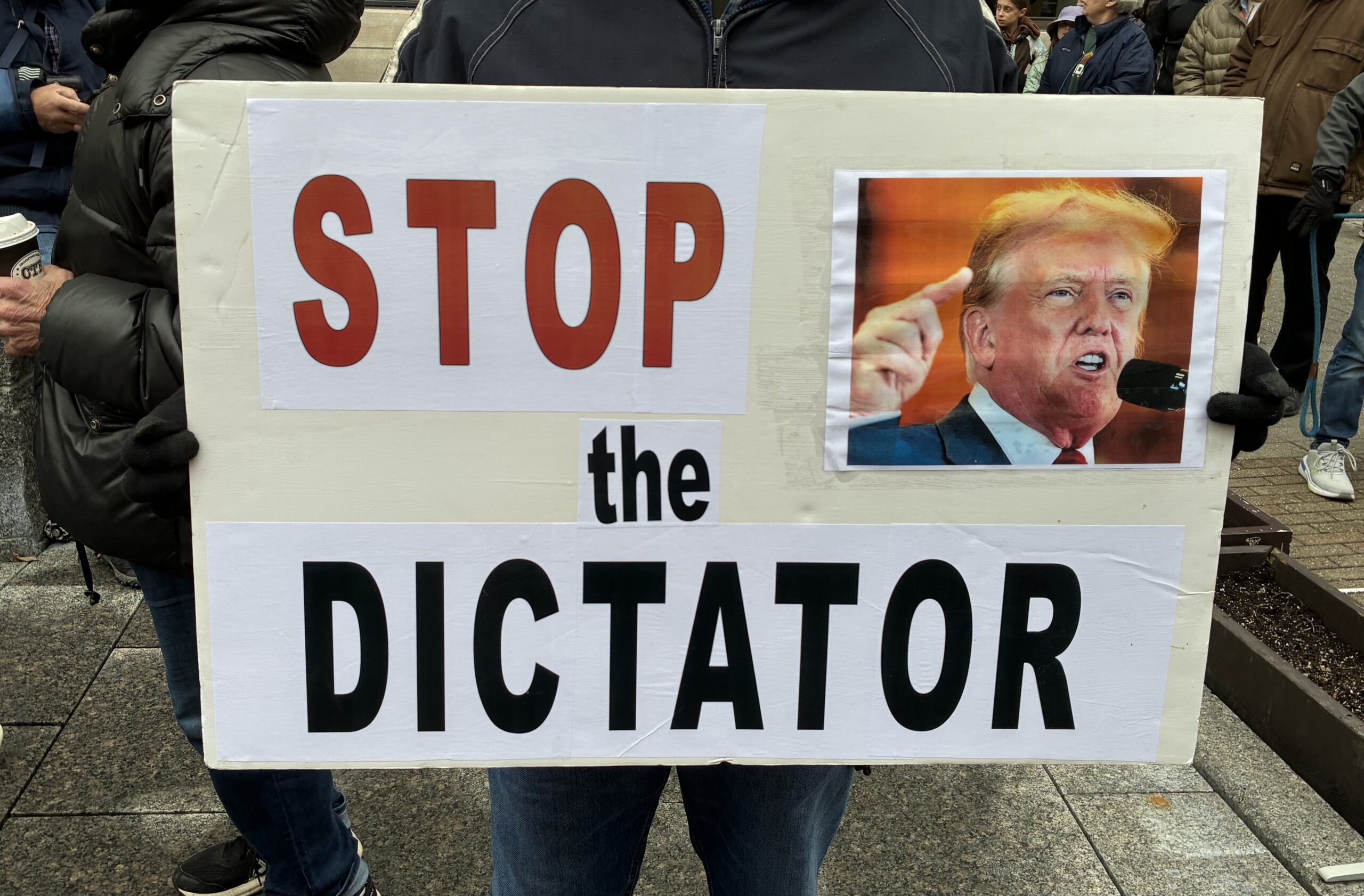
Feeling Stuck in Someone Else’s Nightmare: The Dangers of a Would-Be Leader at War with Himself, and Us

Lately, I often feel like I’m stuck in DT’s mind and can’t find a way out. It’s horrifyingly unpleasant, a daytime nightmare. Then I step back and breathe, momentarily at peace again.


We all create a world in our mind. Our world. Each person’s perception is slightly different from anyone else’s⎼ the depth of color, what we focus on and ignore, what we listen to and hear, what we respond to or bury. What a scene calls to in our memory.


We all, to varying degrees, shape the physical and social world around us to fit our way of perceiving it. In a way, whatever we see is us. We perceive and experience what our senses and brain make possible for us to sense.  We never see or hear exactly what another person sees or hears; or what a dog or a bat sees and hears.


And the moment-by-moment play-by-play that most of us hear in our minds is unique to us yet shares so much with the experience of others. But we can learn to step away from the recording. We can enjoy and be fascinated by, maybe even love, what eludes our play-by-play; we can welcome what is bigger or other than what we’ve ever perceived before.


But not DT. He seems to be one of the very few who feel they must control, manipulate, fabricate everyone and everything until other people only walk, talk, and appear as they would dress them. Only a very few feel they can’t feel secure, maybe can’t breathe unless there’s no one or nothing but themselves in their world shaping it. They’re just too ignorant about controlling themselves they try to make up for it by controlling others.


For example, look at DT’s response to the killing of Charlie Kirk. In a way, this murder was both awful and a perfect opportunity for him and his sycophants. It provided a chance to fertilize the delusion, hate, and division they’ve been growing for years, for lying about and demonizing “the left,” which in their definition is anyone who opposes their lust to turn this nation into a racist dictatorship they control.


Charlie Kirk was an outspoken conservative activist. Oliver Willis, writing for Daily Kos, said it seems many have been forgotten that he was also “a bigot, misogynist, and a racist who regularly excused the very sort of gun violence that ended his life.” Kirk said, in 2023, “It’s worth to have a cost of, unfortunately, some gun deaths every single year so that we can have the second amendment.” Did he mean to excuse 47,000 killed by guns in 2023 alone? How about 27 killed in 2012 in Sandy Hook Elementary School or 19 killed in Robb Elementary School in 2022? What about 47 school shootings so far this year?


Kirk’s killer, Tyler Robinson, comes from a Republican, Mormon, church-going family. He has no criminal record. He turned himself in to police after being encouraged to do so by his parents and a retired police officer who knew his family through their church. He even took responsibility for the vile murder on his social media platform, saying “im sorry for all of this.” He was dating his roommate, a transgender person, and the revelation of this relationship set up a tsunami of speculations, lies, and distortions led by DT himself.


Instead of using this awful event to bring people together in the face of violent death, DT used it to manipulate a violent reaction against Democrats, LGBTQ+, immigrants, and his opponents. “The radicals on the right are radical because they don’t want to see crime…” he said. This ignores the fact that for the last 40 years especially, most politically motivated violence came from the right. “The radicals on the left are the problem – they want men in in women’s sports, they want transgender for everyone, they want open borders…”


He said…


*To read the whole article, please go to The Good Men Project.