
Reflections on The Drive to Know: Reality is More than Words and People are Not Just Concepts

The urge to know, to have an answer, to understand, to explain— this is such a powerful drive in our lives. So many writers, philosophers, fellow human beings have thought and written about this. And we feel it all the time. We don’t hear from a friend or loved one and we send a text, and worry-wait for a reply. We get in the car in a snowstorm yet want to know if we’re being stupid driving anywhere. And when we listen to the news lately, we might wonder what will succeed in making things better? What else might be taken from us, or what will be revealed that will assure democracy and our humanity will prevail over autocracy and cruelty? There can be such pain and discomfort in not-knowing.


Many of us can recall a time we felt some new pain and wondered what the cause was. A pain without an explanation is a pain doubled. Sometimes, not-knowing can be fun and add openness, excitement, and anticipation to our lives. But often, it’s just another source of worry.


We have this sense of ourselves, of what it’s like to reflect on our feelings or experiences. I think I know what it feels like to be me.


But there are times that I’m not so sure. For example, when I realize my attitude, energy level, or what I enjoy doing has changed. Or when so much is going on inside my mind it seems like foreign territory, and I have no idea where it all came from or where it’s leading me. Our inner world can feel so vast and elusive. Or sometimes someone says something about me that shocks me. And as I get older, this rate of change intensifies. I never know from day to day how I’ll be or, of course, what will happen. This is another dimension of not-knowing. We might feel we don’t even know ourselves. How can we control what we don’t know?


And then there’s the negativity bias, where we imagine the worst so we’re ready to take action to prevent it. And we develop a theory about ourselves that’s just too awful to face and we cease to care about the reality; we catastrophise and paralyze ourselves. In this case, friends can help us perceive and face what we need to face but haven’t.


The same is true if a neighbor, friend, or loved one is in pain. If we don’t know the cause, we worry twice as much about them. We want to help. This is part of our natural compassion. If we have an explanation, a reason, even a mere theory of a cause, we worry less. We have a way to help. Even if the reality is bad, there’s often a sense of comfort in knowing.


But sometimes the suggestions we offer others can be hurtful. We can unknowingly imply we’re superior in some way, or that the person is ignorant, or doesn’t know what we think they should know. We can’t totally get into their mind with ours and maybe we don’t want to use our empathy and imagination to even try do so.


One issue here is feeling hurt and helpless in the face of another’s pain. We can feel a loss of control in being powerless to help. So, we reach for something to give us that control. But I wonder about control. What does it really mean?


We might also expect there to be reasons for things. Not just causes, but something like God delivering prizes and penalties. When something awful happens to a good person, and to ourselves, we might try to figure out “what did we do to deserve this?” But I think God is too big or the intelligence of the universe too inclusive to think in terms prizes and penalties. Maybe, the teaching about Karma is correct, and one thing, one action, one intention simply sets up the conditions for other actions and intentions.


And when I try so hard to find an explanation, I could simply be enjoying expanding my knowledge. I love reading and learning. But it can also be an attempt to turn reality into words and people into concepts. A word is so much smaller than the reality it purports to explain. And a concept of a person can describe at most a tiny particle of them. A little bit of humility about what we think we know can go a long way….


*To read the whole article, please go to The Good Men Project.
When Trees Speak: The Dark Does Not Descend on Us. It Emerges from Inside Where Eyes Meet Others

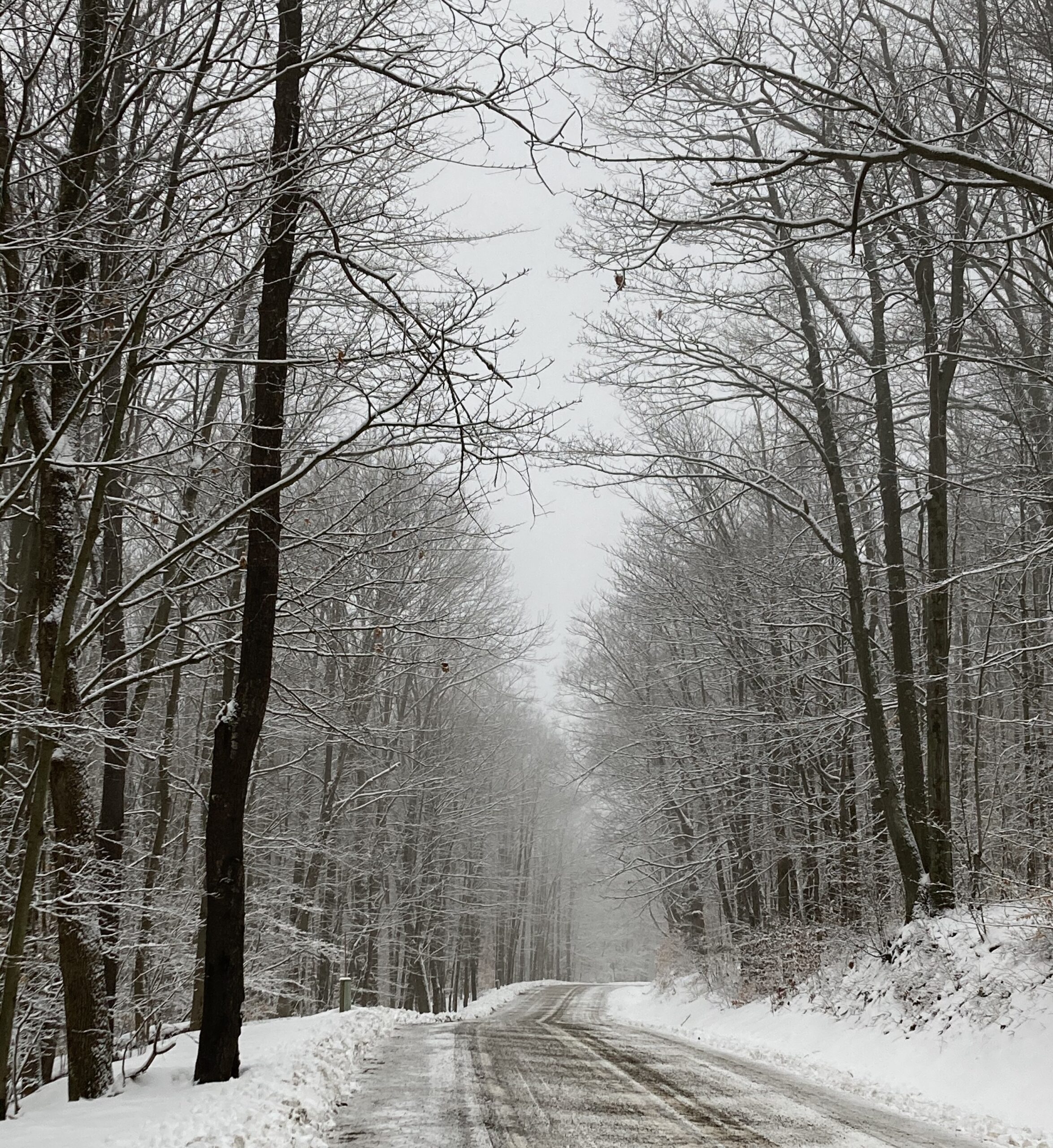
My wife and I took a long walk late in the afternoon. The sky was mostly dark grey. It had rained earlier, with a touch of snow. With the dropping temperature, the rain turned to ice, which coated all the bushes, tree branches, and electric lines. There was just a hint of the setting sun, but that hint was reflected and augmented by the ice, so everywhere we looked there were individual hands and fingers of light, thousands of them.


As the light disappeared further, instead of the dark descending on us from above, it was as if it emerged directly from inside everything we noticed⎼ from each tree or bush my eyes met or from the road itself. Details and colors, and the remnants of light icing the branches seemed to be sitting on darkness and winking out.


In previous years, during the winter I did not often go outside to exercise. It takes heavier clothes and boots, mittens, and hats, and the road and paths are often slippery. I used to work out in the gym or martial arts dojo. My wife did yoga classes. Now, due to the coronavirus, especially with new and more virulent strains⎼ and the vaccine so close yet not widely available⎼ our home is our gym and we hike steep hills in almost all sorts of weather. An added benefit is we also see our neighbors more than we used to, or at least the ones who walk.


Walking has become a stable part of our day, not only a way of getting out of the house and getting exercise, but a classroom and a way to constructively structure time. As we walk, we study how the light plays with the road and trees, and how the trees play with sound. By paying careful, mindful attention, we better understand and feel more at home wherever we are.


It’s usually so quiet we can hear the other residents of the road. Three ravens live in the pine forest and often fly over us, speaking with their hoarse cry. The trees speak with unexpected voices. The pine forest occasionally makes sounds like a cat calling out. When I first heard the sounds, I responded, shouted out the names of my cats to see if one of them was in there. But no cat emerged. Other times, especially when it was windy, the pines sounded like wind chimes. Further up the road, a very different voice. Oak, maple and ash trees leaned into each other, speaking in groans, sighs or whispers. Each tree or pair of trees had its own voice.


When we arrived home today, the mail was waiting for us. It was not just ads but a package. A new book, or actually an old one I had to search for, a translation of The Four Chinese Classics, by David Hinton. I took off my coat and gloves and sat down, excited to see what the book would offer.


I opened to a random page. It was in the Chuang Tzu, one of the two most important books of Taoism, and read the following passage spoken by an adept named Piebald: “In the awesome beauty of mountain forests, it’s all huge trees a hundred feet around, and they’re full of wailing hollows and holes⎼ like noses, like mouths, like ears, like posts and beams, like cups and bowls, like empty ditches and puddles… When the wind’s light, the harmony’s gentle; but when the storm wails, it’s a mighty chorus.” …


To read the whole piece, please go to The Good Men Project.
 

The Fruits of Our Actions: Transforming Self and World

Wouldn’t it be nice if people who seem awful to us got their “just” rewards? If bullies and thieves were stopped and punished and we got to see the punishment? Wouldn’t it be wonderful if narcissistic rulers who ripped off their nation and committed acts of inhumanity were taken from the White House to the jail house? Oh, if only. But it’s obvious that it doesn’t always work that way, at least not in our personal timeline ⎼ except maybe in the section of our imagination reserved for wishes and dreams. …..


A Meditation on Taking Action


And when the rage and the fear and the tears about the state of the world breaks through, or when the despair threatens to overcome us, when we feel isolated (because fear is isolating), or want to run to a different universe, then we need to take a breath and step back from the emotion. Instead of hiding it away, we can notice it. Make it something to observe and learn from. Such fear is not a message to run away but to open up.


Close your eyes and notice how you are breathing. If you feel powerless, it is not a message about giving up but that you need to act. If you feel lacking in courage or you can’t imagine what to do, then imagine someone you know or have read about or wish to know who acted with courage. Someone compassionate and driven to act, or someone informed who knew and did what needed to be done. Maybe someone creative who thought of something no one else thought of.


Who was this person? Imagine her or him. Imagine what she looks like. What was it this person did? What do you think she felt when she did it? Or felt before she did it? Imagine the fear or self-doubt he might have felt? How did he act despite the fear? Imagine her feeling fear yet acting anyway.


How is this person just like you? Is her fear any different from yours?


Imagine him feeling he had to act. What have you done in your life that was helpful to someone else or creative?


You and this person are not so different. You both feel fear. You both breathe in and out. You both notice what is happening.


So now let come to mind some situation you want to change, and you feel needs addressing. Let come to mind something you can do. And imagine doing it. Where do you start? Who can you talk to about it? Who would share your concern?


And what do you need to know? Where could you find that information? And what would the change look like?


What would it feel like to have taken these actions?


Take a breath in and out. How do you feel now?


To read the whole blog, go to The Good Men Project.