
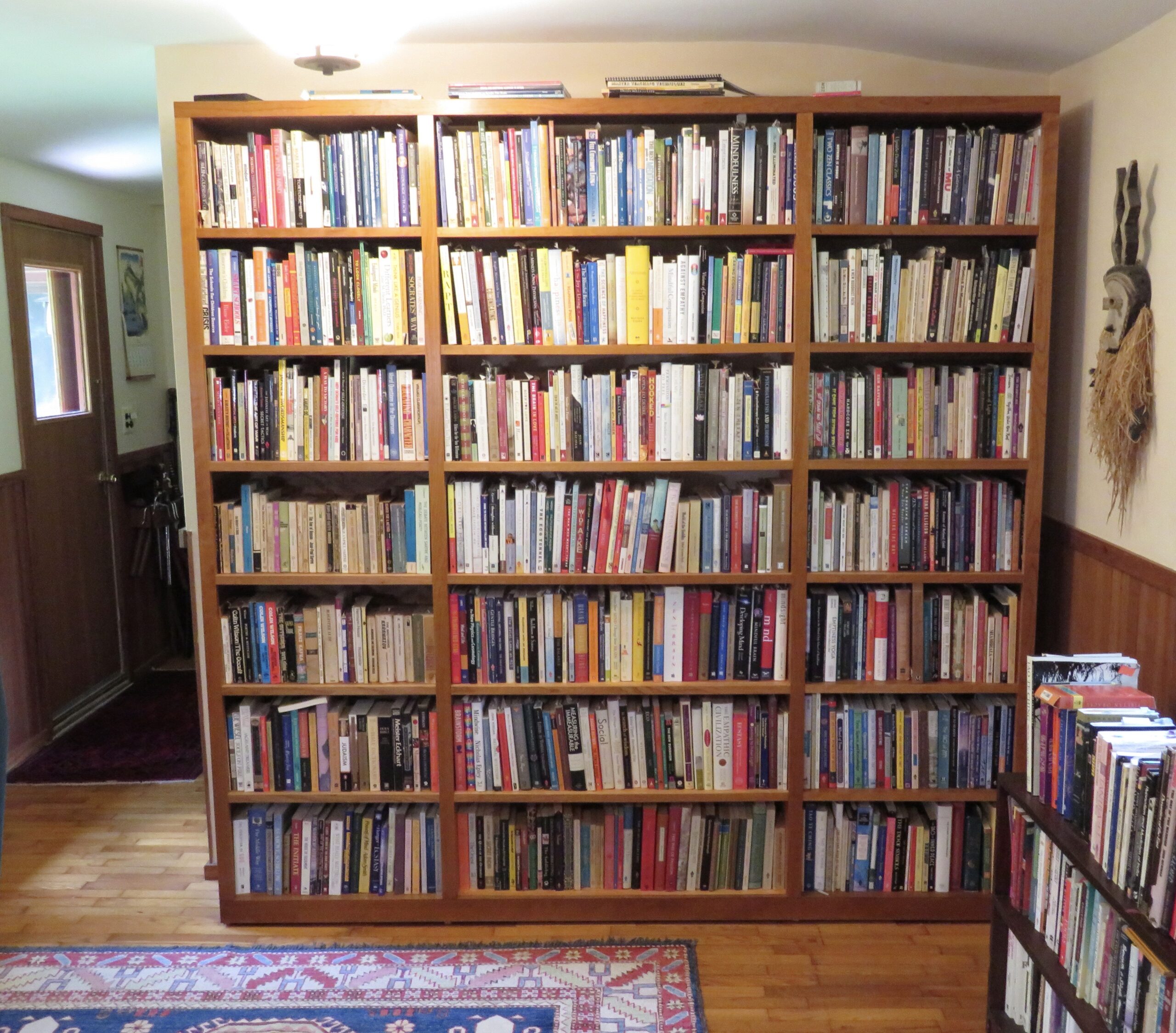

It was such a comforting moment. I was reading a book where the main character, a bookseller, was watching a customer reading the classic novel, The Count of Monte Cristo. The man was old and seated in a cushioned chair, at a table, sipping coffee. Books were scattered everywhere, not just on the wood shelves. There was mismatched artwork on the somewhat peeling walls. Lights hung from the ceiling creating areas of clarity amidst the soft darkness. Snow increasingly falling outside as the world turned dark. Yet inside, it was warm. A fire was going in the woodstove. Such a comforting moment.
The Book of Doors by Gareth Brown is part urban fantasy, part mystery and adventure, part romance⎼ and partly an examination of the psychological effects of pain and grief. Shortly after the book begins, the main character inherits a magical book that allows them to travel from any unlocked door to any other they can clearly imagine. There are all sorts of magic books in the story⎼ a book of shadows, for example, enabling the holder to disappear and become a mere shadow passing through any space. There’s a book of Illusions, one of luck, destruction, etc.
We never know what a book might reveal. They’re all around us or used to be. Like doors. Like places in the mind, or in our homes, schools, or workplace; memories, ignored bits of reality. Places we can step through to taste or digest; or to dwell fully and beautifully. Some with a hidden power.
When I was 18 or 19, I walked through an open door into the old Barnes & Noble Bookstore in the Village, on 8th Street & 6th Avenue, in downtown New York City. Back then, it was a smaller, more intimate store, not like the chain stores of today. I was just wandering the aisles, hoping to find a treasure, when I noticed a man and woman, maybe in their 70s, in the philosophy section in the back of the store. They were discussing the French activist and philosopher, J. P. Sartre and his concept of authenticity. They were both dressed in old but expensive clothing. The woman looked sort of regal, the man very professorial. They intrigued me but I respected their privacy and felt too embarrassed to get close enough to listen in on their conversation. So, I moved on.
I ran into them 2 more times. One time was at a lecture on Thoreau in an upper middle-class neighborhood on the West Side of Manhattan. Someone at the lecture told me they had escaped from the Nazis in Austria. I don’t know the truth of this, but supposedly she was from a noble family, and he was a professor, but I don’t remember in what field. And later, back downtown on 6th Avenue, I was surprised to see the woman alone on the street, begging for money, and aggressively berating those who pretended not to see her.
Another doorway, in a recent dream. I entered what at first appeared to be the home I grew up in, where my parents lived for almost 30 years after I moved out. But in the dream my parents had sold that house. The dream home was slightly different, and in bad shape. The bathroom was not working. I had to sleep on the couch in the living room, not my old bedroom.
And my parents were very old. Someone said my mom was near death. My dad was in only slightly better shape. All at once, several people I didn’t know, mostly younger, in their twenties or thirties, came out from the back of the house, talking loudly amongst themselves and crowding the living room. Outside, through a window, I saw someone park, get off a motorcycle, and walk away. One of the younger people claimed the bike had been stolen and now returned. My dad, who had never in his life been on a motorcycle let alone driven one, put on a leather jacket and helmet, climbed on the bike, and tore off. Maybe he had stepped through a doorway to a younger self, as he looked so much younger, with his back straighter than it had been in years…
*To read the whole article, please go to The Good Men Project.

