
Finding Our Power in How We See, Hear, and Speak: Hearing Both the Speech of Other People as Well as Trees as the Way the World Speaks in Us

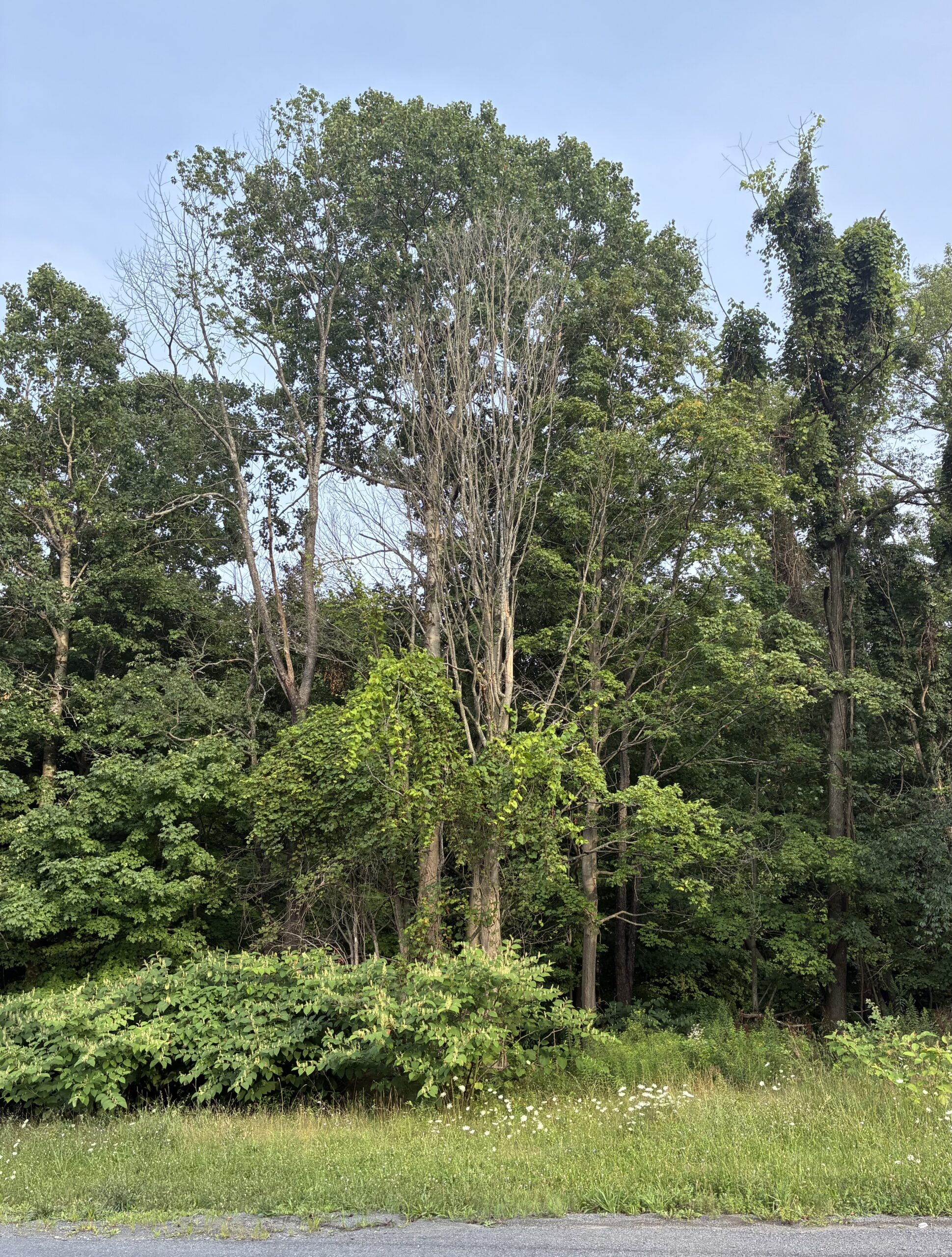
I was recently walking down my rural road. It was a quiet afternoon, mostly sunny and in the 80s. About a half mile from home, on the edge of a forest, the road turned sharply. When I reached the turn, it was suddenly windy. The tree leaves were shaking. The energy was the same as what precedes a rainstorm. But there were no clouds. And as soon as I walked 5 or 10 feet past this group of trees, the leaves were quiet.


I realized I had noticed the wind that inhabits this space many times before. And this was, as I said, especially true minutes or maybe hours before a rainstorm, when the leaves and trees in this curve in the road vibrated. It served as a semaphore or audiphore, a warning system, to turn back before the rains came. Why did the wind speak like this? Did it have to do with a change in air pressure caused by the road turning and butting against the forest? Or something else? It felt like the spot had a life of its own and could speak on its own. But somehow, before now, I hadn’t grasped anything of what was being said.


Life can give us so much, but we miss a great deal of it. In a way, our senses exist both to notice and ignore, to sense as well as filter what we perceive. The research psychologist and professor Dr. Robert Ornstein talks about the senses as “data-reduction systems.” He points out if we took in everything, if we became conscious of everything going on around us at any point in time, we’d be overwhelmed. It would be too much stimulation.


Ornstein quotes the 19th century philosopher and physician, often called the “father of American psychology,” William James as saying the mind acts like a sculptor. Out of the raw and swarming chaos around us we, through cumulative choices and with the help of our ancestors, our culture, and linguistic systems, we select this and reject that. We create the world we live in and feel. We’re also taught or conditioned to accept this and deny that. What we consciously perceive greatly depends on what we’re taught to see, what we expect and pay attention to, and what we value. Other minds create other worlds.


We also depend, of course, on what nature gives us. For example, our eyes can perceive only a tiny fraction of available light. The possibly visible light in the electromagnetic spectrum is so wide, ranging in wavelength from “less than one billionth of a meter to more than a thousand meters,” says Ornstein. But the human eye can detect only a tiny part of that, only 400-700 billionths of a meter.


For humans, ultraviolet light is barely perceptible. Ed Yong, in his wonderful book An Immense World: How Animal Senses Reveal the Hidden Realms Around Us, says ultraviolet is “an invisible hue just on the edge of our vision—a perceptual void that our imaginations are keen to fill.” But to bees, some fish as well as reindeer, dogs, cats, etc. UV signals are common.


So, thinking of our eyes as only windows to the world is a limited metaphor. We’re not merely windows; we’re not, as some would say, merely mechanical processes. And we’re not separate from the world we sculpt. How we think about reality strongly influences our ability to act in it. How we think about our ability to make choices influences how well and what we choose. This is so crucial to recognize. If we think we have no role, we create a world in which we’re powerless. Getting us to think we’re powerless in shaping what we see is a belief propagated by autocrats to enable them to control us….


*To read the whole article, please click on this link to The Good Men Project.

When We Feel Each Word We Utter Holds Another Person in Its Hands: In Making Ourselves Real to Others, We Become More Real to Ourselves

We all know those moments when we so want to talk to a friend. It might be with one particular person; or it might be a cry to just talk with someone, anyone who cares or knows us, and who will listen. There are moments when we realize something we didn’t say, or regret saying. There are moments when something is just turning over and over inside us, shaking the nerve pathways. And we yearn to reach out. There are moments when we wonder, who is it I can talk to that will understand?


But I wonder⎼ this drive can be so compelling. What is it we think we gain from sharing? What do we feel will happen or change by the act of opening our mouths and speaking? I doubt it’s just a release of pent-up emotion that we crave. And it must be something more than simply sharing with someone important to us something that’s important.


I’ve had some medical issues lately. And part of me wants to keep it all to myself, so in my own eyes and the eyes of the world, I appear healthy. But the questions about how to understand my health abound. What does this pain mean? Is there a diagnosis? The not-knowing can be frightening. A definitive explanation or label, even a scary one, can provide such relief.


And this is so true for all that goes on inside of us. When we look inward, hear a thought, feel a sensation or feeling, how do we know with any surety what it means? It’s so difficult to make sense of all that goes on inside us. We can feel our heart beating slowly or quickly.  We can feel tension in our belly, a rawness in our gut, heat in my palm. But there are no bold printed signs on my inner roadways saying, “here I am” and “this is truth.” Our inner world is so vast and elusive⎼ and tricky. Anything we experience can be interpreted in so many ways.


And what about the strong impulse to share whatever news we have, about our health or any event in our lives? How much should we share? Our state of health is part of our identity. When we talk, we create a perspective on who we are. In a way, we try to shape reality itself. We select words, images, and create stories with ourselves as the main character. We become the hero or heroine of one version of our lives. This gives our struggles meaning and importance.


But to select, we limit and distort. We describe the indescribable; we create walls or boundaries around what is naturally boundaryless. And we think of these boundaries as points of distinction, or separation, even isolation. So, how do we speak so it serves us instead of isolates us?


By creating a story of a self, we create something another person can relate to. By selecting a feeling or experience to share, we give another person a chance to enter our experience, to climb inside with us. Boundaries also create points of contact. A hand not only touches but can be touched.


And as I said earlier, our inner lives can be so fuzzy and confusing, so vast and limitless. Saying something about ourselves to another person is in a way a personal experiment. How we interpret our inner signals and outer events is crucial. We try one story and see if it holds up and feels right. Not only in the eyes and mind of the other person, but how it feels in our own mouth. We use conversations with others to make the fuzzy clear and give reality to ourselves. In making ourselves real to others, we become more real to ourselves.


But we need to be careful here….


*To read the whole post, please go to The Good Men Project.