To Better Understand the Echoes of What We Do and Say: What Would Happen If We Felt the Rivers of the Earth as the Veins of Our Body?

In a book titled In the Absence of the Ordinary: Soul Work for Times of Uncertainty, the author, Francis Weller, says “we can no longer divide the inside from the outside.” Maybe the pandemic, the climate emergency, regional wars, economic instability, and I’d add, this new administration, have made that illusory division uncomfortable and too painful to live with.


Weller thinks we’ve begun to feel there’s no “ordinary” anymore. He describes a felt sense that the continuity of history and our participation in it have altered. Increasingly, we “register in our souls” the sorrows of the world. The sorrow of others, of our planet, is our sorrow. As climate change stresses forests, oceans, the fabric of natural life, social bonds also fray, and clarity of thought diminishes. The world, or at least human civilization, seems to be teetering on an edge. Yet the fate of the world’s climate and history runs right through us. What an unbearable but necessary burden.


I hope he’s correct, but I don’t know. How many of “us” now fit Weller’s analysis? Polls show increasing concern about the environment and climate. They show disapproval of the DT administration’s wars, economic policies, and cuts to healthcare. Most of my community of friends, family, and neighbors fit his analysis, but certainly not others. Certainly not the sycophants or supporters of the administration. But will enough of us wake up in time?


Dividing up the world, analyzing and breaking down situations and problems, is often necessary and useful, but it yields only partial truths. It can create problems even as it solves others. But dividing ourselves emotionally from the world— never. We need to develop a better awareness of our entanglement with everything around us so we can better understand the echoes of what we do and say.


To counter the illusion of a divisive self, Weller recommends we increase our tolerance and ability to descend into the dark mythic underworld, the world of dreams, the unknown. We so often fear or resist the uncertain. We need to allow ourselves to do what we can in this unbearable situation; to let go of much of the life we’ve known so we can step into the unknown. So, we reach into the darkness to find the inspiration and resources to build something new, in harmony with the natural world, and I think just.


Weller recommends 5 disciplines to explore and strengthen in ourselves so we can better face the depths of what’s happening.

  1. Deep listening: to sit quietly and listen for the truth spoken and lived by others and the trees, hills, water, around us. Hear what needs to be heard.
  2. Restraint: take a moment before acting to pause, breathe, and reflect.
  3. Humility: look around and become sensitive to how we depend on one another, how enmeshed we all are in each other. And I’d add, realize that we’re all prone to think our view is right and true; so, in order not to be wrong, we must recognize the “right/s” of others.
  4. Embrace not-knowing. Acknowledge we never know what’s going to happen. We don’t even know all that’s really happening right here in front of us. But by acknowledging this, and living it, we can be more open, vulnerable, and humble. We can take in more than possible otherwise.
  5. Let go: Everything is impermanent, always changing. But we can better change in harmony with the world when we no longer try to control all that happens in it.


But descending into what Weller calls the dark is, I think, also entering what is always right here, now. It’s just that we don’t look at it or see it. In every perception, there’s not just us and what we look at; there’s the looking, or the awareness itself. When we are aware of awareness, we can be so present. It almost seems unnecessary or repetitive to say it, but when we see another human being, what we experience is not just the person but our awareness of them. That tree, that artwork, has ourselves in it. We are never not of this world. It’s our home. And when we feel this, it can be startling and beautiful. It can awaken the energy needed to dare, to care, to create, and to act.


Years ago, I hitch-hiked to the west coast and took a side trip to the Grand Canyon. I stood at the edge of the Canyon, staring into its depths; the strata of soil, stone, and colors seemed to extend forever. Deep at the bottom, a barely perceived blue river. Then a family of 5 parked and exited their car. The woman in the group was maybe 40 years old and totally wrapped up corralling her 3 kids. When she reached the edge near me, her attempt at controlling her children, her focus on anything other than the canyon, was totally forgotten. All she had, or all she was, was an awareness of what was seen and felt. She just looked out at the canyon and it seemed she felt the utter incomprehensibility of everything in front of her. And all she could say was, “Oh, my God. Oh my God.”


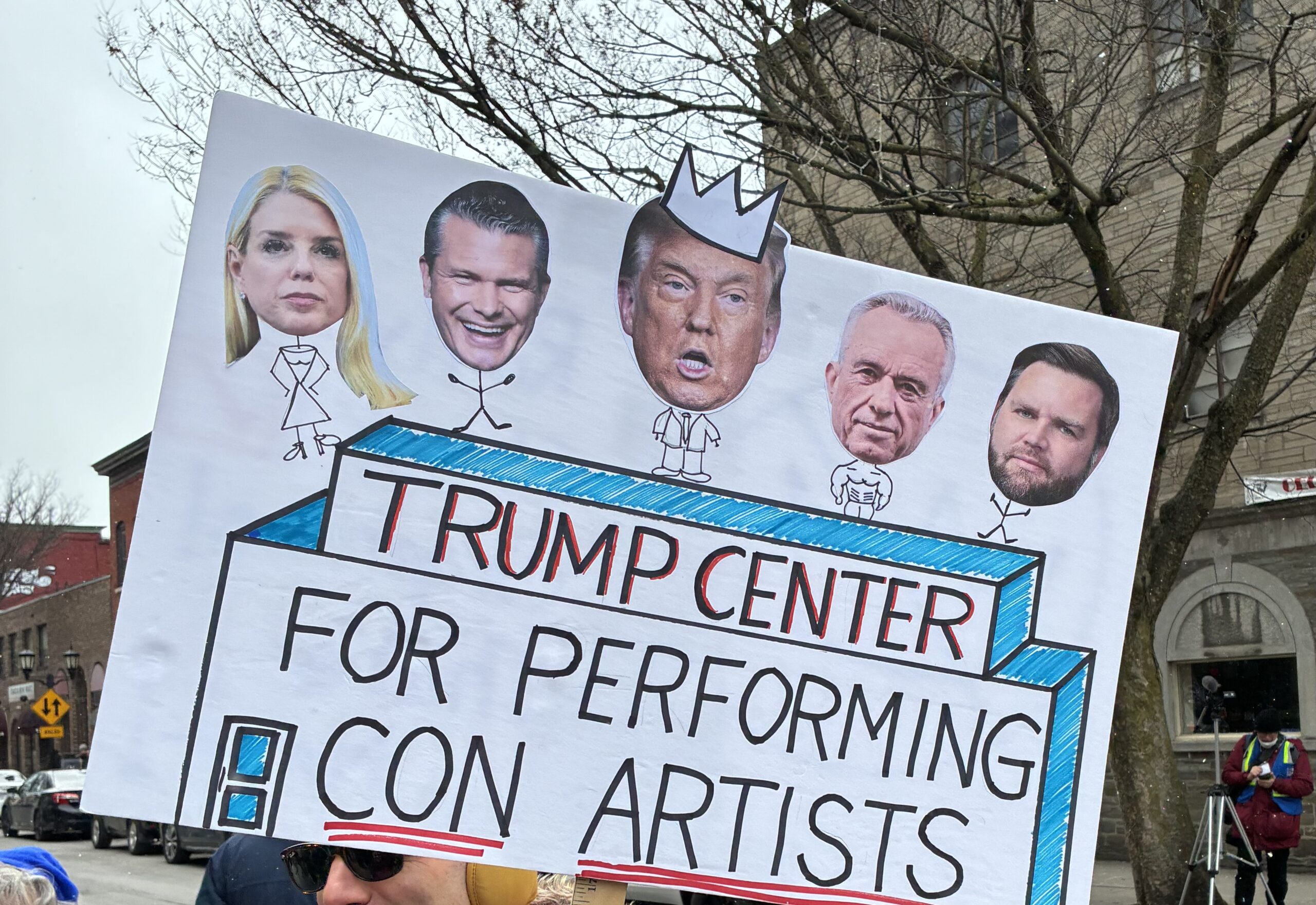
We need these “Oh, my God” moments, moments of awareness of a reality so startlingly real. And it might not be obvious, but demonstrating with thousands of others for a political cause while thinking with a perspective larger than ourselves alone— acting to save our democracy, healthcare, and planet— ”Oh, my God.”


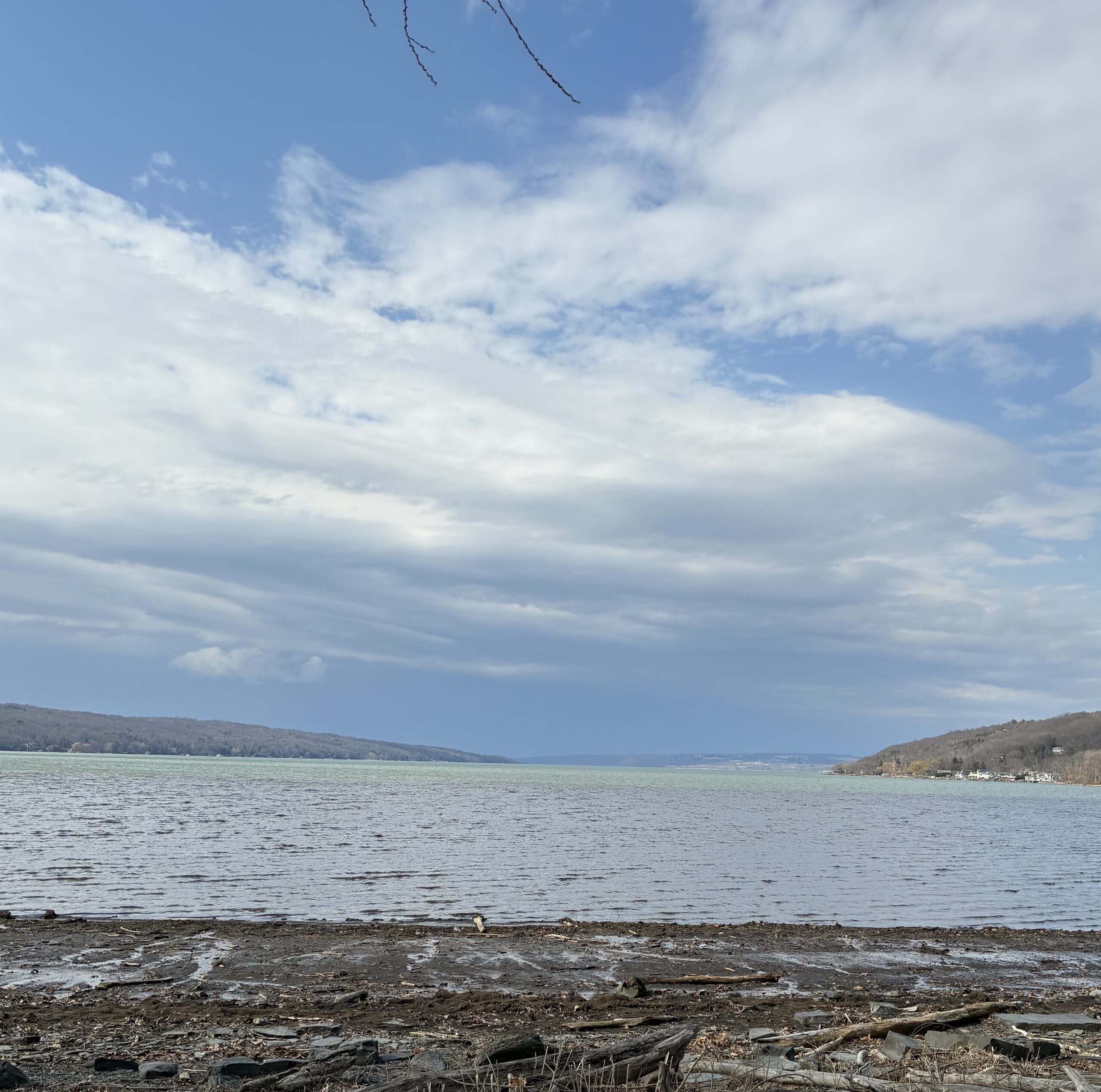
When I was parking my car near a friend’s home several blocks from the location of the last No Kings demonstration, the size and atmosphere of the event became clear. There were so many cars, so many people. It was like a river of people flowing together, a powerful, even joyous river…


*To read the whole article, please go to The Good Men Project.

Stop the King of Lies and Rip-offs from Being the King of US: What Can I Do? Is Not an Assumption of Hopelessness but A Driver of Reflection and Action

This morning, the sky was partly cloudy, after one of the wettest springs in history, with a grey haze from Canadian fires. Still, a cardinal and a vireo were singing. Outside my office, the rhododendron flowers had turned brown and were falling off the bush, but the roses were very alive with a deep red color.


But in our human realm, news reports set a very threatening tone to the day. This began at a news conference earlier in the week, when Senator Alex Padilla, Democrat from California, tried to ask a question of DT’s Homeland Security Secretary Kristi Noem. As he tried to take a step forward to be heard, identifying himself as a US Senator (the ranking member of the Judiciary Committee on Immigration), Noem’s security detail stopped him, shoved him to the ground, where he was handcuffed and forcibly taken from the room.


Later, the Senator explained he had repeatedly asked DHS for information on their increasingly extreme actions against immigrants but had not received answers. He said, “If this is how this administration… the DHS responds to a senator with a question, you can only imagine what they’re doing to farm workers, to cooks, to day laborers, throughout the LA community and throughout California and throughout the country.”


Since June 6, mostly nonviolent protests continued in LA, after having been met not only with police but soldiers, National Guard troops sent in by DT against the explicit direction of California Governor Newsom. This was an even more unrestrained repeat of DT’s militarized response in 2020  to protests against the killing of George Floyd. And, as in 2020, the possibly illegal deployment of troops only served to inflame the situation further.


And on the morning of Saturday, June 14th, in their Minnesota home, Melissa Hortman, a Democratic state representative and her husband were assassinated, in a politically targeted killing. The assailant also shot a second Democratic lawmaker and his wife multiple times, but they both thankfully remain alive as of now.  When DT was asked by a reporter if he would call Minnesota Governor Walz, he responded with more spite than any semblance of truly caring. “Well, it’s a terrible thing. I think he’s a terrible governor,” ABC News reported Trump said. “I think he’s a grossly incompetent person. But I may, I may call him, I may call other people too.” As of Sunday, he hadn’t called the Governor.


Starting Saturday morning, a “Celebration” in Washington D.C., with a military parade in the evening, honoring the 250th anniversary of the US Army⎼ and the birthday of the King of Lies. But across 200 cities covering most of the country, a NO KINGS demonstration at 1:00. Also later in the day, a Gay Pride event and a Juneteenth remembrance.


The events presented a dramatic contrast. The military parade celebrated not only the courage and sacrifice of soldiers, but the ego and self-centeredness of DT. In anticipation and messaging, it was frightening; but it turned out to be a sad and not well attended event.


The NO KINGS protests were attended by millions. They were both serious and fun, concerned for the rights and future for all of us⎼ compassionate yet defiant of DT’s attempts to destroy democracy, to mistreat and remove immigrants of color, and undermine any government agencies and policies that protect the well-being of the mass of citizens, like healthcare, Social Security, SNAP, and education.


The protests were peaceful yet energizing.


*To tread the whole article, please go to The Good Men Project.

It’s So Overwhelming: Rediscovering the Core of Our Being

DT continues to do all he can to stir up the chaos, the shock, the abuses so we can’t keep up. My e-mails are flooded with petitions, unbelievable news stories, information on protests that happened and ones to join, and requests for money to fight back against the assaults. Never before did I so anticipate and cheer on suits against the government. I used to automatically delete 95% of emails; now, 95% seem too critical to ignore.


This morning: Scott Dworkin, Massive Anti-DT Protests Erupt Everywhere and More Good News. And: Opinion You Don’t Want To Miss. Trump IRS Pick Just Enriched by Tax Schemers, Trump Relaunches His Tariff Corruption Game. Articles on DT’s threat to the economy and threat to our ability to afford our lives. The Supreme Court denying or sometimes affirming DT’s lust for absolute power at our expense. The illegal imprisonment of immigrants, the attempts to destroy due process and the rule of law. Articles repeatedly appear on the destruction of health care, environmental protections, and all government functions that support the well-being and the very lives of most Americans.


And notably, an article in the New York Times on Easter Sunday about how Americans desire and are turning to a belief in a god, soul, afterlife, a spiritual dimension to their lives. 92% of Americans claim they have some kind of spiritual belief. The article, Believing, by Lauren Jackson, appears in a section of the Times dramatically titled America Wants a God. It’s part of her now yearlong project studying a significant shift in American life, after decades of people turning away from religion. A good number of us, 40 million Americans, had left their churches, synagogues, etc. and looked to jobs, gym classes, mysticism, meditation, mostly secular replacements.


But since the pandemic, the environmental emergency, and DT, more and more of us have felt an “existential malaise.” Our world, our lives are threatened on so many fronts, and we want somewhere to turn for support, for reason, for care. And studies, including one by the Pew Research Center, show that people who practice a religion, or have some sort of regular spiritual practice, tend to be happier, and one from Harvard on how religion contributes to being healthier. (Yeah, Harvard.)


This revival of spiritual longing, or maybe desperation, rings very true to me. We see this in the great interest in mindfulness over the last 40 years. And on the other hand, we see it in the maybe one third of Americans who have declared DT their new God or savior. I don’t know how believing in the Donald’s holiness makes people happier. I mean, he sells bibles for extra cash and seems to sell access to power to evangelicals for votes.


If godly means moral, caring about the well-being of others, living by the Golden Rule or Ten Commandments, and knowledgeable of the content of whatever Holy teachings one says one believes in, I think DT is probably one of the last people on earth to be called godly. But he nevertheless claims the title so absolutely others seem to accept his insistence as proof. When an assassin’s bullet just grazed him, he claimed God intervened in his behalf. Maybe spreading hate has a happy edge to it, or makes people feel united in a community of shared bitterness. Or maybe people can mistake autocratic political power for power over eternity.


Since even before the early Middle Ages, religion was often pitted against reason. With a 20th century decrease in church membership there was an increase in trust in science, research, rationality. And, at the same time, an increase in materialism, in a commodification of every aspect of life. Our own attention, our very mind, became the biggest commodity to sell. Although maybe this effort of commodifying the human mind, of controlling the mind of others, has always been the biggest power that certain humans hungered for?…


*To read the whole article, please go to The Good Men Project.