

Discovering A Depth in Ourselves Often Forgotten in this Crisis

Change can happen so quickly. Just a few days ago, we had snow and sleet⎼ in May! Spring flowers were covered by snow, broken by sleet, and blossoms were blown from the branches of cherry trees. Yet right now, it’s sunny and warm. All the snow is just a memory.


And even though it took a few months, it feels like it was just a few days before the pandemic changed everything. It is a storm that rages through our lives, but instead of ending in a day or two it continues on. And it is two storm fronts combined, COVID-19 ⎼ the fear of illness as well as the news of infections, deaths, jobs lost, schools closed⎼ as well as the DT administration and all the ills it brings us each day. But both of these, too, will end.


As a teenager, I remember many of us thinking being at school was preparing for life, not living it. We wanted “real life” to begin. Well, if real life hadn’t already begun for us, it is here now. This is it. Whatever we learned or studied, we have to use it now to help ourselves and others through this crisis.


Meditation or mindfulness has become the core structure of my day, along with greeting my wife and cats. I am so grateful to my teachers for showing me these practices. Each morning, I stretch, exercise, and meditate. When either fear or worry show up, I know I can let it go, or at least diminish it. Best of all, meditation provides a means to get quiet inside and study whatever occurs, so whatever occurs can teach me how to perceive with less projection or distortion, think more clearly, and grow stronger.


Due to the pandemic. I can’t go to the gym, so I’ve brought my workout home. I work out here more than ever, take more walks, do more breathing exercises and martial arts training.  And it’s not just more, it’s better. I have no other place to be, so I am here more thoroughly.


Writing stories, personal or persuasive essays or blogs, has been another way to learn about myself and feel more positive emotionally. It requires a combination of creativity, critical thinking, mystery-solving, and meditation. My first drafts are often journal entries or responses to an article or poem I read, a news program or podcast I listened to. I record an insight or something that intrigued me. Or I just write what I see around me or feel. And then I follow it up, do research, dive into the puzzle of my mind and write a full draft. And then take a breath. Sleep on it. Let it sit and percolate in my body and dreams….


*To read the whole piece, please go to The Good Men Project.
Getting Out of Your Story to Tell Your Story and Live Your Life

It’s Not What You Write or Say That’s Perfect. It’s the Whole Moment That Can Be Perfect


How often do you write something, think it is perfect, and then two minutes or two days later, you find all these points you missed or words with meanings you never noticed before? Or you do something and later regret it or realize you could have done it better? And you imagine other people noticing the same deficiencies you noticed, and because of what they notice they think of you as lacking in insight or vision or whatever. It is so difficult to see ourselves or our actions clearly. It is impossible to know all that we might wish we knew.


Writing is never done. There is an illusion or maybe a delusion that you can do something, create something, and if you feel it is perfect now then it will be perfect forever. How you perceive or think about it now will be how you will perceive it later. You think of the piece you just completed as having a character totally divorced from your character, as the reader.


I was recently listening to the NPR Ted Radio Hour and Daniel Gilbert, author and a professor of psychology at Harvard, talked about the “illusion of stasis.” You can reach a point in your life where you think you have arrived at the “end of history.” Most of the changes you will go through will have already happened. What you think now will largely be what you will think later.


But nothing is static or complete by itself, or perfect, except “in the eyes of the beholder.” You might feel that something you create is wonderful, especially if you did the best you could, at that particular moment in that particular place and maybe with those particular people. And it might be wonderful. But what is wonderful or perfect is the whole situation, not any one part of it.


When you write, if you focus just on the writing and forget the entire universe that contributed to that piece, you might get lost in what you are thinking about. You might get lost in the story you are telling. And later, when you realize what you had missed or how your view had changed, you might berate yourself for your shortsightedness. Let go of this judgmental thought and be kinder to yourself.


But if, for that moment, you have done your best. If, for that moment, you have lived, thought, loved, and been sincere ⎼If you have been real to yourself and not left thoughts unrecognized or important words unsaid, you will arrive, as fully as possible, in a new moment. You will recognize that because you did what you did in the past, you can now see even more, imagine even more, feel even more….


To read the whole piece, go to The Good Men Project.

A New Review of My Book “Compassionate Critical Thinking”

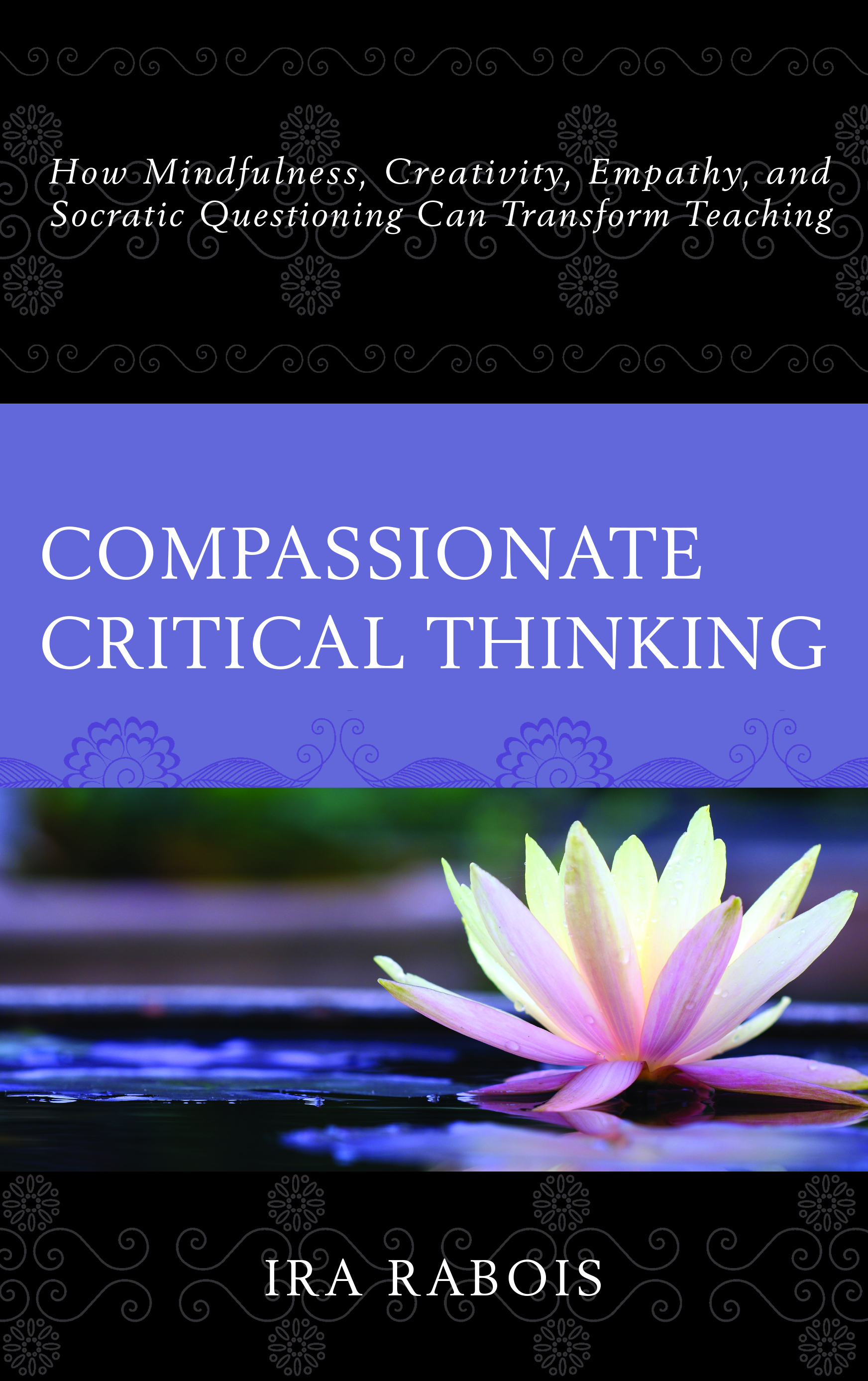
The organization, mindfulteachers.org, a wonderful organization, just published a review of my book, Compassionate Critical Thinking: How Mindfulness, Creativity, Empathy, and Socratic Questioning Can Transform Teaching. The book was published by Rowman & Littlefield. It is a book that, I hope not only will help teachers, students, and parents in this time of anxiety and threats, but maybe help anyone trying to understand him or herself and what is happening in our world.

The review begins:

“Often, you have little choice in what material you teach; the only choice you have is how the material is taught… When a teacher enters the classroom with awareness and genuine caring, students are more likely to do the same.”


Compassionate Critical Thinking: How Mindfulness, Creativity, Empathy, and Socratic Questioning Can Transform Teaching is based on Ira Rabois’ thirty-year career teaching English, philosophy, history, and psychology to high school students. 

Rabois includes six types of practices in his teaching:


To read the whole review, go to the website. Enjoy.