Can We Utilize Fear Instead of Fearing It? – When It’s So Real It Feels Unreal

This time in history we’re going through is not only scary and disturbing, but so difficult to understand and accept as real. Part of that difficulty comes from the almost all-pervasive reach of the threat. Part of it comes from wanting so much to know what will happen⎼ want to know “we will be all right” ⎼ but we’re in a different universe from knowing that. Part of it comes from perceiving that so much we value, that we feel is crucial to our lives is being taken away step by step. And this is so real it feels unreal.


Just last week, DT threatened to withhold support for or attack lawmakers who go against his wish to wipe out the independent free press in this country, including defunding NPR and PBS. And then his sycophants in Congress defunded NPR and PBS.


He sued the Wall Street Journal for billions for publishing a letter purportedly from DT to Jeffrey Epstein that included a lewd drawing, and apparently providing evidence that DT and Epstein were not just casual acquaintances.


Stephen Colbert, who was often critical of the president in his monologues, saw his contract for his late-night show terminated by CBS. This looks suspiciously like CBS acting in fear of being attacked by DT. As Steven Harper, in Common Dreams asked, was Colbert’s termination part of an implicit or explicit deal to get Federal Communications Commission approval for a merger between Paramount (parent company of CBS) and Skydance Media?


And was the termination of Colbert’s contract a continuation of Paramounmt’s bowing down to DT that they started earlier in the year, when they agreed to pay the President $16 million to settle a suit that he had almost no chance of winning? The suit was not just frivolous but a direct attack by DT on CBS for daring to share, during the election, an interview with DT’s opponent, Kamala Harris.


And these are just a small sampling of his attacks on the press. He threatened legal action against CNN for reporting on an app that warns people when ICE agents are nearby. He threatened Disney, which owns ABC News, with a suit because George Stephanopoulos, a top news anchor, shared a description of the president’s assault on writer E. Jean Carroll⎼ and Disney capitulated, paid $16 million to DT, despite the fact DT was found guilty by a court, for this case of sexual abuse.


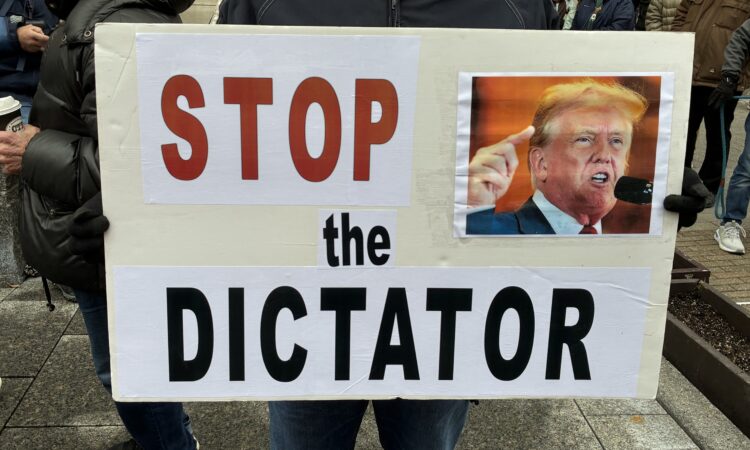
And on and on. DT is quickly moving to secure the power of a dictator. He’s trying to rip away our right to free speech and to eliminate all the vehicles we could use to exercise that right. Back in 2017, during his first administration, he received criticism for calling the media, the free press, the “enemy of the people.” Now, he’s straight out attacking any media or anyone that shares views other than his own. He’s doing anything he can to shut it, or us, up.


We don’t know what will come of this. We don’t know if enough people will protest, or enough politicians will say “we’ve had it with him.” And then there’s the Jeffrey Epstein rebellion against DT.


There’s a large segment of MAGA supporters who voted for DT because he promised to reveal a list complied by Jeffrey Epstein of prominent men who utilized Epstein’s connections to engage in child sexual predation. And now DT’s saying the opposite⎼ saying, there was no list. There is nothing there. And any of you that waste my time on this are weaklings, stupid people. Will the Jeffrey Epstein rebellion against DT’s refusal to come clean build in strength and undermine his power base?


DT has also been showing increasing signs of cognitive decline, although there have been warnings of him being reality-challenged for years….


*To read the whole article, please go to The Good Men Project.

When We Feel Each Word We Utter Holds Another Person in Its Hands: In Making Ourselves Real to Others, We Become More Real to Ourselves

We all know those moments when we so want to talk to a friend. It might be with one particular person; or it might be a cry to just talk with someone, anyone who cares or knows us, and who will listen. There are moments when we realize something we didn’t say, or regret saying. There are moments when something is just turning over and over inside us, shaking the nerve pathways. And we yearn to reach out. There are moments when we wonder, who is it I can talk to that will understand?


But I wonder⎼ this drive can be so compelling. What is it we think we gain from sharing? What do we feel will happen or change by the act of opening our mouths and speaking? I doubt it’s just a release of pent-up emotion that we crave. And it must be something more than simply sharing with someone important to us something that’s important.


I’ve had some medical issues lately. And part of me wants to keep it all to myself, so in my own eyes and the eyes of the world, I appear healthy. But the questions about how to understand my health abound. What does this pain mean? Is there a diagnosis? The not-knowing can be frightening. A definitive explanation or label, even a scary one, can provide such relief.


And this is so true for all that goes on inside of us. When we look inward, hear a thought, feel a sensation or feeling, how do we know with any surety what it means? It’s so difficult to make sense of all that goes on inside us. We can feel our heart beating slowly or quickly.  We can feel tension in our belly, a rawness in our gut, heat in my palm. But there are no bold printed signs on my inner roadways saying, “here I am” and “this is truth.” Our inner world is so vast and elusive⎼ and tricky. Anything we experience can be interpreted in so many ways.


And what about the strong impulse to share whatever news we have, about our health or any event in our lives? How much should we share? Our state of health is part of our identity. When we talk, we create a perspective on who we are. In a way, we try to shape reality itself. We select words, images, and create stories with ourselves as the main character. We become the hero or heroine of one version of our lives. This gives our struggles meaning and importance.


But to select, we limit and distort. We describe the indescribable; we create walls or boundaries around what is naturally boundaryless. And we think of these boundaries as points of distinction, or separation, even isolation. So, how do we speak so it serves us instead of isolates us?


By creating a story of a self, we create something another person can relate to. By selecting a feeling or experience to share, we give another person a chance to enter our experience, to climb inside with us. Boundaries also create points of contact. A hand not only touches but can be touched.


And as I said earlier, our inner lives can be so fuzzy and confusing, so vast and limitless. Saying something about ourselves to another person is in a way a personal experiment. How we interpret our inner signals and outer events is crucial. We try one story and see if it holds up and feels right. Not only in the eyes and mind of the other person, but how it feels in our own mouth. We use conversations with others to make the fuzzy clear and give reality to ourselves. In making ourselves real to others, we become more real to ourselves.


But we need to be careful here….


*To read the whole post, please go to The Good Men Project.

DT Has One Great Ability, to Manipulate and Destroy: If He Had Set Out to Purposely Hurt Our Nation, His Actions Couldn’t Be More Destructive

In 1919, at the closing edge of the first world war, and when the waves of the flu pandemic were beginning to spread and kill millions, the poet William Butler Yeats wrote: “Things fall apart; the centre cannot hold, mere anarchy is loosed upon the land…” A time of political, social, and moral breakdown seemed at hand. The old values, old ways of thinking, were dying.


And today, we’re clearly facing our own time of pandemics, political, social, and moral breakdown, of old ways, maybe once reliable ways of understanding the world being ripped from us, plunging us into depths of unknowing.


Judd Legum wrote an article called “Making Measles Great Again.” In it he described how DT and his health secretary, Robert Kennedy, Jr, instead of making our nation great are making the measles threat great. They’re making us greatly more vulnerable to future pandemics.


Measles is extremely contagious. About 92% of unvaccinated people exposed to it get infected. But by the year 2000, the WHO declared the disease eradicated in the US, due to an extensive vaccination program. In 2000, there were 86 cases reported in the US. Halfway through 2025, there were already 1274 cases, 155 hospitalizations, and 3 deaths, marking the first time in a decade with a death from the illness.


And the cause? Increasing distrust of science itself, of reliable information. People like RFK, Jr. spreading misinformation. Despite the fact that almost all the spread of the illness is amongst the unvaccinated, RFK claimed that the vaccine caused the deaths, the illness.


RFK is doing the same with the deadly bird flu, saying we should let it run wild, while cancelling research into vaccines and other methods of ending its spread. The magazine Science published an article from virologists, veterinarians, and health safety experts on the inanity of this approach: “Essentially, the longer you allow a virus that has shown to be effective in infecting multiple hosts survive in an environment, the greater the chance you give it to spread, to mutate, and to try its luck at adaptation,”  said Erin Sorrell, a virologist at the Johns Hopkins Center for Health Security. “Worst case scenario, the virus adapts and expands its host range to become transmissible in humans … Now we have a pandemic.”


Undermining public health institutions is one deadly way to unravel the core of a nation and “loose the blood-dimmed tide,”  and “mere anarchy upon the world.” DT’s big beautiful/ugly bill passed just a week ago could undermine the core program that keeps our hospitals and healthcare system functioning. Although the worst effects of the bill were purposefully delayed until after the 2026 midterms, the bill could kick up to 16 million people off MEDICAID and health insurance. Yet DT and his GOP continue to lie about or try to distort how devastating these effects could be.


In Texas, at least 109 people have died, 173 remain missing due to the extreme floods. Concerns have arisen that cuts by DOGE in the Weather Service, and the GOP assault on climate science might have contributed to the disastrous situation there. According to Jake Johnson, writing for Common Dreams, “Though local National Weather Service (NWS) forecasters did issue warnings in the lead-up to Friday’s flooding—which killed at least 82 people, including dozens of children—key roles were reportedly vacant ahead of the downpour, prompting scrutiny of the Trump administration’s mass firings and budget cuts, in addition to years of neglect and failures by Republicans at the state level.”


It’s unclear how much staffing shortages at the NWS undermined the efficacy of the response, of warnings and preparations by officials in Texas. However, it’s certainly clear that climate warming is making such events more common and fearsome. What the DT administration and the GOP are doing will only assure that such tragedies continue to occur, even grow in frequency, by undermining research into climate science and by hiding information needed to mitigate the harmful effects of climate instability. The Big Ugly bill terminates many federal investments into alternative wind and solar energy thusly increasing the threat of carbon pollution and climate warming.


DT even plans to cut FEMA and turn disaster response to states or run the federal responses right out of the White House. Is this another way to enforce obedience to him, as he’s done in the past, by withholding aid to states that do not bend a knee to him?….


*To read the whole post, please go to The Good Men Project.

What Feeds The Waters of Heart: The Care We All Need

I woke up one recent Sunday morning with chest pain. As I got out of bed, the pain gradually grew until there was almost nothing else left in my mind and body but pain. Each breath was a question. Most of us know what’s it like when we have some physical ailment and don’t know the cause; and thus, we don’t know what to do about it. The not-knowing becomes an additional mountain of pain. We don’t know how serious our situation is. We don’t know if we should go to the ER. I would’ve called a doctor, but it was Sunday⎼ none were available. Was this IT? Was my life at stake? Could I die?


My wife and I were hesitant to go to the ER because we’d been there earlier in the week and had spent hours without getting any clear answers. But pain can overwhelm doubt and provide its own dictates. We went.


The drive was both horrible and hilarious. It was early in the morning. I wanted my wife to drive through stop signs and redlights. She wouldn’t. She said we’d get a ticket. I said if any cop stopped us, they’d escort us to the ER. I turned on the flashers. She turned them off. We laughed; we wanted to cry, or I did, but didn’t. It would hurt too much. I was never so glad to see the mechanical doors of the ER.


I had called the ER before leaving home, and maybe that helped get us in sooner. Still, it took hours before they could get a hint about what was going on with me and do anything at all to reduce the pain, let alone begin treatment. I wound up being admitted for 5 days. And this changed my whole perception of hospitals.


I’m lucky; I still have good health insurance from my former job. My room was on the fourth floor of a community hospital that overlooked a lake carved out of steep hills by ancient glaciers. At each different time of day, and differently each day, the quality of light changed. At 5:00 am, amidst the thrill of mutedly hearing through the thick walls so many birds greet the morning, the trees and hillsides appeared in the lake as cloudy representatives of themselves, vague mysterious hints of who they were. In the afternoon, maybe at 3:00 pm, the light was stark. The reflections, if there were any, were clear. They tricked my eyes; I could almost see the reflection as the reality.


Each day, I walked the halls as much as I could. And as I did so, I realized I was learning lessons I never anticipated. I was learning respect, for one thing. Not just an obvious respect, of not talking too loudly, not disturbing others at rest. But a respect for a shared humanity. This was a unique situation. All around me, the normally hidden was exposed. I heard people cry or shout out in pain. I heard buzzers ring for nurses. I heard a team of doctors explain to my roommate their diagnosis and need for possible life-saving surgery. Luckily, everything turned out fine. Pain and suffering were right there for all of us. Our mortality was right there. And it was accepted, let in, so it could be faced. So, it could be admitted.


And care, compassion. This, too, surrounded us. It was the core of the place, despite the profit motive, despite insurance company dictates, rigid procedures made to protect the hospital and caregivers at least as much as patients. Despite an often-formulaic education that made it difficult at times for doctors and nurses to see me, the individual human in the patient. Sometimes profession got in the way of avocation. But the compassion was there, with both doctors and nurses. Patients learn to care for others from the nurses, to care for each other. I had a roommate and after 2 days we were sharing phone numbers. When we care, our perception and thinking opens. We see more.


And I noticed something weird as I walked. My mind was in a way like the lake. Amidst all the pain, a pain that felt unendurable at times, there was this quiet base. Just as I could see the beauty of the lake even as I felt in myself confusion and fear, there was this base of sheer knowingness in everything perceived or thought. There was an awareness without pain. That felt as real, as immediate as life could get. That made everything possible, all of this, all of what was frightening, what was hopeful, and what was joyous.


And who knows how this happened, but in the morning of the second or third day at the hospital my wife was helping me wash and change clothes. I was trying to put on shorts, and for some reason I felt incredibly astonished that I had 2 legs. Can you believe it? I had 2 legs? And I started laughing. My wife thought I was going nuts and asked what was going on. I tried to explain about having two legs being so much fun. And that my shorts, too, had 2 openings for legs. A perfect fit. And this was the most amazing thing in the world. And then she, too started laughing, giggling crazily, which made it very difficult for me to get my shorts on. It was a breaking or waking point, maybe, for us in dealing with the whole situation.


And it wasn’t drugs laughing. Some might say I sounded like I was high on drugs. But for various reasons, I can’t take painkillers and don’t do recreational drugs. Maybe this was the high, the delight that naturally inhabits the waters of mind but which we don’t notice often enough. Maybe it was just being absurdly tired or feeling the absurdity of the situation. Maybe we both just needed a great laugh to relieve the great stress….


*To read the whole post, please go to The Good Men Project.

Stop the King of Lies and Rip-offs from Being the King of US: What Can I Do? Is Not an Assumption of Hopelessness but A Driver of Reflection and Action

This morning, the sky was partly cloudy, after one of the wettest springs in history, with a grey haze from Canadian fires. Still, a cardinal and a vireo were singing. Outside my office, the rhododendron flowers had turned brown and were falling off the bush, but the roses were very alive with a deep red color.


But in our human realm, news reports set a very threatening tone to the day. This began at a news conference earlier in the week, when Senator Alex Padilla, Democrat from California, tried to ask a question of DT’s Homeland Security Secretary Kristi Noem. As he tried to take a step forward to be heard, identifying himself as a US Senator (the ranking member of the Judiciary Committee on Immigration), Noem’s security detail stopped him, shoved him to the ground, where he was handcuffed and forcibly taken from the room.


Later, the Senator explained he had repeatedly asked DHS for information on their increasingly extreme actions against immigrants but had not received answers. He said, “If this is how this administration… the DHS responds to a senator with a question, you can only imagine what they’re doing to farm workers, to cooks, to day laborers, throughout the LA community and throughout California and throughout the country.”


Since June 6, mostly nonviolent protests continued in LA, after having been met not only with police but soldiers, National Guard troops sent in by DT against the explicit direction of California Governor Newsom. This was an even more unrestrained repeat of DT’s militarized response in 2020  to protests against the killing of George Floyd. And, as in 2020, the possibly illegal deployment of troops only served to inflame the situation further.


And on the morning of Saturday, June 14th, in their Minnesota home, Melissa Hortman, a Democratic state representative and her husband were assassinated, in a politically targeted killing. The assailant also shot a second Democratic lawmaker and his wife multiple times, but they both thankfully remain alive as of now.  When DT was asked by a reporter if he would call Minnesota Governor Walz, he responded with more spite than any semblance of truly caring. “Well, it’s a terrible thing. I think he’s a terrible governor,” ABC News reported Trump said. “I think he’s a grossly incompetent person. But I may, I may call him, I may call other people too.” As of Sunday, he hadn’t called the Governor.


Starting Saturday morning, a “Celebration” in Washington D.C., with a military parade in the evening, honoring the 250th anniversary of the US Army⎼ and the birthday of the King of Lies. But across 200 cities covering most of the country, a NO KINGS demonstration at 1:00. Also later in the day, a Gay Pride event and a Juneteenth remembrance.


The events presented a dramatic contrast. The military parade celebrated not only the courage and sacrifice of soldiers, but the ego and self-centeredness of DT. In anticipation and messaging, it was frightening; but it turned out to be a sad and not well attended event.


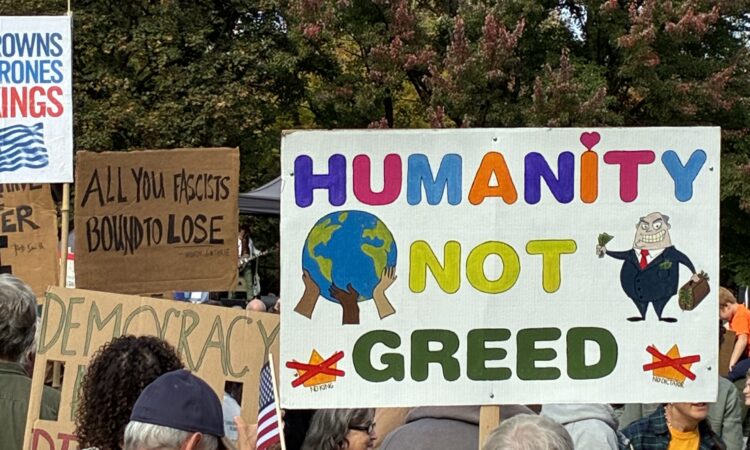
The NO KINGS protests were attended by millions. They were both serious and fun, concerned for the rights and future for all of us⎼ compassionate yet defiant of DT’s attempts to destroy democracy, to mistreat and remove immigrants of color, and undermine any government agencies and policies that protect the well-being of the mass of citizens, like healthcare, Social Security, SNAP, and education.


The protests were peaceful yet energizing.


*To tread the whole article, please go to The Good Men Project.

When Taking a Breath Feels Like Writing a Poem: What We Ignore Grows Mythical in Size

These days, breathing-in seems to be filled with a deep dread, a darkness, as if I’m about to open a door no one wants to open but maybe must. It’s a door I rationally know I share with millions of others, but don’t always feel. And the more I hesitate about opening it, the more difficult it is to even look at it. What we ignore becomes mythical in size.


I also dread to verbalize this, but I wonder if sleep disruption has become a national epidemic. The anxiety levels in this country are skyrocketing. And so many people have shared with me they’re having difficulty sleeping. So many have shared a sense of mourning, not only for neighbors who have been deported or lost their jobs, but mourning for the loss of an expectation of justice, fairness, due process. The world. Their future. Humanity. So many of us are suffering from moral injury or trauma.


Maybe you know the work of primatologist Frans de Waal, who with Sarah Brosnan did experiments with capuchin monkeys showing these primates have a deep sense of and desire for what is fair. When two capuchins performed a simple task, and one was rewarded with a less preferred, less sweet reward than the other, they then refused to continue to participate. They noticed and didn’t like any inequity in the treatment of others. It wasn’t all about competition and winning but noticing and caring about fairness.


In some ways, I weirdly realize the dread I had felt back in November and December 2024 might have lessened. DT is scary, a clown in many ways and frighteningly so, frighteningly uncaring of anyone other than himself and his power-hungry cohorts, a threat to everything and everyone I hold dear. Too many others have lost their livelihood, left the country or been deported or died, yet I‘m still able to speak out. Or maybe I’ve just become better at closing certain doors.


Or maybe I had just expected there would no longer be friendship, joy, love once DT was in office. No longer be any surprisingly beautiful moments. And yet these persist, some very simple. This afternoon for example, I started boiling water for tea. I then sat down to wait and so many thoughts went through my mind. It was like my mind had become a city center, with thoughts and images racing along the sidewalks and roads. And not just thoughts but inner compulsions to do something other than sit, like recording thoughts in my journal, or refinishing the window ledge above the sink, doing something “useful.”


But instead, I just watched and listened to the steam rising from the teapot, and it was enough. I noticed the song of water boiling was a complex song, with a deep quiet living in its core. Doing “nothing” suddenly felt so beautiful. And outside the house, a cardinal was singing. Maybe it was responding to the song of boiling tea water? Maybe I’ve stopped holding my breath and breathing-out amazed me.


It feels almost taboo to talk of something like this, watching and listening to water boiling when so many lives, the ecosystems of the world, and the continuation of democracy are at stake. But the freedom to live and share our moments, to let them affirm our existence, is a crucial element of human life.


I woke up about 1:00 am last night….


*To read the entire article, please go to The Good Men Project.
It’s Not When, But If: Will 2025 Be the Last Memorial Day Honoring and Mourning Those Who Died Fighting for Democracy?

This past week I wondered: will this be the last Memorial Day? With all the assaults on democracy by DT and his authoritarian party, will this be the last year the holiday is commemorated to remember and honor those who gave their lives defending democracy?


When he first won the election less than one year or one eternity ago, DT controlled all 3 branches of government. And many of us who opposed him said “wait until the midterms. We’ll win control of the House and maybe Senate and resurrect democracy.” But few who’re looking realistically now at recent events are still saying that. Many realize our time to act is not in a year, but now. DT is doing all he can to destroy the possibility of meaningful midterm elections. As the song says, “It’s now or [possibly] never.”


For example, I’ve been reading about the hidden contents of the House Reconciliation bill, or what DT calls “a big beautiful bill” and others call the Big Ugly. DT calls it “beautiful” because it gives him what no law should ever give a president in a democracy. It gives him not only more economic means to rule unopposed, to be the boss, King, Dictator, the absolute word on everything by gifting him tax cuts on the rich. And as it’s clearly developed in Project 2025, it also gives him the political power to make his dreams come true.


On May 22, Robert Reich wrote an article revealing details of what is hidden from most news discussions. He describes how DT has been working for years to neuter the courts. For example, several lower court justices and then the Supreme Court told  him to “facilitate” the return of Kilmar Abrego Garcia, a legal resident of this country, illegally deported to a cruel prison in El Salvador. But DT wouldn’t comply with the orders. A federal judge ruled that the DT regime willfully disregarded a court order restraining them from such deportations. He also tries to intimidate judges with attacks on them and their families in language that could and has led to violence.


Courts have only one power to make their orders stick—to hold a politician or anyone in contempt. But the Big Ugly Bill has a hidden agenda. There’s a provision which says, “No court of the United States may use appropriated funds to enforce a contempt citation for failure to comply with an injunction or temporary restraining order if no security was given when the injunction was issued…” Translation: this provision would stop courts from enforcing contempt citations and end any power they had over DT.


An article in the Campaign Legal Center for Advancing Democracy Through Law news outlet, by Eric Kashdan not only gives more details on the provision described by Reich, but provides other hidden anti-democratic material in the 1000 page bill.


For example, in section 43201(c) is buried a provision imposing a ban of ten years on enforcing any state or local law that would regulate AI, including laws controlling its use in political campaigns and elections. This means its use to fabricate images and spread disinformation. It actually stops the enforcement of laws passed by any government bodies other than DT’s Congress, preventing any lawmakers outside Congress from protecting us, their constituents.


Kasdan spells out this could⎼ and would⎼ mean giving free reign to the spread of lies and disinformation that undermine our ability to make informed decisions. It would create an even more dangerous situation than what we have now, one that further debilitates any trust in the existence of truth or trust in our elections. It takes us right through the doors of the Ministry of Truth/Disinformation George Orwell described in his novel 1984.


This is only one part of the DT GOP assault on “we the people” of the U. S….


*To read the whole article, please click on this link to The Good Men Project.

A Necessary Ingredient for Sanity in Our World Today; The Empowering Force of Compassion

When I stop and just feel what is going on in myself, and listen to what I most need, I discover a drive for being held, and for holding. For care and comfort, and for comforting. And somehow tied to that is a need to be more accepting of how little I know for sure. And to realize this is one aspect of compassion⎼ to recognize I share so much with others but there’s so much more I don’t know. And to value all of it, the knowing and the not-knowing. And the learning of how to be more open and compassionate, for myself and for others.


It often feels like one aim of the DT administration is to suck the life out of our mutual concern for others. Embedding compassion in the community itself would help not only ourselves but all those around us. It would make us feel stronger, more ready to act. And I think DT abhors this possibility, yet this is exactly what we need right now.


But what exactly is compassion? What images do we have of it or of compassionate people? How would we change if we were more compassionate? What differentiates it from other mental or emotional states associated with it, like empathy, sympathy, or pity? First, we must realize that we can actually develop our compassion.


One book that could be a resource for us is The Compassionate Instinct, edited by Dacher Keltner, Jason Marsh, and Jeremy Adam Smith. The book explores scientific evidence and philosophical arguments for compassion. In the first essay, Keltner argues that it is “rooted in our brain and biology, and [is] ready to be cultivated for the greater good.” It’s in us as a possibility, to be developed—or subverted. Our brains are plastic in that they’re continuously rewiring; that’s how we learn. Learning means change. We change according to our experience and education. Even the way our DNA expresses itself and influences our development depends on experience.


Compassion is not just empathy, or not necessarily feeling the suffering of others, but a readiness to recognize and act to relieve that suffering. It’s a responsiveness that empowers us. It’s not just sympathy for, and certainly not pity for, what others are experiencing. Pity can be so condescending, separating, and compassion is more of a welcoming. It’s a recognition and valuing of the fact that we never have a full understanding of any other person. Each person is partly an infinite mystery, and we share that mystery and so much else with them.


To develop our compassion, it’s best if, in each possible moment, we intend to respect and directly learn who we are. This means mindfulness, or trauma informed mindfulness, and compassion practices. To respond with clarity to events, and to make decisions with depth of thought, we must be able to observe and be present in our experiences, and feel in ourselves the presence and responsiveness of others. We need empathy.


We can, for example, pause in whatever we’re doing. Maybe close our eyes or look closely around us; or just feel our feet on the ground, how the weight is distributed on our feet, what our toes feel like in our shoes. How it feels to just stand where we are. Can we smell the air? Where in our body do we feel the breathing in? And when we breathe out, can we feel our shoulders relax, and settle down?


Maybe our minds are full of thoughts, self-attacks for not doing enough or wishing the election had turned out differently. With so much awful news, it’s so easy to distance, hurt, exhaust and thus disempower ourselves. We might feel we don’t deserve compassion. But when the world needs us so badly is exactly when we must give ourselves to it….


*To read the whole piece, please go to The Good Men Project.
Science & Democracy: Anaximander and Opening the Mind Replacing a Myth of What Was with Expanding Our Understanding of What Could Be

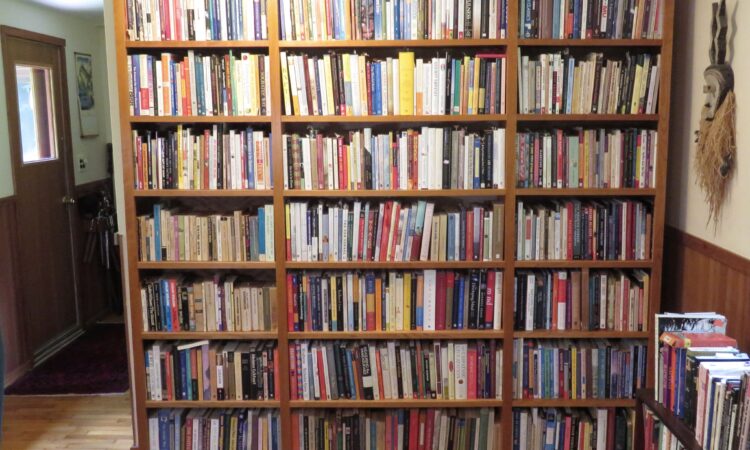
A few years ago, I wrote an article asking Is Uncertainty A Blessing or a Curse, Or Both? It was based on a book by theoretical physicist Carlo Rovelli. As a result of the article, Dr. Rovelli’s publisher sent me a copy of his new book, Anaximander and the Birth of Science. This new book is as well written and intriguing as the first one I read years ago. It’s also as relevant as the older book was to this frightening moment in history that we are facing.


Rovelli defines science, in the introduction, as “the passionate search for ever newer ways to conceive the world.” Its strength is thus based not in what we’re certain of, but in a “radical awareness” of our ignorance, of recognizing that what we don’t know is vast. Thus, it’s fluid and constantly pushes us to learn more and more. And it constantly moves to overthrow the old ways that we ordered our world and move us into something new, something ever deeper and more comprehensive.


And one aspect of the threat we face today is the emphasis on certainty. To emphasize certainty in the face of a universe that’s continually changing and evolving is to deny and even hide reality. It’s to cling to the ideas, images, illusions we held of the past in order to pretend we can manufacture a future that fits those created illusions. It means to undermine learning itself in favor of indoctrination. It’s to fight for dominance for one person or group over the many; to fight for total centralized control of information, resources, and power instead of a de-centralized, interdependent, democratic sharing of perspectives, information, resources, and power. In other words, science and democracy are linked together.


Anaximander lived in a place and time where both political and mental realms were opening up, where gaps were emerging in the sources and institutions of both political power and intellectual ideas and belief. He was born in Miletus, a Greek city-state on the Ionian or Turkish coast, in 610 BCE. Athens was just beginning to grow in power. The Odyssey and The Iliad had been composed two centuries earlier.  Solon, the creator of the first constitution to incorporate democratic ideas, had just been born. And about 200 years later, we have Sophocles, Sappho, and Plato and the Golden Age of Greece.


Miletus was close to Mesopotamia, Egypt, the Black Sea, and traded with a good portion of the rest of the world. The city thrived from the introduction of ideas and products from all these different areas. Rovelli discusses how civilizations flourish when they mingle; they decline in isolation. So called cultural “purity’ closes off new ideas and understandings.


His was a time of secularization, where the religious or spiritual realms were not controlled by a church or religious institution. Where the ideas of the ancients, of the past, were not given divine and unquestioned status. The Homeric gods were neither fully credible nor majestic, but full of faults as well as powers. Miletus itself was an independent city-state in a league of cities where no one entity dominated the others. It was called the Ionian League, and it met in a Parliament, maybe the first in history.


Writing was no longer the exclusive domain of the religious elite and rulers, or to scribes, priests, and aristocrats. It was possibly the first time in history written accumulated knowledge and study were accessible to many, both to learn⎼ and to question, criticize, and debate. A large class of citizens could discuss not only intellectual issues but how to apportion power and make decisions critical to the lives of the community. And it was assumed that knowledge and truth best emerge from allowing criticism⎼ of established ideas as well as new understandings. And where open discussion replaced absolute belief. The same held true in social and political matters. Democracy in intellect and belief mirrored democracy in politics.


Of course, this didn’t last….


*To read the whole piece, please go to The Good Men Project.
Who Are They Coming After Next? If We Didn’t Believe It Before, We’ll Believe It Now

The volume of birdcalls increases as night slowly transforms into day. It’s spring; my wife’s flowers are painting the yard beautiful colors. The air smells sweet to breathe. On a day like this, how can we believe it can all end? How can we believe our savings can be stolen or depleted, the protections on air quality ended, so the air will no longer smell so sweet or be safely breathed. Bird habitats dangerously threatened. The safety of my home and property ended. And all by the DT government. How do we see the ferocity of such a beast when so much of what was, and so much beauty remains?


The Washington Post recently revealed that DT is having plans written up to weaken the independence of the nuclear safety regulators and relax rules that protect us from radiation exposure. Why? To fast track the resurrection of the nuclear power industry.


According to Reuters, on May 11 FEMA announced that, to align themselves with DT’s intentions, they are sharply reducing training for state and local weather and other emergency managers. This would leave all storm-prone communities more vulnerable, less prepared to handle the often-devastating effects of hurricanes and other catastrophic weather events, all of which have been happening more frequently with global warming. And they’re doing this just a few weeks before the June 1 beginning of hurricane season, a hurricane season predicted to be busier than normal this year.


Why? They claim their aim is to reduce waste and save money. But it’s difficult to understand how paying the people who help us prepare for storms and rebuild afterwards is wasteful—unless you’re a billionaire and think your money makes you immune from needing their services.


And this is happening in every aspect of government, affecting every aspect of our lives, from weakening rules that protect our water from highly dangerous, forever chemicals, firing those who fight forest fires, firing inspectors who provide food safety, healthcare, to stealing our retirement savings, habeas corpus, and even our right to speak out and vote.


And if that isn’t enough, this really scared me⎼ The Mayor of Newark, Ras Baraka, was recently arrested by DHS agents and charged with trespass at an ICE detention facility. This was a private detention facility, opened despite a law prohibiting such, and without allowing legally required inspections by the state. The mayor was there in support of a congressional delegation aiming to inspect the site and was not on private land but public property. The mayor said he had been standing there for over an hour when arrested and had not been warned to move.


The following day, a DHS spokesperson said they were considering also arresting the 3 member Democratic Congressional delegation that was at the facility with the mayor. They accused the Democrats of assaulting ICE agents.


One member of the Democratic delegation, Representative Rob Menendez, said: “As Members of Congress, we have a legal right to conduct oversight at any DHS facility without prior notice, as we have already done twice this year. Throughout every step of this visit, ICE attempted to intimidate everyone involved and impede our ability to conduct oversight.” Menendez added, “This is like nothing I’ve ever seen before, and I am shocked and disturbed that something like this happened in our community.”


Another member of the delegation, Representative LaMonica McIver added that the lawmakers were met with “contempt, disrespect, and aggression from ICE.” So⎼ who is violating the law here?


And this comes just a few weeks after DT’s Department of Justice arrested Milwaukee Judge Hannah Dugan…


*To read the entire piece, please go to The Good Men Project.