
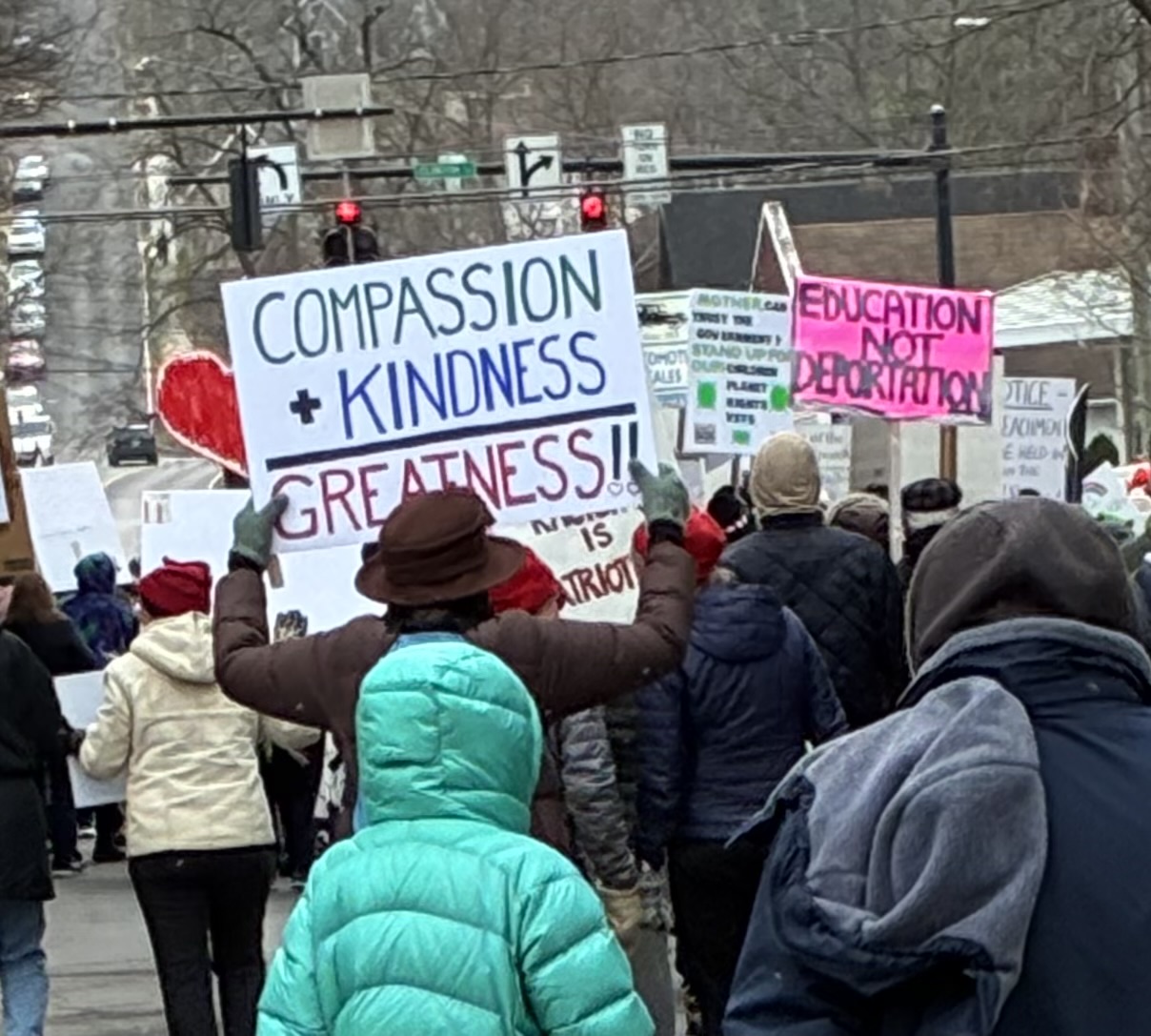

May I be happy….
Like so many of my friends and neighbors, I sometimes feel that to spend any length of time other than fighting injustice, going to work, dealing with health issues, or caring for others is a waste of time. Having fun can get lost. Fun is fiddling while the earth burns. It’s putting flowers in the window of a building about to be demolished. It’s sitting silent while our rights and lives are being stolen from us.
May I be happy. May I be healthy. May I be at peace. May all beings be free from suffering. I learned this loving-kindness practice, meditation, and wish from author and Buddhist teacher Sharon Salzberg and others. Visualizing myself happy, smiling, for example, can free me from ruminating, worrying, especially right now, in today’s world. We need to feel we can have moments of happiness despite the multiple threats to our world. If we feel we can’t be happy, we might give up and do nothing.
To feel we can be happy we need to feel that we have agency, that we can make changes in ourselves and the world around us.
To feel we can make changes, it’s helpful to feel present right here, right now. When we feel present, we more easily feel joy.
A few days ago, I heard a program on NPR. The program was an interview by Alicia Garceau of Michaeleen Doucleff, author of a new book called Dopamine Kids: A Science-Based Plan to Rewire Your Child’s Brain and Take Back Your Family in the Age of Screens and Ultra Processed Foods. The book applied evidence of how research paid for mainly by gambling industries was utilized by social media platforms and the food industry to addict us to their products.
Doucleff is a science writer and trained biochemist. Several years ago, she wanted to figure out how to reduce her family’s dependence on new tech and ultra processed foods. She found something surprising.
We think of the hormone and neurotransmitter dopamine as the pleasure molecule. What she discovered was dopamine doesn’t give us pleasure; instead, it ties us to what we’re doing. It creates a feeling of wanting. We eat chips and we keep eating them, not because they really satisfy us. They have little to no nutrition. But the more we eat, the more we want. We get caught by wanting.
And when we want, we feel empty. We feel what Buddhist philosopher David Loy describes as lacking; we feel that what we have, what we are is not enough. It’s part of the Buddhist understanding of the cause of suffering or feeling our lives are unsatisfactory. Wanting wants the wanting to never cease. It robs us of joy and agency.
Children intently desire and get focused on their screen time. They get caught up in “the infinite scroll” not because it brings them joy; the screen experience robs them of that. It promises so much, a sense of belonging, community, support. But this is a trick. It’s like a game advertised by a casino that promises us riches but delivers financial loss instead.
Casinos aim to create in the player a continuous, timeless, flow-like state so we more easily feel we have won something when we haven’t….
*To read the whole post, please go to The Good Men Project.